
-
Your next favorite book
is waiting.
Summary | Excerpt | Reviews | Beyond the book | Read-Alikes | Genres & Themes | Author Bio

A Novel
by Larissa Pham Book Reviewed by:
In Larissa Pham's debut novel, Discipline, we are introduced to Christine, who is at the airport in Chicago, about to embark on a tour promoting her first book. The novel, published by a small press, is a revenge fantasy based on an affair with her former painting professor and mentor, Richard, from ten years earlier, an affair that ended badly and caused her to abandon her painting career: "I had never been able to take myself seriously as an artist after everything that happened, even though in the larger timeline of my life it had only been a few months. I didn't paint again." Over the last decade, Christine has committed to putting her former life behind her and believed her book was a way of closing that chapter: "You can't ever change what's already happened to you, but when you write about it, you can at least reframe it. Take control of it, maybe." But her book tour is upended when she receives a mysterious email—one line, no subject—saying "that's not how I remember it," which she instantly recognizes as being from Richard.
The email shatters her illusion of closure, and she becomes consumed with what he thinks of her book. Their years of silence end as they exchange emails, in which she accepts his invitation to join him in his cabin in Maine—she plans to finally confront him once and for all. Discipline is a subtle literary thriller that invites questions about mentorship in the creative arts, the potential for it to go awry, the stories we tell ourselves, art-making, and revenge.
The book is divided into two parts, with each chapter in Part One named after an artist (see Beyond the Book), highlighting the importance of art in Christine's life; the work of each artist is integrated into the story as she encounters it at a museum, gallery, or even a bar. Her musings on the art and the artist are beneficial to those who, like me, might be unfamiliar with them, without being too meandering or distracting from the plot.
"I had never truly tried to replicate life the way Celmins did, in this exactitude, down to the finest detail. But I did think there was something important, maybe even necessary, in trying to make something that depicted, even if not life as it was, then life as how it felt."
She details her travels through various cities during her tour, where she encounters people from her past—including an ex-boyfriend, a former art friend, and a classmate—and strangers, like a queer studies professor who drives her to her next destination, and a biologist who accidentally takes her suitcase at the airport. Her interactions with these individuals offer insight into her affair with Richard and how it changed her view of identity as an artist and her relationship with art. She tells Henry, the biologist, that she's not an artist when he inquires about her book; she tells another man she meets at a book event in a bar that she's a figure skater. When she reconnects with her ex, Colin, we learn she never told him about the affair, which prompted her pivotal move to New York. Her commitment to leaving her past behind made her emotionally guarded and invulnerable: "I had been entirely focused on what I was trying to accomplish, the transformation I was pulling, like a magician's silk, across my life, my past disappearing in its wake."
As each chapter unfolds, we explore Christine's backstory in greater depth, gaining a clearer view of how significant this period was for her. She reconnects with Frances, her friend and MFA program peer, whom she studied closely as an artist throughout their four years together. This reveals more about the challenges of maintaining friendships in the art world and the trauma Christine experienced as a result of her affair with Richard. Frances is the only member of their cohort who is still actively painting and has achieved notable success. During their time at school, they were often compared, even though Christine felt they differed greatly in appearance, quirks, and artistic style.
"I didn't care that she was the better painter, that she was awarded fellowships that sent her to Florence and Rome. What bothered me was that everyone pitted us against each other because they thought we were the same, when in reality we were completely different. It was a difference that made us hate each other as much as we loved each other, though I was never certain if that was because we wanted to be more similar, or if we couldn't stand that we weren't."
Christine never told Frances about her affair with Richard out of shame, fearing it would hurt her reputation and that it meant his mentorship was based on a false premise—not because she was talented, but because he was attracted to her. She is deeply suspicious that the departmental award she received was because of Richard's influence, and that it should rightfully have gone to Frances. Christine stopped painting because of Richard, and losing that part of her identity has fostered rage toward him. She now confesses to Frances that, after the disastrous end of the affair and everything that followed, she was so distressed she wanted to die. "I had let that dream die instead, and in choosing to write a book about it, I had chosen revenge."
Her final destination is with Richard, which marks the beginning of Part Two, set entirely in Maine.
Richard says that he didn't think she would accept his invitation, and she internally remarks, "I didn't think I would, either...I had been so determined to leave all that in my past, to bury it under the narrative I had created...But there was another part of me, the part that is a writer, that wanted to know what he was going to say." All the questions Christine and the reader have been collecting throughout the story are answered, and the suspense is released like letting the air out of a balloon, little by little. I was gripped as everything the story had been building toward arrived. Opinions on whether the ending is worth the payoff could vary, as it was not what I predicted and left me slightly stunned, reinforcing themes about revenge and the unfulfilling nature of closure.
The thriller elements keep Discipline captivating, but it is ideal for literary fiction fans, as the musings and reflections on art, relationships, and the desire to control one's own narrative are where the depth and meaning lie. Pham has a great ability to examine the artistic spirit and shed light on the untidy emotions and complexities of the art world. The blend of dialogue and introspection keeps the book well-paced, and although Christine is an emotionally distant protagonist, readers will be invested in how she controls the story till the very end.
 This review
first ran in the February 11, 2026
issue of BookBrowse Recommends.
This review
first ran in the February 11, 2026
issue of BookBrowse Recommends.

If you liked Discipline, try these:

by Julia Langbein
Published 2026
From the acclaimed author of American Mermaid ("I loved it…and have never read anything like it"—Elizabeth Gilbert) comes a wise, funny, and wildly original examination of female desire and the price women pay for giving in to their appetites—starring an apparition of Monica Lewinsky.
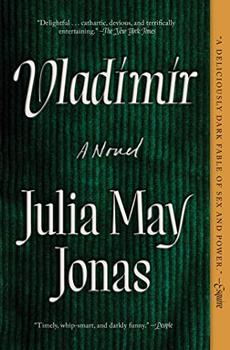
by Julia May Jonas
Published 2023
A provocative, razor-sharp, and timely debut novel about a beloved English professor facing a slew of accusations against her professor husband by former students - a situation that becomes more complicated when she herself develops an obsession of her own...

by Susan Choi
Published 2020
Pulitzer finalist Susan Choi's multi-part, narrative-upending novel.
Theo of Golden by Allen Levi
One spring morning, a stranger arrives in the small southern city of Golden. No one knows where he has come from…or why…






Your guide toexceptional books
BookBrowse seeks out and recommends the best in contemporary fiction and nonfiction—books that not only engage and entertain but also deepen our understanding of ourselves and the world around us.

