
-
Your next favorite book
is waiting.
Summary | Excerpt | Reviews | Beyond the book | Read-Alikes | Genres & Themes | Author Bio

 Book Reviewed by:
Talking It Over (1991), Julian Barnes's sixth novel, asks questions that epitomize much of his oeuvre: How does time affect relationships and memory? How does life get translated into written evidence? The book is composed of rotating monologues from Stuart, his wife Gillian, and his best friend Oliver. Soon after Stuart and Gillian get married, Oliver falls in love with Gillian, woos her, and convinces her to divorce Stuart and marry him instead. But there's no "happily ever after" to be found here.
The epigraph is a Russian saying: "He lies like an eye-witness." This sardonic dictum establishes that the first-person statements that follow will be unreliable, no matter what the speakers aver. "My name is Stuart, and I remember everything," the novel opens—an impossible claim. Memory is always flawed, and an extra complication here is that the three main characters understand events and motivations differently, and so present them in a way that each feels is true but that also tends to flatter whoever is speaking. Words embody not just facts but biased versions of them, which complicate readers' interpretations.
Stuart and Oliver met at private school when they were fifteen years old. Oliver describes asking Stuart, "Could I borrow a pound from you?" Stuart, however, remembers Oliver saying, "Lend us a quid." The phrases might have the same meaning, but the latter is informal to the point of rudeness, which fits with Oliver bossing a classmate he'd never spoken to before. "What do you want it for?" Stuart replied. Oliver, mock-offended, came back with "Such colossal impertinence. What on earth do you want to know for?" To which Stuart responded, "No prudent money manager would authorize a loan without first knowing its purpose."
The encounter introduces the characters' personalities and sets the tone for their interactions. Stuart is cautious and serious (and the financial reference is apt, as he becomes an investment banker). Oliver, by contrast, is impulsive, entitled, and a spendthrift. His affected manner of speaking was the primary thing I remembered about this novel before rereading it. His speech is pretentious and flamboyant. He peppers his sentences with French and Latin, and he'll never use a few simple words when he could use ten abstruse ones. For instance, he explains what Gillian does for a living by saying that "she toiled as a handmaiden of the arts, rendering fresh the faded pigments of yesteryear. What? Oh, she restores pictures."
Oliver is funny, certainly, but also exasperating. He teaches English as a foreign language for a couple of seedy London academies and has a history of foisting his romantic attentions on pupils.
"And then Gillian came along and there were three of us," Stuart recalls. After what he portrays as a golden summer of friendship, the trio's dynamic changed when he and Gillian married. Oliver was so upset about being displaced that he went to the airport to meet them off the plane home from their secret honeymoon destination. Gillian, practical and unsentimental, describes the shift thus:
"Of course I liked him—you can't not like Oliver once you get to know him—but he did tend to monopolize things. Almost telling us what to do. I'm not really complaining. I'm just making a small correction.
That's the trouble with talking it over like this. It never seems quite right to the person being talked about.
I met Stuart. I fell in love. I married. What's the story?"
True to the title, Barnes emphasizes the (faux) oral nature of his text. The reader takes the place of a priest or therapist, hearing verbal confessions. Every so often, a protagonist will become aware of the interlocutor, answering a straight question or consciously refuting what he or she imagines one of the others has said about an incident. All three narratives are looping and indirect, yet keep coming back to the details of how their connections were formalized, broken, and reformed. There are also occasional asides from secondary characters like Gillian's mother, Oliver's landlady, and a school acquaintance of Stuart and Oliver's.
The two weddings are key scenes, unsurprisingly, but small moments can be just as illuminating. Oliver tells of an "accident" in which he and Stuart "stood up for some reason, [and] an unfortunate clash of heads occurred which quite stunned us both." However, on the next page we learn the truth: When Stuart realized Oliver was trying to steal Gillian from him, he got drunk and head-butted Oliver. Oliver makes it sound unintentional because he's ashamed of physical weakness (and his father had been abusive, so the incident brought up traumatic memories) and doesn't want to think of himself as a guilty party getting the comeuppance he deserves.
This is no simple love triangle (see Beyond the Book); rather, Barnes delivers a masterclass in creating voices and interrogating unreliable perspectives. The protagonists struggle to see themselves and each other clearly, a cogent commentary on how subjectivity blinds us. How people speak—not just overall speech patterns but individual word choices—reveals much about them here. Though I thoroughly enjoyed my reread, I also found the novel almost unbearably sad. Each character must deal with hurt and blame in a personal way: sometimes by pretending the feelings don't exist; other times through self-destructive habits. I can wholeheartedly recommend this as a first taste of Barnes or a dive into his earlier work for those who might know him solely through the Booker Prize-winning The Sense of an Ending (2011). A sequel to Talking It Over—Love, etc.—was published nine years later, so the curious can follow up with these three, who have a lot more to say for themselves.
 This review
first ran in the January 28, 2026
issue of BookBrowse Recommends.
This review
first ran in the January 28, 2026
issue of BookBrowse Recommends.

If you liked Talking It Over, try these:

by Lily King
Published 2025
From the New York Times bestselling author of Writers & Lovers comes a magnificent and intimate new novel of desire, friendship, and the lasting impact of first love.
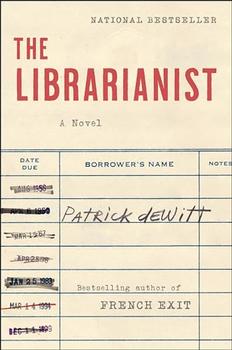
by Patrick deWitt
Published 2024
From bestselling and award-winning author Patrick deWitt comes the story of Bob Comet, a man who has lived his life through and for literature, unaware that his own experience is a poignant and affecting narrative in itself.
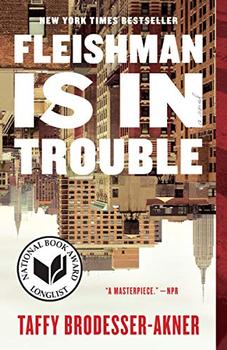
by Taffy Brodesser-Akner
Published 2020
A finely observed, timely exploration of marriage, divorce, and the bewildering dynamics of ambition from one of the most exciting writers working today.

L.A. Women by Ella Berman
Two ambitious writers in 1960s LA face betrayal when one writes a novel based on the other's life.






Your guide toexceptional books
BookBrowse seeks out and recommends the best in contemporary fiction and nonfiction—books that not only engage and entertain but also deepen our understanding of ourselves and the world around us.

