
-
Your next favorite book
is waiting.
Summary | Excerpt | Reviews | Beyond the book | Read-Alikes | Genres & Themes | Author Bio

A Life Reimagined
by Lea Ypi Book Reviewed by:
When Lea Ypi's grandfather Asllan was imprisoned and charged with espionage, most of the family's belongings—including photos—were confiscated by the communist regime. Her grandmother Leman's vivid stories of growing up in Greece, moving to Albania, and celebrating what she called the "happiest time of her life" in the winter of 1941 remained stories to Ypi, with no visual record attached. It's a shock, therefore, when one of those lost photographs goes viral. Commenters see an elite couple without context, the son of a former prime minister and the grandmother of a prominent philosophy professor, smiling at a ski resort during the darkest days of World War II. Vitriol pours in, with anonymous speculators debating whether Leman and Asllan Ypi were fascist collaborators, communist spies, or both to enjoy that position of privilege—neither theory with a factual basis, but difficult to disprove with no counterevidence.
Lea Ypi has never seen this photo, has never met the post's author. When she goes to reply, she's indignant: what right do these people have to comment on her grandmother's life? How can they pronounce judgment from afar, when they have no idea of who she was? To defend her grandmother's dignity, she recognizes the need to find out the truth herself—and so begins a compelling journey through archives, memory, and philosophy to reconstruct the life of Leman Ypi.
Over the course of Indignity, Lea Ypi mixes three different methods of storytelling: a first-person narrative of her time at archives looking for clues; a third-person, fictionalized retelling of her grandmother's life through various characters' eyes; and selected primary source documents, like embassy telegrams and espionage reports. Ypi's ability to flow naturally and smoothly between these narrative threads verges on the superhuman. In three sections, the story progresses from searching for records on a lagging archive computer, to her great-grandfather Ibrahim Pasha's death in the twilight of the Ottoman Empire, to a spirited debate on national identity post-World War I—all without losing focus on the central questions of memory and dignity.
A sudden shift in time and tone—jumping from Ypi's perspective in a modern Albanian archive to her grandmother's early childhood in Greece—becomes the perfect transition between present and past, and demonstrates how events are preserved in written record versus in family mythology. Rather than seeing Leman's life in the abstract as a set of facts, we meet her as a fully-fledged character, experiencing her story through her eyes and the eyes of those around her. Ypi begins this fictionalized history with her great-grandfather's less than flattering death, and how Leman's mother sought to protect his legacy by lying about it. "He would have wanted to leave with dignity," she opines. The official cause of death recorded by a family doctor contrasts with Ypi's memory of Leman gleefully sharing how her father died of eating too much baklava after a fast. This tells the reader something about Leman's approach to secrets, and that what happens to your dignity after you die is not up to you. You can't control the comments under your sadly timed honeymoon photo, or the archives your descendants search for you in.
As the book progresses, Ypi's search brings more questions than answers, with conflicting and missing information across historical records obscuring the complete truth of Leman's life. Ypi comes face-to-face with the realization of every historian, that what is not present in the archive tells you just as much as what is. Further, she reflects, "perhaps the truth about Leman Ypi consists only in part in the reconstruction of the facts about her life. Just as valuable is the interpretation of those facts, the story they tell, the moral light they cast on the world." Fans of Tim O'Brien's legendary The Things They Carried will recognize a piece of his "story-truth" versus "happening-truth" in Ypi's analysis, and in how she uses a semi-fictionalized way of retelling her grandmother's story to get at deeper truths about humanity.
Lea Ypi is a philosopher first and an author second. There are points in the book where your immersion might wear thin; namely, when characters begin intensely ruminating on the nature of dignity, moral agency, and leftist ideals—or when Ypi sprinkles in a phrase like "master-slave dialectic of recognition" mid-line. Less philosophically inclined readers may be thrown, but only temporarily. I implore you to engage with every bit of this book, as everything—and I mean everything—connects to the mystery of Leman's life and that core question of dignity, and is brought back full-circle in masterful prose.
"Yesterday I was trying to write an essay on Kant and ended up researching grief," Ypi writes in her diary following her grandmother's death. In Indignity, you might say that Ypi researched Leman and ended up writing about the human condition. For each person that influences the course of Leman's life, each person Ypi imagines a unique internal monologue and perspective for, there is a distinct view of human dignity and morality they represent. Her great-grandmother views dignity as a social standing, a public perception that can be lost if anyone were to find out about the baklava incident. Her great-grandfather feels that a "deeper understanding of someone's motives and aims" is "the sort of thing necessary to pronounce judgments on their dignity." A young Enver Hoxha, future leader of the Albanian communist regime, speaks of dignity in terms of power and deference. To Leman's bureaucratic father-in-law, who leads the Albanian government under fascist occupation, "dignity is just stopping the fire from spreading."
Ypi offers another interpretation, though she never dictates to the reader which notion of dignity is the correct one, if there is such a thing. She posits that "dignity lies in trying to act with a moral purpose," with the emphasis on effort, not success.
In the prologue, Ypi wonders if reconstructing her grandmother's true history in Albania is even possible. "I feel compelled to rectify, to share the stories she trusted to me, to tell the truth for life. But do I even know the truth? Can I recount her life the way she would have done? Can I transform this caricature into a once-real human character?" Reader, come see and judge for yourself if she can. For Ypi, "It's difficult to say how I will do it." For me, it's easy to say how Ypi tries to tell Leman's story: with dignity.
 This review
first ran in the January 14, 2026
issue of BookBrowse Recommends.
This review
first ran in the January 14, 2026
issue of BookBrowse Recommends.

If you liked Indignity, try these:
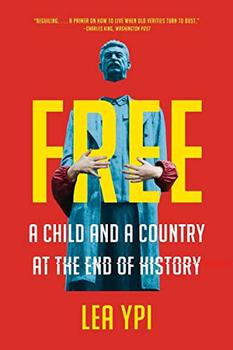
by Lea Ypi
Published 2022
A reflection on "freedom" in a dramatic, beautifully written memoir of the end of Communism in the Balkans. Longlisted for the 2021 Baillie Gifford Prize for Non-Fiction.
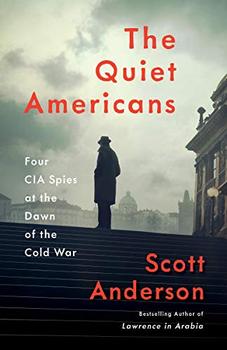
by Scott Anderson
Published 2021
From the bestselling author of Lawrence in Arabia, a gripping history of the early years of the Cold War, the CIA's covert battles against communism, and the tragic consequences which still affect America and the world today.
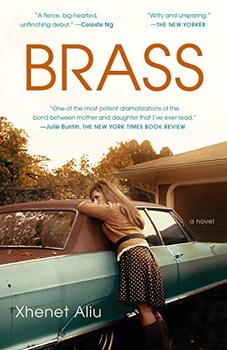
by Xhenet Aliu
Published 2019
Told in equally gripping parallel narratives with biting wit and grace, Brass announces a fearless new voice with a timely, tender, and quintessentially American story.

L.A. Women by Ella Berman
Two ambitious writers in 1960s LA face betrayal when one writes a novel based on the other's life.






Your guide toexceptional books
BookBrowse seeks out and recommends the best in contemporary fiction and nonfiction—books that not only engage and entertain but also deepen our understanding of ourselves and the world around us.

