
-
Your next favorite book
is waiting.
Summary | Excerpt | Reviews | Beyond the book | Read-Alikes | Genres & Themes | Author Bio

A Novel
by Madeline Cash Book Reviewed by:
Madeline Cash's debut novel, Lost Lambs, takes place in an unnamed coastal town in an unspecified year, an ambiguous setting that gives the story the twinge of an alternate reality. Against this backdrop, the five members of the Flynn family are navigating distinct but overlapping plotlines. Bud Flynn, the patriarch, has been sleeping in his car since his wife, Catherine, told him she wanted to open up their relationship so she could sleep with the neighbor, claiming it would be good for them. ("I can't imagine how this is a positive step for our marriage," Bud had responded. "Well, a step nonetheless. Maybe a lateral move," Catherine replied.)
Distracted and morose, and never very good at his job anyway—a lazy eye for detail, a tendency to leave early—Bud finds his performance as an accounts manager at Alabaster Harbor plummeting. Fed up, his manager requires him to join a support group: Lost Lambs, run out of the Flynns' former church by Miss Winkle, a homely, heavily involved parishioner. When Miss Winkle inspires in Bud a newfound motivation for working hard—and perhaps a Christian do-gooding spirit—Bud begins to investigate a strange discrepancy in the port logs and brings it to the attention of his manager; and then, when his manager blows him off, escalates it to Alabaster himself, the sinister billionaire owner of the Harbor, and accuses him of corruption and/or illegal activity.
Meanwhile, Bud's three teenage daughters are getting wrapped up in similarly nefarious activity, while simultaneously fretting about being skinny, pretty, and lovable. Seventeen-year-old Abigail has sneaked into a party at Alabaster's mansion and met an older guy named Wes—former military, current mercenary—working security. As they fall in love, Wes learns that Abigail has been invited to a second party hosted by Alabaster—a mysterious one that Wes isn't working—and that she may be in danger. Louise, 15, has an anonymous internet friend who is converting her to Islamic fundamentalism through instant messages and helping her build a bomb to detonate at the Inner Beauty pageant she didn't qualify for. Warning signs go unnoticed by her distracted family, who, for example, ask why she's wearing what the reader assumes to be a burkini to the beach but think nothing of her response:
"This is my bathing suit!" said Louise.
"It covers your head," said Abigail.
"It's so I can enjoy American recreation while remaining modest and deferent to God," said Louise.
Finally, Harper, almost 13, is a genius and rabblerouser and original discoverer of the discrepancy in her father's accounts. She's convinced that Alabaster is spying on the town's citizens through art installations (she's right).
Lost Lambs is irreverent and witty, full of gags and wordplay. When Miss Winkle accidentally sets off a gnat infestation in the church by bringing in an infected orchid, Cash misspells every word that contains "nat" by adding a "g": "extermignation," "intergnational." (Halfway through the book, when the gnats are exterminated, the spelling returns to normal.) In her diary, Abigail writes about the art teacher she dated the previous year that "he's taught me so much about perspective." Miss Winkle's daughter is named Perry.
The setup is funny; the characters feel real and well-developed; the jokes land. Where the book strains credulity is when it reaches outside the domestic sphere. Would Alabaster really invite Abigail to his creepy, illegal party, simply because she's pretty or to further threaten/punish her father for overstepping? When Louise is stopped by TSA because she's on the no-fly list, would she really get off with just a warning? It's a fun ride—and refreshing to read a domestic dramady that expands into new settings and genres—but the world feels a bit cartoonish.
Indeed, Lost Lambs reminded me of nothing so much as an extended episode of The Simpsons (complimentary)—the everywhere-and-nowhere setting; the creepy billionaire whose business employs the town; the exaggerated, comic plotlines that, for all their absurdity, feel like genuine, natural extensions of each character. There is a real critique at the heart of the book—of suburban, American culture; of the corrupt institutions and wealthy figures that poison and manipulate ordinary people—but it seems as though the commentary is in service of the joke, instead of the other way around. There are few real consequences, and the reader gets the sense that everything resets at the end: that the family, slightly misshapen but ultimately unharmed, ends up back at square one, ready for another escapade.
 This review
first ran in the January 14, 2026
issue of BookBrowse Recommends.
This review
first ran in the January 14, 2026
issue of BookBrowse Recommends.

If you liked Lost Lambs, try these:

by Kayla Rae Whitaker
Published 2026
A sweeping novel of one Kentucky family's rise and fall throughout the 1980s—a tragicomic tour de force about love and marriage, parents and children, and the perils of mixing family with business, from the acclaimed author of The Animators.

by Taffy Brodesser-Akner
Published 2025
An exhilarating novel about one American family, the dark moment that shatters their suburban paradise, and the wild legacy of trauma and inheritance, from the New York Times bestselling author of Fleishman Is in Trouble.
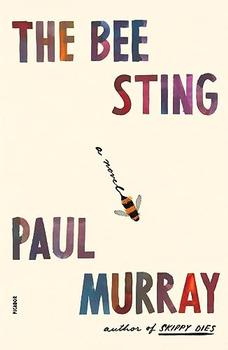
by Paul Murray
Published 2024
From the author of Skippy Dies comes Paul Murray's The Bee Sting, an irresistibly funny, wise, and thought-provoking tour de force about family, fortune, and the struggle to be a good person when the world is falling apart.




There is no worse robber than a bad book.
Click Here to find out who said this, as well as discovering other famous literary quotes!

Can you name the title?
Test your book knowledge with our daily trivia challenge!
Your guide toexceptional books
BookBrowse seeks out and recommends the best in contemporary fiction and nonfiction—books that not only engage and entertain but also deepen our understanding of ourselves and the world around us.
