
-
Your next favorite book
is waiting.
Summary | Excerpt | Reviews | Beyond the Book | Read-Alikes | Genres & Themes | Author Bio

A Novel
by Madeline Cash Book Reviewed by:
This article relates to Lost Lambs

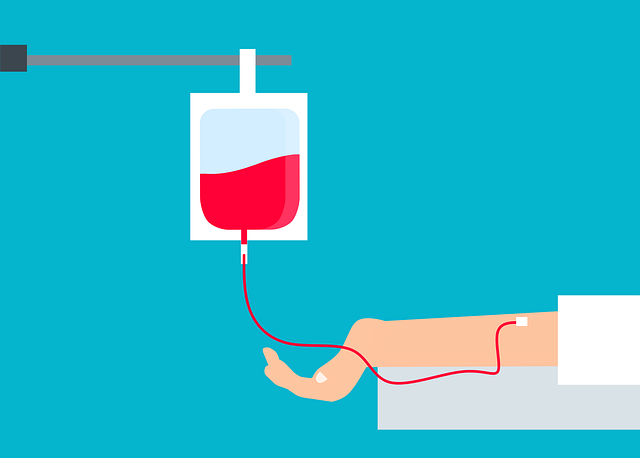 Madeline Cash's debut novel Lost Lambs features a sinister billionaire who has younger people's blood transfused into his body in order to slow or prevent the aging process, a practice known as parabiosis (also a general term for the physiological joining of two organisms) or "young blood transfusion."
Young blood transfusion is practiced in real life by some uber-wealthy, often tech-obsessed individuals who are looking for ways to extend their lifespans or even escape death, though it is far from mainstream, evidence for its effectiveness is scant, and the FDA cautions against it. A 2016 Inc. article about Peter Thiel, the billionaire tech investor (and mega-donor to the Republican Party), discussed his obsession with finding a cure for death and his investment in anti-aging technologies. Thiel was closely monitoring results of studies about parabiosis, which the article states he called "a potential biological Fountain of Youth—the closest thing science has discovered to an anti-aging panacea." At the time, the idea was faddish in tech circles and Silicon Valley; for example, a startup called Ambrosia offered transfusions of young plasma to hundreds of participants who paid $8,000 each, although it has since shut down; and the TV show Silicon Valley parodied the practice with a plotline in which a tech CEO relied on a "blood boy" to follow him around, donating his blood.
More recently, tech entrepreneur and "biohacker" Bryan Johnson has made headlines for the life-extension system Blueprint, which, as of 2023, he had spent more than $4 million developing. According to TIME, with Blueprint, Johnson "outsources every decision involving his body to a team of doctors, who use data to develop a strict health regimen to reduce what Johnson calls his 'biological age'"; in 2023, Johnson was 46 years old but claimed that, according to his doctors, he had the bones of a 30-year-old and the heart of a 37-year-old. One of his methods was young blood transfusions—he received blood from anonymous donors that he personally screened to make sure they were free of diseases, had a healthy lifestyle, and had an "ideal" body mass index. He also received a transfer of plasma from his own son, although Johnson later determined that the plasma didn't have a measurable impact on his aging.
The interest in parabiosis in the past decade seems to have been kickstarted by a 2014 Harvard study in which scientists injected old mice with the plasma of young mice, and found that it improved their memory and cognitive abilities. But blood transfusions have been used throughout history in attempts to improve overall health. One of the first blood transfusions ever recorded was in 1642 for Louis XIII, whose health was flagging at age 41, which according to the Guardian "was intended not only to reinvigorate Louis, but to prolong his life and remove the otherwise incurable disorders from which he was suffering." A young lamb's blood was pumped directly into Louis's vein; he died a few days later.
Blood collection, by Mohamed Hassan via Pixabay
Filed under Medicine, Science and Tech
 This article relates to Lost Lambs.
It first ran in the January 14, 2026
issue of BookBrowse Recommends.
This article relates to Lost Lambs.
It first ran in the January 14, 2026
issue of BookBrowse Recommends.
Theo of Golden by Allen Levi
One spring morning, a stranger arrives in the small southern city of Golden. No one knows where he has come from…or why…






Your guide toexceptional books
BookBrowse seeks out and recommends the best in contemporary fiction and nonfiction—books that not only engage and entertain but also deepen our understanding of ourselves and the world around us.

