
-
Your next favorite book
is waiting.
Summary | Excerpt | Reviews | Beyond the book | Read-Alikes | Genres & Themes | Author Bio

A Novel
by Bryan Washington Book Reviewed by:
Bryan Washington's third novel, Palaver, a finalist for the 2025 National Book Award, begins with a mother lost in Tokyo. She is visiting her son but unable to locate his apartment, so she stops into a bistro to try to contact him. When he arrives to pick her up, their greeting signals that these two do not have a tender or close relationship: the moment he sees her, the son is annoyed and frustrated by the disturbance. As he brings her back to his apartment, a two-minute walk from where he found her, we learn that the mother has flown across the world to visit uninvited and for undisclosed reasons, and that they haven't spoken in years. "The son really wasn't in the habit of keeping in touch, but he'd always answer. At least, at first. Then, one day, he stopped. This was three years ago. He'd been living in Japan for twelve." Over the course of the mother's visit, we piece together their backstories, the reasons for their separation, and the life and community the son has built for himself in exchange for the one he left behind. With black-and-white photographs of the city woven throughout, Palaver offers an immersive view of Tokyo while delving into the theme of parental and child estrangement. It examines how to rediscover someone you once knew, how memory can hinder reconciliation, how new environments can open doors to forgiveness, belonging, and reinvention, and what it means to love the family you're born into and the family you choose.
Narrated in third person, the story follows "the mother" and "the son," who remain unnamed, creating a sense of distance while balancing their perspectives and dynamics. This prevents either from being completely vilified or validated. I found myself neither rooting for one nor the other but instead curious about how they might confront and possibly overcome their past pain. The title reflects their communication struggles as they try to speak honestly about their feelings. The son perceives the mother as uncaring, stemming from her physical abuse of him and her behavior surrounding his sexuality. Conversely, the mother views her son as selfish and difficult, and struggles to accept him for who he is. The son avoids discussing his older brother, who is in prison for selling drugs, resenting his mother for choosing him, which she admits is at least partly true. He finds it hard to reconcile his pride with maintaining a relationship with his family, particularly because of his grievances about how he was treated. Insight into his family life clarifies his departure from Texas and the estrangement that followed. But we learn that he has considered returning home and has hidden unsent letters to his brother in his apartment, showing that the separation hasn't entirely erased his desire for reconnection.
Through the mother's flashbacks, we learn about her childhood in Jamaica and her close bond with her older brother, Stefan, who died of AIDS after she moved away. This adds complexity to her character and suggests her feelings about her son's sexuality are more complicated than standard homophobia. The son remains unaware of these details, noting that she rarely discusses her brother with him—a missed opportunity for connection that reinforces their inability to communicate.
Much of her life has been shaped by others' actions, including the influence and pressure from her best friend and Stefan to leave Jamaica. The mother treats her time in Japan as a unique opportunity to explore and embrace her curiosity while waiting for her son to warm up to her, leading to an unexpected connection with Ben, the owner of the bistro she often visits. While we see her begin to form a community, we also learn about the people in the son's life who have made Japan feel like home to him, from the students he tutors, to his complicated relationship with a married man, to the friendships he's built based on shared identity. These relationships in particular highlight the story's message about the understated value of simply showing up for the people you care about and how that creates a familial bond.
During the last few days of the mother's stay in Japan, the two take a trip to Nara (a city in the Kansai region of Honshu). Several revelations unfold, and both begin to let their guard slip. "In the time they'd spent together, the mother noticed that the son had become less squeamish around her. At first, he'd tuck himself into corners to avoid showing his body. Now, he simply did what he was doing. She wasn't sure how she felt about it." There are humbling realizations that they don't know each other as well as they thought. The son cautions the mother that the walk they are going to take will be uphill. She responds by reminding him of how it is similar to where she grew up, only to realize the son has no idea what she is referring to. "'You've seen where I grew up.' The son blinked at her for a moment. And this is when the mother remembered that he actually hadn't seen it at all. But the son didn't dwell on her oversight."
Their conflict reaches a climax when the mother reveals her motive for coming to see her son, leading to their most honest and direct confrontation yet. It seems like this could backtrack the progress they've made. Over the next few days, they seem to return to barely speaking, back to being unsure of how to decipher each other. "She wondered briefly, if being a good parent meant leaving him to his devices, or asking him how he was doing. Either could've been the right answer. Or neither."
But we see how, by continuing to show up for each other while still in a palaver, they extend olive branches to each other, attempting to forge a new path forward in their relationship. "You still don't get it, said the mother. It doesn't have to look any particular way. We don't have to look any particular way. We just have to try. To figure out what works for us. That's all that matters to me." Palaver showcases the honesty and imperfection of loving the family you are born into and the one you choose, how to build a life that reflects and honors your identity and desire for connection, and the value of showing up for each other even when language fails.
 This review
first ran in the January 14, 2026
issue of BookBrowse Recommends.
This review
first ran in the January 14, 2026
issue of BookBrowse Recommends.

If you liked Palaver, try these:

by Rachel Khong
Published 2025
From the award-winning author of Goodbye, Vitamin: How far would you go to shape your own destiny? An exhilarating novel of American identity that spans three generations in one family and asks: What makes us who we are? And how inevitable are our futures?
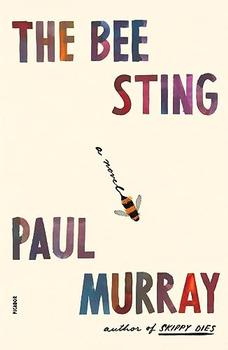
by Paul Murray
Published 2024
From the author of Skippy Dies comes Paul Murray's The Bee Sting, an irresistibly funny, wise, and thought-provoking tour de force about family, fortune, and the struggle to be a good person when the world is falling apart.
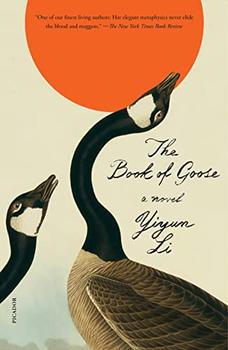
by Yiyun Li
Published 2023
A magnificent, beguiling tale winding from the postwar rural provinces to Paris, from an English boarding school, to the quiet Pennsylvania home where a woman can live without her past, The Book of Goose is a story of disturbing intimacy and obsession, of exploitation and strength of will, by the celebrated author Yiyun Li.
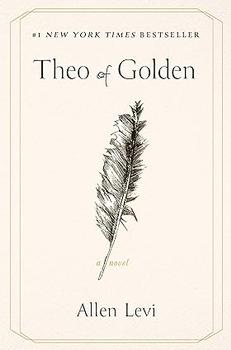
Theo of Golden by Allen Levi
One spring morning, a stranger arrives in the small southern city of Golden. No one knows where he has come from…or why…






Your guide toexceptional books
BookBrowse seeks out and recommends the best in contemporary fiction and nonfiction—books that not only engage and entertain but also deepen our understanding of ourselves and the world around us.

