
-
Your next favorite book
is waiting.
Summary | Excerpt | Reviews | Beyond the book | Read-Alikes | Genres & Themes | Author Bio

 Book Reviewed by:
The main character of As Many Souls as Stars, Natasha Siegel's fantasy debut, is Cybil Harding, born to the cursed family of an English nobleman in the late 1500s. Due to a centuries-old deal with a demon, the Harding family has access to magic, but only the eldest child of each generation inherits the gift. And, furthermore, if that child is a daughter, she also inherits the "curse of Eve" and is perceived to be an evil witch, whether or not she uses the magic at all. When Cybil's father attempts to summon a demon to end this curse, the demon—who most often takes a female form named Miriam Richter—kills him and hopes to feast on Cybil's soul. Cybil rebuffs these attempts, but is eventually pursued and killed by a witchfinder.
But while the book's protagonist does begin as Cybil Harding, her story does not end there. Through the course of the novel, Siegel introduces two more versions of Cybil, reincarnated into descendants of herself in the ensuing centuries. Esther in the Regency period and Rosamund in the 1920s are both born with the task of breaking the family curse before Miriam can find them—and before their time is up and they, like Cybil, die at twenty-three. If they lose this high-stakes game, they will have gambled away their shared, reincarnated soul. The biggest hitch is that each time she is reborn, Cybil and her successors have to start at zero, with absolutely no memories from the lifetime (or lifetimes) before her.
But while you'd think it would behoove Miriam to let the Hardings stumble their way through those twenty-three years before she can demand payment in the form of their bright, strong soul—which she constantly praises for its glow, size, and intensity—she begins to have feelings of lust and maybe even love for each Harding in turn. Cybil, Esther, and Rosamund all have some kind of sexual contact with Miriam, despite Cybil initially feeling that "attraction was a form of obligation, and she had no interest in accruing a debt"; the sexual tension is strong between them throughout the novel, and Siegel emphasizes their physical closeness and attraction in multiple key scenes. And so ensues a playful, charged cat-in-mouse game—while Miriam is ostensibly hunting Cybil/Esther/Rosamund down for her soul, and the Harding in each generation is ostensibly focused on breaking the curse, the characters often become distracted by their desire for one another.
If the main characters aren't exactly likeable, it seems like that may be part of Siegel's point: Cybil/Esther/Rosamund learns over the centuries that endeavoring to be liked is merely a distraction from her soul-saving task; and when it comes to Miriam, it makes sense for a demon not to have a winning personality. None of the secondary characters really stick around, although Esther's half-brother Isaac (who crops up briefly again in Rosamund's storyline) is a shining light among a cast of characters who all seem to drag the Hardings down. There's a repeated theme of men suppressing the Hardings throughout the centuries—first their father, then their cousin—but I found myself rooting for Rosamund's husband, Walt, who has something in common with Cybil/Esther/Rosamund and proves a friend, finally, after centuries of friendlessness that Esther and Rosamund ruminate on frequently.
As Many Souls As Stars feels like an instantly classic story of feminine rage and love, featuring a witch who can't be burned and a nonbinary lesbian demon. (Miriam creates her own physical form by combining the images of a man and a woman, and later appears at a Regency ball in men's clothing, reveling in their genderlessness.) The cyclical nature of the book's timelines makes it stand out among other romantasy books, and the dynamic between the characters will certainly appeal to readers who like toxic tropes and red flags in their romance.
 This review
first ran in the January 14, 2026
issue of BookBrowse Recommends.
This review
first ran in the January 14, 2026
issue of BookBrowse Recommends.

If you liked As Many Souls as Stars, try these:
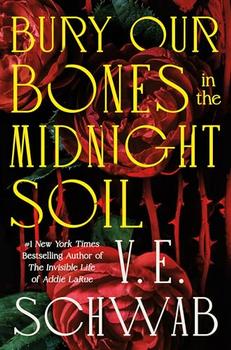
Bury Our Bones in the Midnight Soil
by Victoria E. Schwab
Published 2026
From V. E. Schwab, the #1 New York Times bestselling author of The Invisible Life of Addie LaRue: a new genre-defying novel about immortality and hunger.

by Leigh Bardugo
Published 2025
From the #1 New York Times bestselling author Leigh Bardugo comes a spellbinding novel set in the Spanish Golden Age.
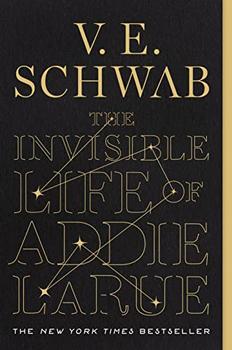
The Invisible Life of Addie LaRue
by Victoria E. Schwab
Published 2023
Winner of the 2020 BookBrowse Fiction Award
In the vein of The Time Traveler's Wife and Life After Life, The Invisible Life of Addie LaRue is New York Times bestselling author V. E. Schwab's genre-defying tour de force.
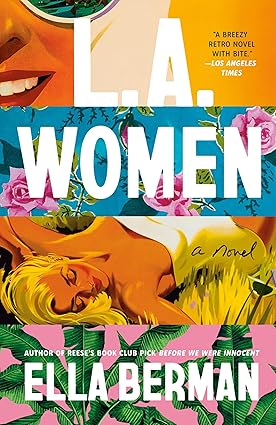
L.A. Women by Ella Berman
Two ambitious writers in 1960s LA face betrayal when one writes a novel based on the other's life.

Your guide toexceptional books
BookBrowse seeks out and recommends the best in contemporary fiction and nonfiction—books that not only engage and entertain but also deepen our understanding of ourselves and the world around us.

