
-
Your next favorite book
is waiting.
Summary | Excerpt | Reading Guide | Reviews | Beyond the book | Read-Alikes | Genres & Themes | Author Bio

A Novel
by Virginia Evans Book Reviewed by:
Virginia Evans' debut, The Correspondent, is an epistolary novel that revolves around Sybil Van Antwerp, a lifelong letter-writer who is 73 when the book opens in 2012. We're first introduced to Sybil through a letter she's written to her brother Felix; from this letter and those that follow, we learn that both she and Felix were adopted, that she's divorced with two adult children (a third died many years ago when he was just eight years old), that she's retired from her profession as a law clerk, that she loves gardening and literature, and that she's gradually going blind. The novel unfolds over the next nine years, and we follow Sybil through the letters she writes and receives from others as she experiences the ups and downs of aging.
The plot of The Correspondent consists of many small narrative arcs that play out simultaneously. There's one that concerns Sybil's budding love life, and another that centers around drama at her garden club. She receives a DNA test as a Christmas present, which sparks both a very funny set of emails with a customer service representative and a more serious plotline about what she learns from the results. There are storylines about her physical decline as she ages, and about her relationship with an autistic boy whom she shepherds into adulthood. Sybil writes to and receives communication from over twenty different people over the course of the novel, and each correspondence tells its own story—although these stories often overlap, as Sybil shares with some people the things she's learned from others.
The nature of epistolary novels is such that we only see fragments of someone's life—quick glimpses into their day and their concerns of that moment—but, when executed well, those fragments add up to a fully developed character. To say that Evans has successfully created a fully formed character in Sybil is an understatement: Sybil has so much depth that it's almost hard to believe she's not a real person.
We gain an understanding of Sybil not only through her words but through the different tones she uses to address her correspondents. Her first letters to Mick Watts, a retired attorney who wants to date her, border on hostile. She's given a eulogy at a funeral that they both attended, and in an attempt to compliment her afterwards, he writes, "It's a wonderfully amusing thing when a woman can deliver a good punch line and keep a straight face." She responds, "A good punch line is a good punch line regardless if delivered by a man or a woman. You sound like an old fool with comments like that one." (Ouch!) But he isn't dissuaded, and her responses gradually become less harsh as she warms to a potential romance with him. Her tenor is encouraging when writing to her younger pen-pals, imperious to the members of her garden committee, confessional with others. In all cases, she maintains a brutal honesty that often makes her come across as somewhat cantankerous.
We learn other things about her, too: She's determined to get her way, which we discover through her persistent communication with a college dean to whom she demands to be allowed to audit classes. She has zero understanding of technical issues, as evidenced by her clueless emails to the customer service representative. And letters to the author Joan Didion describe the grief she still feels over the death of her son. (Didion likewise lost a child—her daughter, Quintana Roo—and while we don't get to read Joan's letters, it's clear from the context that she writes back often.)
The Correspondent deals with aspects of life as wide-ranging and complex as aging, adoption, grief, and guilt. Sybil's letters address such topics obliquely rather than head on; readers pick up on clues scattered throughout the letters as a detective might, reading between the lines. Sybil never comes out and writes, "I'm getting old," for example. Instead, she mentions to her brother in a two-sentence postscript in her first letter that she's wrecked her car, and it comes clear that this is due to failing eyesight; in a later letter, she describes how she fell and broke her wrist.
The novel's form makes it a natural page-turner; with its short letters—most just a paragraph or two—and compelling protagonist, a reader may easily find herself thinking, "Well, just one more…" The Correspondent was voted by BookBrowse members as their favorite book of 2025, and it's easy to see why: its engaging heroine, masterful execution, and thematic complexity make it an exceptionally memorable read and a delightful novel to discuss with a group.
 This review
first ran in the December 10, 2025
issue of BookBrowse Recommends.
This review
first ran in the December 10, 2025
issue of BookBrowse Recommends.

If you liked The Correspondent, try these:

The Love Elixir of Augusta Stern
by Lynda Cohen Loigman
Published 2025
It's never too late for new beginnings.
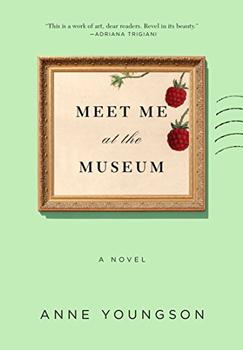
by Anne Youngson
Published 2019
Anne Youngson's Meet Me at the Museum is a celebration of long letters, kindred spirits, and the possibility of writing a new story for yourself, at any stage of life.
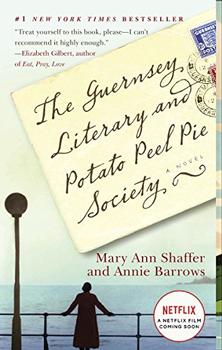
The Guernsey Literary and Potato Peel Pie Society
by Mary Ann Shaffer, Annie Barrows
Published 2009
Written with warmth and humor as a series of letters, this novel is a celebration of the written word in all its guises, and of finding connection in the most surprising ways.
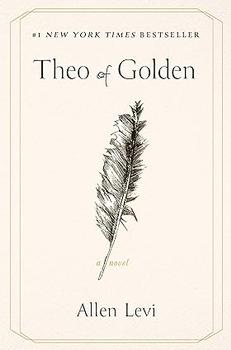
Theo of Golden by Allen Levi
One spring morning, a stranger arrives in the small southern city of Golden. No one knows where he has come from…or why…




Your guide toexceptional books
BookBrowse seeks out and recommends the best in contemporary fiction and nonfiction—books that not only engage and entertain but also deepen our understanding of ourselves and the world around us.

