
-
Your next favorite book
is waiting.
Summary | Excerpt | Reviews | Beyond the book | Read-Alikes | Genres & Themes | Author Bio

A Novel
by Quan Barry Book Reviewed by:
I first encountered the writer Quan Barry via her 2020 novel, We Ride Upon Sticks, about a high school field hockey team that's also a coven of teen witches. Since then, I've come to appreciate her truly impressive range. She's written historical fiction, several collections of poetry, a postapocalyptic novella based on the myth of Pandora…and now an inventive work of literary horror, set at the literal ends of the earth.
It's the Christmas season, in other words, the peak of midsummer in the southern hemisphere, making it the perfect time for a luxury excursion to Antarctica, where a group of privileged, largely white ecotourists are eager to see one of Earth's last unspoiled spots before it disappears forever. An outlier in the group in more ways than one is Veronique, known as Striker, a forty-year-old Black woman who's on this trip for professional reasons. She's a location scout for a film production company, tasked with convincing the powers that be that their planned biopic of Ernest Shackleton really needs to be filmed on location in Antarctica, not "in a water tank on a soundstage in Burbank."
Striker, who, along with her older sister, was raised by adoptive white parents in a largely white (and ominously unfriendly) neighborhood, and who works in a white-dominated industry, is no stranger to being the only Black person in any given space. She maintains her equilibrium by making up nicknames and fictional backstories for her fellow passengers: the elderly Baron and his wife la Grande Dame; corn-fed Billy Bob, his wife Bobbi Sue, and their two kids; the Tech Titan and her fawning husband; and creepy kid Lucy, who has three dads and a pet rat. She's also struck up a steamy (literally—there's a sauna encounter) shipboard romance with Percy, one of their guides.
But what starts off as a fairly straightforward (if slightly off-kilter) novel of adventure and the foibles of the rich takes a very different turn when a freak accident kills Percy, separates the rest of the passengers from their ship and each other, and maroons several of them on an island filled with dark and unexplainable secrets. Everyone's hiding secrets—including Striker—and their distrust of each other is compounded by the sense of supernatural…something...watching their every move.
Adding to the inherent unease in this isolated setting are the storytelling techniques Barry uses, crafted to maximize the reader's disorientation. Sections of the text appear to be redacted, or are set in angle brackets—readers soon learn that Striker (who confesses that her greatest fear is losing her mind) has a tendency to lose awareness of her surroundings for periods of time, a phenomenon she calls becoming "Dark Striker." While she's stranded on the island, these Dark Striker episodes are accompanied by vivid visions of the past, of a different polar expedition gone horribly awry, devolving into violence and madness. These narrative lacunae intentionally leave the reader to fill in the gaps, growing increasingly unmoored from a rational understanding of the situation even as the sense of dread continues to mount.
This isn't just a straightforward horror novel, however; the nearly oppressive whiteness of the polar landscape serves as a potent visual metaphor for Striker's feeling of being stranded in a menacing interpersonal environment of alienation and otherness, ameliorated only by Billy Bob and Bobbi Sue's teenager, who comes out as nonbinary and proves an unlikely ally in the wake of what Striker perceives as hostile surroundings. This incorporation of issues of race and privilege ratchet up the narrative's heft—but it's worth noting that the novel also has moments of both broad and satirical humor (a gross-out scene in which the assembled company resorts to eating penguin eggs is a standout) as well as of great beauty, as Striker's filmmaker's eye picks up on all the fleeting beauty that surrounds the looming horror: "the ice reminded Striker of summer clouds. The way each piece slowly revealed its true self to the eye of the beholder—that one a horse, that one a barn, that one a man in a rowboat lost and desperate on the Southern Sea." Once again, Quan Barry has demonstrated her range and adeptness at an unexpected new genre—readers will be eager to see what she tackles next.
 This review
first ran in the November 19, 2025
issue of BookBrowse Recommends.
This review
first ran in the November 19, 2025
issue of BookBrowse Recommends.

If you liked The Unveiling, try these:

by Silvia Moreno-Garcia
Published 2026
Three women in three different eras encounter danger and witchcraft in this eerie multigenerational horror saga from the New York Times bestselling author of Mexican Gothic.
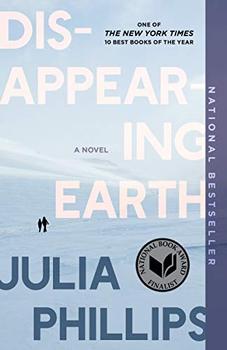
by Julia Phillips
Published 2020
Spellbinding, moving - evoking a fascinating region on the other side of the world - this suspenseful and haunting story announces the debut of a profoundly gifted writer.
by Mat Johnson
Published 2012
A comic journey into the ultimate land of whiteness by an unlikely band of African American adventurers

L.A. Women by Ella Berman
Two ambitious writers in 1960s LA face betrayal when one writes a novel based on the other's life.




Your guide toexceptional books
BookBrowse seeks out and recommends the best in contemporary fiction and nonfiction—books that not only engage and entertain but also deepen our understanding of ourselves and the world around us.

