
-
Your next favorite book
is waiting.
Summary | Excerpt | Reviews | Beyond the book | Read-Alikes | Genres & Themes | Author Bio

A Novel
by Ling Ma Book Reviewed by:
Ling Ma's Severance feels both like a novel of a particular time and one that hasn't aged at all. It was published in 2018, while the main events of the book are understood to mostly take place around 2011, in a world where a pandemic infects humanity with a transformative virus. Looking back, the period during which the book is set now seems like an era when American society was at a peak of naive unsustainability, and the point of its publication seems to mark the beginning of a societal fracturing that was just becoming visible on a large scale. Ma's novel is uncannily prescient and continually relevant, not only because of its fictional pandemic that echoes our later real-life one, but because of how its portrayal of a sudden, literal, physical breakdown of society echoes our slow, ongoing one.
In Severance, a virus called Shen Fever sweeps the globe. Infected humans become stuck in a loop, repeating familiar actions seemingly unconsciously before they die. In the meantime, the main character, Candace Chen, continues showing up for work at her job in New York, in the Bibles division of a publishing company, after all of her colleagues have succumbed to infection or left. Eventually, she joins up with a group of survivors who roam what remains of the country, looking to establish a future. Candace's experiences in the survivor group echo the office culture of her erstwhile existence, making it seem like she has fled one cult for another. The insufferable leader, Bob, asks her if she thinks the group is a good fit for her, as if she might have other prospects—an absurd question to ask in the midst of an all-out apocalypse but not much less absurd in its typical context, where a person's survival often depends on a paycheck and the assumption of luxury of choice is theater.
While this setup evokes satire, the story is inundated with Candace's beautiful, resonant reflections—on her move to New York after college, her relationship with her boyfriend Jonathan (whose child she is now carrying, unbeknownst to him), her work travels to Shenzhen, her fragmented connections with her parents (both dead before Shen Fever), her reconstructed narratives of their lives as immigrants from China, her childhood in Salt Lake City and Fuzhou. These pieces serve the purpose of backstory but also have the quality of a calm, eternal, rotating present. Details feel charged, loaded with subtle meaning, perhaps on the verge of explaining something—or, on the contrary, suffused with an exhilarating lack of meaning because whatever they could have explained is long gone. The multi-timeline structure of the story informs its exploration of time and memory, which are both devices and themes (see Beyond the Book).
Meanwhile, Candace's life with the survivor group is menacing. If Bob is a bumbling leader made ignorant by his own privilege and the deference of others, he is still dangerous in a world destroyed by Shen Fever and was no doubt just as dangerous in the world before that. The difference being that while Bob was clearly wealthy pre-pandemic, which probably gave him certain advantages that he could imagine spoke to his capabilities, here he has no actual authority, so he has to coast on a limited supply of unearned confidence, maybe hoping to establish a foothold as a real leader with the other survivors before it runs out.
Candace and Jonathan's relationship, tender and caring but fraught with communication problems, is a gentle thread running through the novel. The first chapter begins with Jonathan's declaration that he is leaving New York on a friend's boat. While he asks her to come with him, Candace is understandably hurt by his deciding without consulting her, putting his own choices ahead of their relationship rather than acting as if they are partners. But when Jonathan sees Shen Fever as a real threat, and tries to persuade her to leave with him for reasons of safety, the reader, already knowing what's going to happen, is forced to see Candace's decision to stay at her job in the city not just as a legitimate personal decision but also as lacking the practicality she thinks it represents. Candace, who wants stability for herself and her unborn child, doesn't understand that the rules of the game she is used to playing, the definition of security and insecurity, of what is valuable, have already changed. She doesn't understand because what she would have to understand is unimaginable. And even after the world around her has virtually stopped, and she no longer needs to imagine, she doesn't quite know how to absorb this or what to do. The point isn't that she should have left with Jonathan, either, rather that her basis for decision making has collapsed—we have no idea whether she would have been better or worse off with him and neither does she.
As people today continue to live and work in a real-life pandemic at a time of slow societal breakdown, it's worth considering what has already changed and what is already gone. And what was gone long ago. Many people are seeking answers to explain a country dealing in widespread systemic abuse, and it may be tempting to look reflexively to liberal authority, to the Bobs who have been failing us for long before Covid and have fewer answers than anyone, in a cycle that seems reminiscent of the looping actions of the "fevered" in Ma's novel. If the Obama era was a time when some clung fervently to the belief that humans could fix an exploitative, extractive world with what passes for representative democracy, many others understood a long time ago, were forced to understand, that the idea of progress itself was built on a flawed premise. So what now? Severance seems to ask that question about its time of publication, the real-life elements it borrows, and the story it creates, and it may as well be asking it of our current moment, which is arguably just as surreal and evolving as the world Candace inhabits.
That being said, the primary power of Ma's novel is not in its rendering of a simple metaphor for modern society, but in its sensitivity to how humans exist in that society, which makes any symbolic gesture feel organic, incidental, as if surrounding the reader like a warm ocean wave. Its storytelling ultimately captures not a cynical or admonishing view of modern America (or China), but a loving look at people crouched in the nooks and crannies of capitalism and pop culture, ensconced in their weakening spells. Candace reflects on her father's fondness for KFC and British New Wave; on how her mother, homesick for Fuzhou in Salt Lake City, took comfort in "department stores, supermarkets, wholesale clubs, superstores, places of unparalleled abundance." Severance explores how people's lives conform to what they can have, how what is forced upon us may become what is ours, and how that makes it so hard to build a new life, which must, by necessity, include some of the old. "To live in a city is to take part in and to propagate its impossible systems," Candace muses towards the end of the book. "To wake up. To go to work in the morning. It is also to take pleasure in those systems because, otherwise, who could repeat the same routines, year in, year out?"
 This review
first ran in the November 5, 2025
issue of BookBrowse Recommends.
This review
first ran in the November 5, 2025
issue of BookBrowse Recommends.

If you liked Severance, try these:

by Laila Lalami
Published 2026
READ WITH JENNA BOOK CLUB PICK AS FEATURED ON TODAY ● From Laila Lalami—the Pulitzer Prize and National Book Award finalist and a "maestra of literary fiction" (NPR)—comes a riveting and utterly original novel about one woman's fight for freedom, set in a near future where even dreams are under surveillance.

by Ruben Reyes
Published 2025
From the author of There Is a Rio Grande in Heaven, a piercing debut novel following two families in alternative timelines of the Salvadoran civil war—a stunning exploration of the mechanisms of fate, the gravity of the past, and the endurance of love.
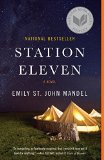
by Emily St. John Mandel
Published 2015
An audacious, darkly glittering novel set in the eerie days of civilization's collapse, Station Eleven tells the spellbinding story of a Hollywood star, his would-be savior, and a nomadic group of actors roaming the scattered outposts of the Great Lakes region, risking everything for art and humanity.
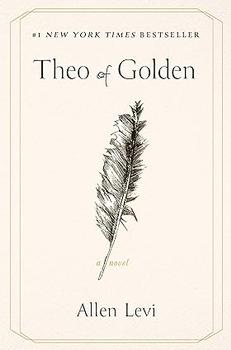
Theo of Golden by Allen Levi
One spring morning, a stranger arrives in the small southern city of Golden. No one knows where he has come from…or why…






Your guide toexceptional books
BookBrowse seeks out and recommends the best in contemporary fiction and nonfiction—books that not only engage and entertain but also deepen our understanding of ourselves and the world around us.

