
-
Your next favorite book
is waiting.
Summary | Excerpt | Reviews | Beyond the book | Read-Alikes | Genres & Themes | Author Bio

 Book Reviewed by:
Six years have passed since a deadly fungal infection wiped out the entire female population. In the aftermath, a group of men have banded together in a secluded, rural community, awaiting the inevitable end of humanity. Nathan, our narrator, is the group's resident storyteller; his role is to preserve the memories of the women they have lost: beloved mothers, wives, sisters, and daughters. Everything changes, however, with the emergence of a strange new species—sentient, mushroom-like humanoid beings that grow from the bodies of the dead. The men name these creatures The Beauty.
The group's doctor declares that the "mark of humanity is how it treats the world and those who share it with us," which quickly proves to be the crux of the novel. While some are repulsed by its presence, others welcome The Beauty as a source of hope and comfort, and the group is soon divided into two camps: those who see The Beauty as a painful reminder of the loved ones they have lost, and those who see coexistence with The Beauty as the necessary next step in human evolution. As tensions grow and violence threatens to erupt, how the men choose to interact with The Beauty—and each other—will ultimately define what it means to be human and what future, if any, could lie ahead.
The Beauty is a compact, swiftly paced novella, and author Aliya Whiteley strikes a delicate balance between multiple genres: the novel has the assured prose and thematic depth of literary fiction, the darkly compelling shock value of body horror, and the unnervingly plausible setting of dystopian science fiction. It was published in 2014, and I first read it shortly thereafter. It felt bold and defiant, with haunting imagery that has stuck with me ever since. More than ten years later, after a decade of changing societal expectations and conversations around gender dynamics and identities, I felt compelled to the revisit the story to see if it held up. In short, it absolutely does. In the midst of a recent global viral pandemic; the worsening climate crisis; and the rise of transphobia, homophobia, and misogyny, The Beauty feels just as relevant to our society now as it did in 2014—perhaps even more so. As the novel progresses and some men accept a bodily change brought on by interaction with The Beauty, the line between genders blurs, and the book becomes an allegory for the need to view sex and gender as more fluid states of being if we are to progress and learn to live in greater harmony with the natural world. (If the novel feels limited or dated in its vision, it is perhaps in its initial conception of its dystopia: for example, all the men are straight, with gay relationships only referenced as a means of seeking physical comfort in the absence of women; and trans women, who might need to navigate this world along with cisgendered men, are not mentioned. But Whiteley is clearly not afraid to think radically about gender and sexuality in other ways.)
As a final layer, the book is also an ode to the power of storytelling (see Beyond the Book). Nathan uses his skill as a storyteller to mythologize the past and honor those claimed by the disease, including his own mother. He also sees it as his duty to make sense of the present and provide hope for the future, a human need to bring order to chaos in order to face what would otherwise seem impossible. "Today the world moves on, and I must find new ways to turn the truth into stories," Nathan says.
As beautiful as it is disturbing, The Beauty is a provocative sucker-punch read. Like the titular creatures themselves, it may prove divisive, but it is guaranteed to spark deeper thought about the legacy we want to leave behind.
 This review
first ran in the November 5, 2025
issue of BookBrowse Recommends.
This review
first ran in the November 5, 2025
issue of BookBrowse Recommends.

If you liked The Beauty, try these:

by Jeff VanderMeer
Published 2025
The surprise fourth volume in Jeff VanderMeer's Southern Reach series―and the final word on one of the most provocative and popular speculative fiction series of our time.

by Sandra Newman
Published 2024
An imaginative, feminist, and brilliantly relevant-to-today retelling of Orwell's 1984, from the point of view of Winston Smith's lover, Julia, by critically acclaimed novelist Sandra Newman.
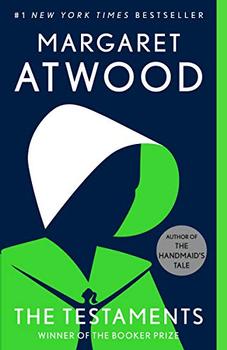
by Margaret Atwood
Published 2020
In this brilliant sequel to The Handmaid's Tale, acclaimed author Margaret Atwood answers the questions that have tantalized readers for decades.




The worst thing about reading new books...
Click Here to find out who said this, as well as discovering other famous literary quotes!

Can you name the title?
Test your book knowledge with our daily trivia challenge!
Your guide toexceptional books
BookBrowse seeks out and recommends the best in contemporary fiction and nonfiction—books that not only engage and entertain but also deepen our understanding of ourselves and the world around us.
