
-
Your next favorite book
is waiting.
Summary | Excerpt | Reviews | Beyond the book | Read-Alikes | Genres & Themes | Author Bio

 Book Reviewed by:
Some novels hit a bit close to home for readers. I, for one, found myself wincing in recognition several times while reading Vincenzo Latronico's Perfection. This novel, which was based on Georges Perec's 1965 novel Things: A Story of the Sixties (see Beyond the Book), was originally published in Italian in 2022, and the 2025 English translation by Sophia Hughes was nominated for the National Book Award for translated literature and shortlisted for the 2025 International Booker Prize.
Latronico is interested in a specific generation of the digital age, the last group to "still remember paper maps and landlines" but introduced to technology early enough in their teens to have embraced it with great enthusiasm, particularly those who are now working as creative professionals and embracing a fully digital lifestyle. His protagonists are Anna and Tom, European expats in Berlin who work online as graphic designers.
Latronico skewers the contemporary millennial obsession with the curated lifestyle. Perfection's focus on a certain kind of digital nomad felt accurate to this American reader living in southern Spain, especially in terms of the complex entry into a different cultural environment and the relentless pull of the next new thing.
The novel opens with a description of online photos. In the expat couple's Berlin rental apartment, we find wide honey-colored floorboards and monstera plants; books piled everywhere, sunlight streaming in; mason jars of rice, grains, spices, and coffee; cast-iron pans; and the kitchen's marble-topped pastry-table with salvaged school chairs. Ouch. Looking up from my book, I recognized the signs of the times all over my own rental house: Mason jars on open shelving, check; monstera plants, check; piles of books, yes; marble-topped table, umm…yup. Cringe.
But, hey, what's not to like? "The life promised by these images is clear and purposeful, uncomplicated. It is a life of coffees taken out on the east-facing balcony in the spring and summer while scrolling New York Times headlines and social media on a tablet." As the focus of the novel pulls out, we learn that Anna and Tom's life all too often falls short of the paradise projected onto their social media accounts and sublet ads. That gorgeous apartment? It's actually dusty and impractical. Between the drafty windows and the ancient radiators, the place is often damp, freezing, and uncomfortable. Tom and Anna are perpetually overwhelmed by organizing the many objects with which they've surrounded themselves. It is not just order that they crave, but some kind of identity. "The environment where they slept and worked, and which they themselves had chosen and shaped, was the one tangible manifestation of who they were."
Like so many digital nomads, Anna and Tom live most of their lives online. When they are not perfecting images for clients, they are creating their own carefully constructed posts. When out on the town, they move in loose groups of people their own age, mostly "French, Polish, Portuguese, sometimes Israeli or Belgian, occasionally American, but almost never German"; like schools of fish, they drift from art openings to cafes to shared late-night meals of takeaway sushi or falafel. They are drawn to trendy political causes, but their interest is fleeting and largely performative. They are fundamentally insular, unaware of the wider geography of their adopted city except within a small oft-trodden parameter, and most are not fully fluent in German.
Oh, squirm!
Yet I realize that I am not the only reader to see myself uncomfortably reflected in this novel. This may in part have to do with Latronico's technique of referring to his characters as a unit. Tom and Anna are never described or separated as individuated subjects, usually referred to by the collective pronoun "they." Somehow, the expansiveness of that collective plural subject ends up enveloping the reader.
Eventually, Anna and Tom find themselves increasingly isolated, as their life grows monotonous and stagnant while their friends grow up, move on, have children, change direction. Latronico pulls the curtain back to show how years of living this kind of skittering-along-the-surface existence can lead to deep dissatisfaction and ennui. The couple decides to try their luck in other alluring locations, so they leave Berlin to spend several months in Portugal and Italy. But can new environments change ingrained habits? Or do they seek instead nothing more than distraction? As the Booker judges stated: "Perfection alters the reader, traps them, revolts them, intrigues them, and ultimately moves them to ask serious questions about themselves." I won't spoil the surprising ending. It doesn't matter: The power in this book lies in its ability to draw the reader into uncomfortable sympathy with this couple who are continually drawn into the gleam of the pretty things that surround them rather than spending a moment reflecting on who are and who they one day hope to be.
 This review
first ran in the November 5, 2025
issue of BookBrowse Recommends.
This review
first ran in the November 5, 2025
issue of BookBrowse Recommends.

If you liked Perfection, try these:
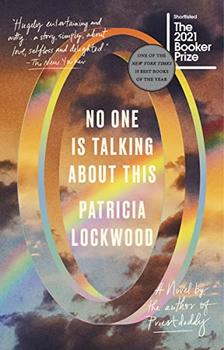
by Patricia Lockwood
Published 2022
From "a formidably gifted writer" (the New York Times Book Review), a book that asks: Is there life after the internet?
by Siri Hustvedt
Published 2014
A brilliant, provocative novel about an artist who, after years of being ignored by the art world, conducts an experiment: she conceals her female identity behind three male fronts.
by Gary Shteyngart
Published 2010
A hilarious and heartfelt new novel, a deliciously dark tale of America’s dysfunctional coming years—and the timeless and tender feelings that just might bring us back from the brink.
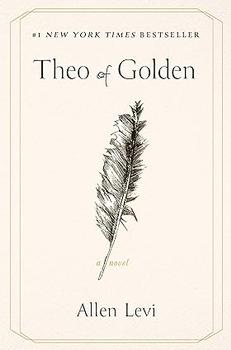
Theo of Golden by Allen Levi
One spring morning, a stranger arrives in the small southern city of Golden. No one knows where he has come from…or why…






Your guide toexceptional books
BookBrowse seeks out and recommends the best in contemporary fiction and nonfiction—books that not only engage and entertain but also deepen our understanding of ourselves and the world around us.

