
-
Your next favorite book
is waiting.
Summary | Excerpt | Reviews | Beyond the Book | Read-Alikes | Genres & Themes | Author Bio

 Book Reviewed by:
This article relates to Perfection

In 2020, in the midst of the COVID-19 pandemic lockdowns, the Italian fiction writer Vincenzo Latronico was mulling over the role that media plays in contemporary life. He had looked at Instagram one day and noticed that several ideas that he had believed he had come up with himself spontaneously appeared on other people's Instagram feeds. This surprised him, reminding him of the mysterious ways that ideas travel.
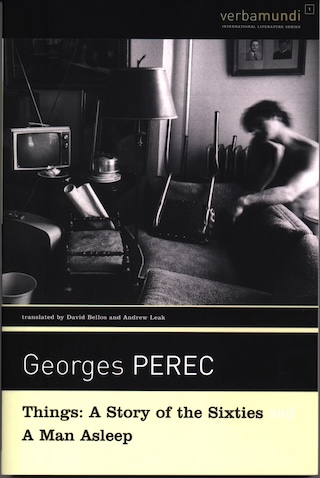 According to Latronico, he had long been interested in writing something "set at the intersection between our physical and digital lives," but had not been sure how to frame it until he read a short novel by the French writer Georges Perec, called Things: A Story of the Sixties. The book was about a young French couple who are constantly flooded by desire for objects that they cannot afford.
In that novel, which was translated into English by David Bellos, Perec relates the story of Jérôme and Sylvie solely through the outside in, by describing only their relationship to objects, those that they have and those that they yearn for. With this experimental approach, Perec avoids using any of the traditional narrative tools of fiction, such as dialogue or internal thoughts. In his introduction to the English translation of Things, Bellos explains that Perec approached the novel in somewhat of a philosophical manner. He was interested in how in the postwar rise of consumer culture in France, the language of advertising and manufactured desire was affecting the lives of citizens. Many readers saw the book as a sharp denunciation of capitalism, but Perec always claimed that his primary interest was to explore his own particular social world. The book became popular and was translated into a number of European languages.
Latronico recognized that his own millennial generation was at a similar crossroads as Perec's. But while Perec's generation witnessed the explosion of consumer culture through television and magazines, and the changed, charged new language of commodity and consumption that simultaneously entered the vernacular, Latronico saw that he was a member of the first generation to be born into an analog world and see it radically transformed through the changes brought on by digital media. These two revolutionary moments in time shared the impact of introducing an entirely new way for society to perceive reality.
According to Latronico, in Perfection he initially set out to rewrite and update Things paragraph by paragraph. His first chapter reflects this early plan. Both books open with descriptions of beautiful apartments that contain attractive knickknacks, records, and books, but while the Berlin apartment in Perfection is all plank floors and boho-eclectic furniture, with sunlight, books, and open shelving, Perec's Paris apartment is carpeted and elegant with black leather sofas and cherrywood bookshelves, brass and oak. The fashions of the day are clearly reflected.
Latronico reports that the books' plot parallels loosened over the course of writing Perfection, but he kept Perec's set of rules. This is reminiscent of the Dogma 25 filmmakers who have recently updated the 30-year-old Dogma 95 manifesto, which contains a set of rules written by the Danish filmmakers Lars Van Trier and Thomas Vinterberg. Like Latronico, the Dogma 25 group had to grapple with the different demands of a contemporary digital world. Similarly, Latronico has moved away from some plot parallels, but has carefully retained the basics of Perec's structural rules. Like Perec, Latronico uses description as the main narrative tool; confines plot to the background while foregrounding what usually is just "setting," and dispassionately chronicles inner lives as if they were items in a product catalog.
By taking on this "outside in" approach, Latronico, like Perec, successfully conveys a world of surfaces, of curation and desire. Ultimately, Latronico seems to understand that by mirroring the narrative structure of Things, he is bringing the two novels into alignment. As he notes, "ultimately I understood both novels deal with a revolution in media, to tell the story of the last generation to come of age before the divide: making them overeager early-adopters, lost in a landscape they didn't grow up in."
Filed under Books and Authors
 This article relates to Perfection.
It first ran in the November 5, 2025
issue of BookBrowse Recommends.
This article relates to Perfection.
It first ran in the November 5, 2025
issue of BookBrowse Recommends.
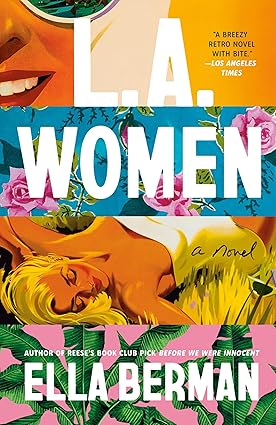
L.A. Women by Ella Berman
Two ambitious writers in 1960s LA face betrayal when one writes a novel based on the other's life.




Your guide toexceptional books
BookBrowse seeks out and recommends the best in contemporary fiction and nonfiction—books that not only engage and entertain but also deepen our understanding of ourselves and the world around us.

