
-
Your next favorite book
is waiting.
Summary | Excerpt | Reading Guide | Reviews | Beyond the book | Read-Alikes | Genres & Themes | Author Bio

A Novel
by Jade Chang Book Reviewed by:
Lola doesn't set out to start a cult. Following the death of her best friend, Alex, in a skateboarding stunt gone wrong, she's barely functioning, let alone scheming. But when someone splices together a video of Alex with a voiceover of Lola imitating a scammy guru during a party game, her deliberately cliched words get misinterpreted as an earnest meditation on grief. Suddenly, tens of thousands of people are following her on Instagram, and she's getting invitations to present her teachings at events. She could admit the error and fade back into obscurity—instead, she capitalizes on it. But when people start getting tattoos of her words, she starts to feel guilty—and simultaneously worried that she's falling for her own hype.
As a Chinese American woman, Lola's success is buoyed by the exoticization and glorification of Eastern spirituality. She didn't grow up in a particularly spiritual home, but after years of facing racism, and in her position as a broke freelance researcher, she's not about to turn down the chance to take rich white people's money. So she leads groups through "moon gazing" events where she explains Chinese mythology about the moon (see Beyond the Book) as if it was a key part of her childhood. When she is mistaken for the daughter of a famous Chinese spiritual teacher because of her last name, she doesn't correct people.
Neither of Lola's parents is actually a renowned sage. She's never met her father, and her mother left her in LA to be raised by a friend when she was nine. They used to speak by phone until Lola, as a teenager, decided she didn't want to anymore, and her mother, complying, fell off the map. Now they're completely estranged. Lola is self-aware enough to know she has abandonment issues, but detached enough from her innermost feelings to try to turn them into a joke. After her mother left, her friend group became her family, which compounds the devastation of Alex's death.
The way this book centers Lola's deep feelings of grief keeps it from reading as pure satire, but it is full of deliciously absurd and funny moments. For instance, when she appears on a popular talk show, another guest that day is a young man who went viral for singing his mom's favorite song to her on her deathbed—that song being Christina Aguilera's raunchy hit "Dirty." This is embraced by the audience as a beautiful, touching moment, with only Lola—and the reader—noting the humor. This scene skewers the emotionally manipulative media ecosystem where deeply personal moments get turned into inspirational content for the masses. The audience does not stop to consider the absurdity of the song choice because the outlets sharing the family's story present it as touching. It also shows how Lola has not fully bought into that system. Though her own posts on social media are designed to stir up emotion, she recognizes the hollowness of the audience's reaction and the way they will easily move on to the next heart-wrenching story. We see the skeptical, calculating side of her that her followers don't.
But Lola's role as detached cynic doesn't last. This novel is structured as one calendar year, beginning with Alex's funeral in January, which allows the reader to observe Lola's personal growth. She knows she is inwardly a mess, and not in the faux-vulnerable, wise way she presents online: "It felt like there were three versions of myself moving forward at once: the Lola laid low by grief, the Lola sprinting toward some spiritual pinnacle, and the Lola looking for an outside answer, a person, an emotion, to rescue her from this insular world." And yet, time begins to heal Lola. She realizes she wasn't just scamming her followers—she was also conning herself into thinking she could go through life holding her own feelings and the people around her at a distance. As Lola begins to let herself experience her feelings, she also begins to feel hope. This book is not just a sendup of commodified spirituality—it is also a deeply relatable story about grief and the ways those left behind try to numb their pain.
 This review
first ran in the October 8, 2025
issue of BookBrowse Recommends.
This review
first ran in the October 8, 2025
issue of BookBrowse Recommends.

If you liked What a Time to Be Alive, try these:
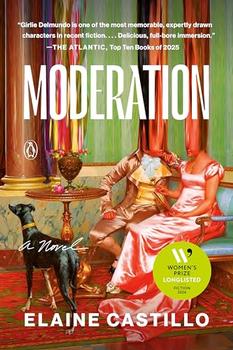
by Elaine Castillo
Published 2026
A bold and inventive novel about real romance in the virtual workplace—bringing Castillo's trademark wit and sharp cultural criticism to an irresistible story about the possible future of love.
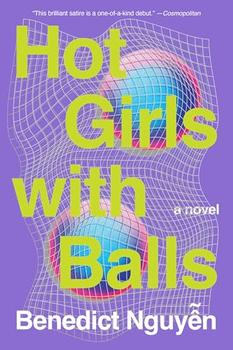
by Benedict Nguyen
Published 2026
In this outrageous and deeply serious satire, two star indoor volleyball players juggle unspoken jealousies in their off-court romance ahead of their rival teams' first rematch in a year.

by Mary H.K. Choi
Published 2026
Bestselling young adult author Mary H.K. Choi debuts a brilliantly observed adult novel about mothers, daughters and the complexity of family set against the backdrop of Hollywood.
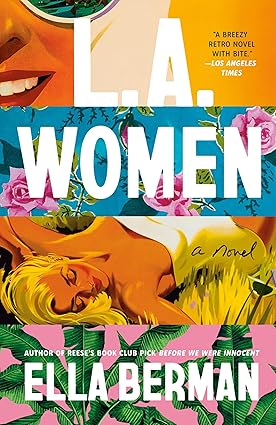
L.A. Women by Ella Berman
Two ambitious writers in 1960s LA face betrayal when one writes a novel based on the other's life.






Your guide toexceptional books
BookBrowse seeks out and recommends the best in contemporary fiction and nonfiction—books that not only engage and entertain but also deepen our understanding of ourselves and the world around us.

