
-
Your next favorite book
is waiting.
Summary | Excerpt | Reading Guide | Reviews | Beyond the Book | Read-Alikes | Genres & Themes | Author Bio

A Novel
by Jade Chang Book Reviewed by:
This article relates to What a Time to Be Alive

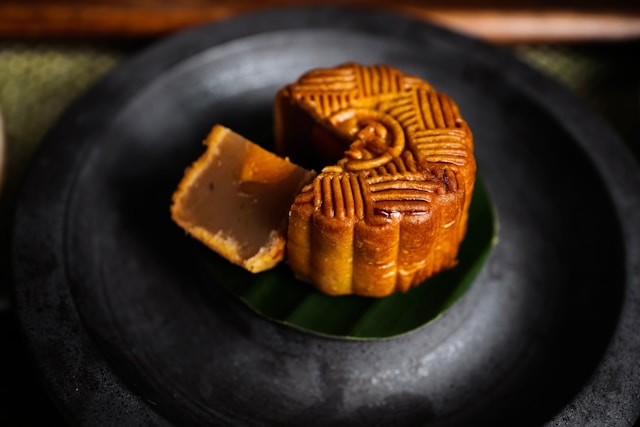 In What a Time to Be Alive, the main character, Lola, starts a spiritual movement. Her signature event is parties focused on looking at the moon through a telescope, where Lola, a Chinese American woman, speaks about the moon's power and symbology. Part of her talk concerns Chinese mythology related to the moon, which is a hit with her primarily white and wealthy audiences, though this myth did not play the large role in her upbringing that she leads them to believe.
The myth Lola shares is that of Chang'e, the Moon Goddess. This story dates back to a divination text from the fifth century BC, and evolved over the centuries as it was retold, often in the form of poetry. Chang'e is a mortal woman who steals an immortality elixir from her husband and ascends to the moon, where she lives for eternity. Different tellings depict Chang'e as having different motivations for taking the potion. In some, she takes it to keep it from being stolen by her husband's apprentice. In others, she takes it to escape from her husband. Chang'e's companion on the moon is a rabbit named Yutu. Japanese, Korean, and Vietnamese folklore also depict a rabbit living on the moon.
In many versions of the myth, Chang'e's husband, Hou Yi, is so distraught by her disappearance that he places her favorite fruits and cakes outside as a sacrifice to her. During China's Mid-Autumn Festival, a harvest festival focused on the moon, people have traditionally made offerings to Chang'e. This festival is celebrated by many in China and the Chinese diaspora. Some still make religious offerings, while for others it is mainly an occasion to spend time with family and give loved ones round pastries called mooncakes.
The Mid-Autumn Festival is not the only way that Chang'e's story lives on. The 2020 animated film Over the Moon is about a young girl who travels to the moon to meet Chang'e. And since 2007, all of China's lunar orbiters and probes have been named Chang'e. Chang'e 3 was the first of them to land on the moon, in 2013. It delivered a rover called Yutu, named after the mythical Chang'e's rabbit.
Like Lola, many people of Chinese descent in the West did not grow up with a strong understanding of Chinese mythology. And now, some are seeking to reclaim it. Blogger Irene Lo writes about researching this myth as a way of embracing her ancestral culture. She says asking her mom about these stories can be difficult because "in asking questions about my ancestral culture, there's always a question I get back, why are you asking? I get the impression, what is the point of talking about it? Is there a use for it, and is it even safe? Assimilation is a bitch." Ultimately, though, Lo writes, "In reflecting upon the cosmic stories that my ancestors shared with each other and created beautiful works of art on, I feel connected to them and inspired to share what l've learned."
Mooncake, traditionally eaten during the Chinese Mid-Autumn festival
Photo by Joe Yu, via Unsplash
Filed under Places, Cultures & Identities
 This article relates to What a Time to Be Alive.
It first ran in the October 8, 2025
issue of BookBrowse Recommends.
This article relates to What a Time to Be Alive.
It first ran in the October 8, 2025
issue of BookBrowse Recommends.

L.A. Women by Ella Berman
Two ambitious writers in 1960s LA face betrayal when one writes a novel based on the other's life.






Your guide toexceptional books
BookBrowse seeks out and recommends the best in contemporary fiction and nonfiction—books that not only engage and entertain but also deepen our understanding of ourselves and the world around us.

