
-
Your next favorite book
is waiting.
Summary | Excerpt | Reading Guide | Reviews | Beyond the book | Read-Alikes | Genres & Themes | Author Bio

A Novel
by Madeline Bell Book Reviewed by:
It is a truth universally acknowledged that any Jane Austen fan has, at least once, wished to slip back in time and find themselves in the Regency era—well, minus "all the racists / and getting married off for the highest bid," as Taylor Swift put it.
That's exactly what happens to Tess Bright, the protagonist and narrator of The Austen Affair. Tess is best known for her lead role in a popular but critically dismissed teen soap. When the chance arises to play Catherine Morland in a new film adaptation of Northanger Abbey, she accepts immediately—not only for her career, but also as a way to honor her late mother, who instilled in her a lifelong passion for all things Austen. The downside is that she must share the screen with Hugh Balfour, a respected British actor who seems to despise her.
Madeline Bell fills her adult debut rom-com novel with pop culture references, giving it the feel of a current-day Gilmore Girls episode. Hugh is labelled a "nepo-baby." Tess's former show, Chuck Brown, sounds suspiciously like Riverdale (comic book origins, sudden superpowers). Unsurprisingly, when Tess is cast as Catherine, the internet has little faith in her. Comments like "Tess Bright has a face that has seen an iPhone. Sorry not sorry" echo the backlash Dakota Johnson faced when cast in Netflix's Persuasion.
These tongue-in-cheek references blend with witty juxtapositions of the 2020s and the 1800s. During a heated argument on set, Tess and Hugh are electrocuted and catapulted back two centuries, to when (and where) Jane Austen was still alive. Hugh is mistaken for his own ancestor returning from war, and Tess is assumed to be his fiancée. Carriages are the BMWs of their day: "He gives the general vibe of the kind of modern-day person who believes owning a BMW licenses them to cut other drivers off on the freeway," says Tess of one of the town's militia men. Readers will nod along in recognition at these modern comparisons, which make this a relatable and enjoyable read.
Naturally, Austen nods abound as well. Tess compares herself to Marianne Dashwood, admitting she has "more sensibility than sense," takes picnic trips with her new acquaintances like those featured in Emma, and, hidden in a closet, overhears Hugh insulting her—an echo of Elizabeth Bennet overhearing Darcy's disparaging remark about her in Pride and Prejudice. Tess and Hugh's relationship follows the familiar "enemies to lovers" arc (though Austen never would have used such a term, given that it can be a flattening oversimplification), full of witty bickering and dramatic declarations. Yet here the tone diverges: whereas Austen builds tension subtly, Bell leans into melodrama, offering one love confession too many.
The pacing reflects this same tendency. Problems are often introduced and then resolved with surprising speed. Within a few pages, Tess and Hugh go from open dislike to being struck by lightning and sent back in time. Within a few paragraphs, they accept their new reality. This briskness might be a deliberate choice to move quickly past the fantasy setup and focus on romance, but the emotional beats feel underdeveloped too. Their feelings for one another shift suddenly; quarrels erupt and resolve almost instantly. Even the climax feels somewhat flat, lacking momentum.
Still, the novel succeeds in what it sets out to do: appeal to its target readers—mainly young women who enjoy romance, Austen, and internet culture—rather than Austen purists or Regency scholars. And it doesn't need to be more than that. The supporting cast (a decaying father, a witty aunt, a rebellious infant, an equivalent to a modern "walking red-flag," and a scorned lover used to rolling her eyes) are distinct and engaging, while Tess's reflections on grief and the past add grounding to the premise.
Ultimately, this is less an attempt to write like Austen and more an homage to Austen's cultural legacy and enduring presence: "Please know that your words meant everything to us: to me, my mother, to so many women. You will be remembered for generations, speaking through centuries with the tongue of a friend," Tess says to the actual Jane Austen (with whom she crosses paths) in one of the emotional last scenes of the novel.
Even with its flaws—that maybe can be forgiven, particularly in a debut—The Austen Affair is entertaining, funny, light-hearted, and self-aware. It frees Austen from the highbrow pedestal and imagines what her world might look like through the eyes of the chronically online. After all, perhaps young ladies did roll their eyes in Regency times.
 This review
first ran in the October 8, 2025
issue of BookBrowse Recommends.
This review
first ran in the October 8, 2025
issue of BookBrowse Recommends.

If you liked The Austen Affair, try these:

by Samantha Allen
Published 2026
In this A Midsummer Night's Dream-inspired romcom, Puck is a reality show producer and agent of chaos with a talent for bringing people together ... and tearing them apart.
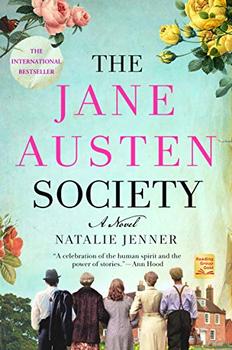
by Natalie Jenner
Published 2021
Just after the Second World War, in the small English village of Chawton, an unusual but like-minded group of people band together to attempt something remarkable.
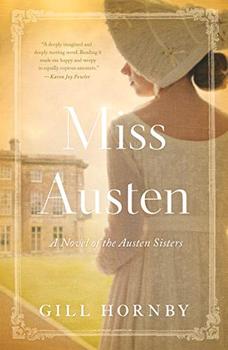
by Gill Hornby
Published 2021
For fans of Jo Baker's Longbourn, a witty, poignant novel about Cassandra Austen and her famous sister, Jane.
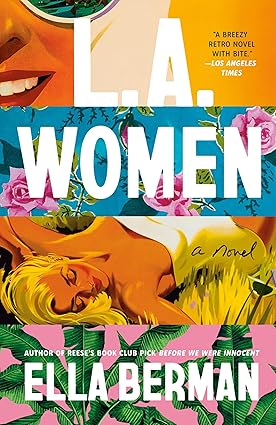
L.A. Women by Ella Berman
Two ambitious writers in 1960s LA face betrayal when one writes a novel based on the other's life.






Your guide toexceptional books
BookBrowse seeks out and recommends the best in contemporary fiction and nonfiction—books that not only engage and entertain but also deepen our understanding of ourselves and the world around us.

