
-
Your next favorite book
is waiting.
Summary | Excerpt | Reviews | Beyond the book | Read-Alikes | Genres & Themes | Author Bio

A Novel
by Ron Rindo Book Reviewed by:
The rural town of Lakota, Wisconsin, stays true to many small-town stereotypes; things move slower, everyone knows everyone, hard work is valued, and opportunities can be scarce. Lakota's once-booming lumber industry has long since passed, leaving hardscrabble farmland and poverty in its wake. In desperation, many locals sold their generational farms to the Amish and set out in search of more reliable work. Today the Amish continue to live alongside those they call the "English," the secular population of Lakota. It's from these modern-day communities that author Ron Rindo draws a rich and bountiful tale in the novel Life, and Death, and Giants.
In the back of a rusted-out pickup truck, Dr. Thomas Kennedy delivers the surprise of his life in the form of an 18-pound baby boy named Gabriel Fisher. This oversized bundle of joy will grow to reveal shocking secrets equal to his extraordinary size and measure. Gabriel's mother Rachel, shunned years ago by the Amish community into which she was born, managed to eke out an existence for herself with the help of Lakota's locals. Rachel holds strong to the belief that Gabriel is a part of God's will and destiny for her, no matter the costs. As Gabriel lets out his newborn cry, he is unaware of his ties to the Amish community that rejects him, and the English population who will accept him. Over time, this gentle giant will both disrupt and bridge these two communities and leave a lasting impression on all those around him.
Life, and Death, and Giants is told through the clear, alternating voices of Gabriel's Amish grandmother Hannah Fisher, veterinarian Thomas Kennedy, and local bar owner Billy Walton. These well-constructed characters build the foundation of the story and draw the reader into their singular worlds within the larger Lakota population. Each has a unique bond with Gabriel, and as he matures, so do the depth and perspectives of Rindo's characters.
The main conflict arrives at the time of Rumspringa (see Beyond the Book), when Gabriel reaches an age that allows him to move beyond the restrictions of the Amish faith and experience life outside the confines of their community, where he now lives with his grandparents. The collective hopes and fears of the adult Amish during this adolescent rite of passage are relatable to all who worry as teenagers push boundaries and explore the wider world, and these universal anxieties ring true through Hannah's words.
"I do not question the wisdom of Rumspringa. It has served our people for hundreds of years. Regret is endemic to human life. The only way to defeat it is to open the door to temptation, to allow anything, having faith that our children will recognize the emptiness of transitory pleasure and the uselessness of earthly things, and return to the fold. Nearly all do."
The author builds tension between Amish life versus that of the English as both call to Gabriel. The Amish are deeply fulfilled by quietly living off the land and following the tenets of their tightly held faith. They live simply to avoid the larger world, which might detract from their beliefs and values. This life provides Gabriel with a peace secured by the love of his family. That said, the modern English world offers choice, technology, and convenience, giving Gabriel access to global opportunities and to those willing to help him take advantage of them. Each character reveals their own complicated history, lending weight to their personal opinions of what might be best for Gabriel. Through Rindo's direct and heartfelt dialogue, an understanding of differing value systems shapes a deep respect for the way one chooses to live.
While the story probes deeper questions of love and loyalty, it also provides big entertainment. Gabriel's sheer size upends life in Lakota, bringing excitement to this otherwise quiet town. His ability to draw in and calm animals never ceases to amaze, and his easygoing nature brings joy to all he meets. Gabriel has gracefully accepted his uniqueness and knows the world is waiting for him. By putting Gabriel in the larger arena of life, Rindo highlights how it's often in our differences that we are drawn together. Exciting play-by-plays of Gabriel's physical prowess are true crowd pleasers and drive the story forward. There are plenty of opportunities to cheer his triumphs, mourn his losses, and enjoy the ride, as well as delightful and moving passages involving art, literature, and the poetry of Emily Dickinson.
Despite all this, the reader may often wish to hear directly from Gabriel himself rather than to see him through the eyes of other characters. Also, Gabriel's gifts push toward the magical in an otherwise grounded work, which might be off-putting depending on one's literary tastes. However, it's not difficult to give oneself over to the enchantment of the story and lean into the beauty of the landscape. Rindo's appreciative descriptions of the Wisconsin countryside are full of color and inspire awe for the land and its ever-changing hues.
There is something for everyone in Life, and Death, and Giants. This big-hearted work embraces themes of community, hope, forgiveness, and acceptance. It calls the reader to examine the ways in which we connect with ourselves and to those around us. With its memorable characters and beautiful depictions of rural life, this novel is a journey that won't soon be forgotten.
 This review
first ran in the October 8, 2025
issue of BookBrowse Recommends.
This review
first ran in the October 8, 2025
issue of BookBrowse Recommends.

If you liked Life, and Death, and Giants, try these:

by Allen Levi
Published 2025
One spring morning, a stranger arrives in the small southern city of Golden. No one knows where he has come from…or why…

by Shelby Van Pelt
Published 2025
Winner of the 2022 BookBrowse Debut Award
For fans of A Man Called Ove, a charming, witty and compulsively readable exploration of friendship, reckoning, and hope that traces a widow's unlikely connection with a giant Pacific octopus.
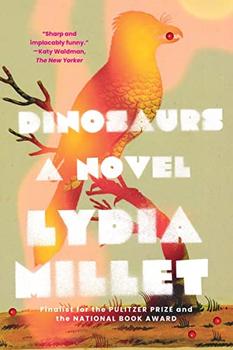
by Lydia Millet
Published 2023
Over twelve novels and two collections Lydia Millet has emerged as a major American novelist. Hailed as "a writer without limits" (Karen Russell) and "a stone-cold genius" (Jenny Offill), Millet makes fiction that vividly evokes the ties between people and other animals and the crisis of extinction.
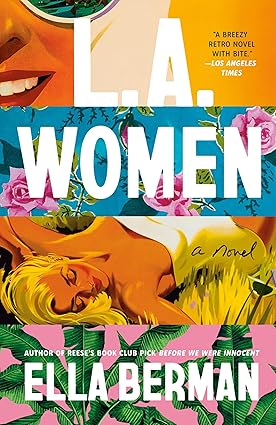
L.A. Women by Ella Berman
Two ambitious writers in 1960s LA face betrayal when one writes a novel based on the other's life.






Your guide toexceptional books
BookBrowse seeks out and recommends the best in contemporary fiction and nonfiction—books that not only engage and entertain but also deepen our understanding of ourselves and the world around us.

