
-
Your next favorite book
is waiting.
Summary | Excerpt | Reading Guide | Reviews | Beyond the book | Read-Alikes | Genres & Themes | Author Bio

 Book Reviewed by:
Lily King's novel Heart the Lover is described by the publisher as being about "desire, friendship, loss, and the lasting impact of first love," and, yes, it certainly is all those things and will appeal to readers who enjoy a well-written, intelligent love story. But, in the able hands of King, the somewhat exhausted (and occasionally exhausting) young-woman-coming-of-age genre is elevated, and, as in her previous novels, beneath the witty repartee and overt themes of love and loss, the author introduces a catalogue of far more subtle refrains that materialize as circling shadows beneath the smooth surface of the story.
Heart the Lover opens in a college classroom on a New England campus in the late 1980s. Our unnamed narrator is in her senior year, and her life takes a sharp turn the day that one of her essays is admiringly read aloud to the class by her 17th-century-lit professor, capturing the attention of the "two smart guys" of the class, intellectual hotshots Sam and Yash, who soon invite the narrator into their cosseted world. They are living with another housemate, Ivan, a James Joyce scholar, in the cozy home of a professor on sabbatical. This sets in motion a complicated love triangle with consequences that will resonate far into the future.
Although the author chooses not to reveal her narrator's name until the end of the novel, it seems not to matter much, as her new friends call all of the girls that they date—and the only girls they know appear to be girls that they have dated or wish to date—"daisies," after Daisy Buchanan of The Great Gatsby. But, when they hear that the narrator walked away from a college golf scholarship, they re-nickname her Jordan, and perhaps for them every woman is either a Daisy or a Jordan, just as a previous generation's women were categorized as Bettys or Veronicas, and a generation of women to follow would be Monicas, Rachels, or Phoebes. In fact, this Jordan bears little resemblance to Fitzgerald's elegant, sporty, cool-as-a-cucumber Jordan Baker; she is actually far more aligned with Jay Gatsby in that she is not from a privileged background like many of those around her—since losing her scholarship, she has relied on student loans, cheap housing (10 housemates, no heat), and restaurant jobs to get herself through college—and, like Gatsby, she is ambitious and willing to make crucial life adjustments to reinvent herself.
The college-era chapters involve an intense flurry of dating, miscommunication, rivalry, attraction, but also real connection and love, and, as the narrator notes in a later chapter: "What good is any other virtue without love?" Her time with these boys also, and perhaps most importantly, introduces into our narrator's life a new model for embracing her own intellect. Conversations with this group are intoxicating because they are filled with clever wordplay, academic discussion, and excitement about books and ideas. Their perfect evening's activity is having a meal together and playing an obscure card game called Sir Hincomb Funnibuster (see Beyond the Book). As the narrator gets to know the boys, she realizes that up to this point she has been a "mere student," and they are "scholars." She decides that she has wasted years with "paltry dabbling," and determines to "get serious."
And here, King attempts to track the thrill of an expanding mind, an intellectual coming of age through a deep engagement with writing and literature. As the narrator will later remark, "A great novel, a truly great one, not only captures a particular fictional experience, it alters and intensifies the way you experience your own life while you read it." For the narrator this period also marks an awakening of ambition. She is quick to recognize academic strategies that are working for her friends. Despite the fact that she will have to take out new loans, she decides to put off graduation in order to take the coursework towards an honors degree. She makes the decision to prioritize her own gifts.
In any King novel, cultural expectations are always lurking just beneath the surface, and the sexual mores of the 1980s are certainly in play throughout. The door into these smart boys' lives depends upon the narrator's romantic relationship with one or the other of them; there seems to be no such thing as intellectual friendships between men and women without sexual undercurrents. In addition, the narrator notes that her professors are all men, and she has never been invited into any of their homes for meals and conversation like her male friends have, and, despite her own consistently high grades, she receives relatively little attention from her professors, aside from the one that came into the restaurant where she worked and made a pass at her. Sexual violence is barely remarked upon. When an old roommate of the narrator's is raped and then stabbed multiple times by an obsessed young man, the response to the incident feels muted and the murder is mentioned only one time in the campus newspaper.
In time, Jordan will become the breakout success of the group, which will come as no surprise to the reader. The final two sections of the novel revisit certain relationships many years later, and for this reader these sections are slightly less compelling. One reason is that a crucial plot point hinges on fairly simple miscommunication, but if anyone can wield that weathered trope with dignity, it's Lily King. The later chapters also serve to remind the reader that the unexpected joys and sadnesses of life have very little to do with decisions of the past, but that early connections linger, and it is never too late to find resolution.
 This review was originally published in The BookBrowse Review in September 2025, and has been updated for the
December 2025 edition.
Click here to go to this issue.
This review was originally published in The BookBrowse Review in September 2025, and has been updated for the
December 2025 edition.
Click here to go to this issue.

If you liked Heart the Lover, try these:
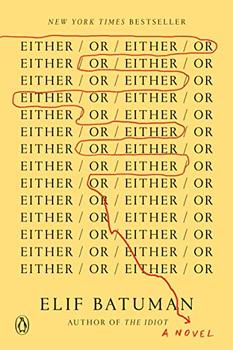
by Elif Batuman
Published 2023
From the acclaimed and bestselling author of The Idiot, the continuation of beloved protagonist Selin's quest for self-knowledge, as she travels abroad and tests the limits of her newfound adulthood.
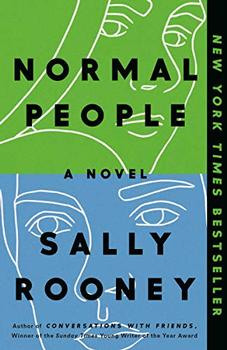
by Sally Rooney
Published 2020
A wondrous and wise coming-of-age love story from the celebrated author of Conversations with Friends
by Meg Wolitzer
Published 2014
The Interestings explores the meaning of talent; the nature of envy; the roles of class, art, money, and power; and how all of it can shift and tilt precipitously over the course of a friendship and a life.
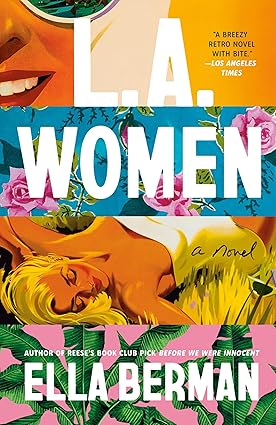
L.A. Women by Ella Berman
Two ambitious writers in 1960s LA face betrayal when one writes a novel based on the other's life.






Your guide toexceptional books
BookBrowse seeks out and recommends the best in contemporary fiction and nonfiction—books that not only engage and entertain but also deepen our understanding of ourselves and the world around us.

