
-
Your next favorite book
is waiting.
Summary | Excerpt | Reviews | Beyond the book | Read-Alikes | Genres & Themes | Author Bio

A Novel
by Kotaro Isaka Book Reviewed by:
Kotaro Isaka's Seesaw Monster has been compared to Black Mirror: like the television series, it imagines a near future where technology has advanced enough to expose unsettling truths about human behavior. In this novel, structured as two interconnected novellas spanning decades, Isaka explores moral and social issues surrounding technology like AI and self-driving cars that are pressing in today's context. Isaka's book is visionary: Seesaw Monster first appeared in Japan in 2019, when these technologies were not yet so dominant. Now translated into English by Sam Malissa—who also brought Isaka's Bullet Train to international audiences—it is already set for a film adaptation starring Anne Hathaway and Salma Hayek.
The first novella, titled Seesaw Monster, begins as a domestic story set in 1980s Japan. Salesman Naoto finds himself trapped between his wife, Miyako, and his mother, Setsu, whose feud escalates beyond household bickering when a stranger reveals that their animosity may be part of an ancient mythological rivalry between the "Sea People" and the "Mountain People." Family tensions soon entangle with espionage and corporate intrigue. "People of the Sea and People of the Mountain should never meet," one character warns. "When they do, without fail, there is collision. They simply cannot understand and accept one another."
The second novella, Spin Monster, jumps decades into the future to a Japan dominated by an omniscient AI, where privacy is a thing of the past and paper documents are the only secure medium. Mito, a messenger, earns his living delivering them, but a routine drop-off turns into a dangerous conspiracy involving Hiyama, his eternal "enemy" since childhood. Here, Miyako reenters the scene, no longer a young wife but a wise elder who brings the two novellas together.
Both are entertaining, page-turning stories that explore interesting ideas about the cyclical nature of conflict. Between the two novellas, Isaka blends a bunch of genres: espionage thriller, speculative fiction, and social commentary go hand in hand with propulsive storytelling. Yet, there are some minor faults. In the first, Naoto seems like the wrong choice of narrator. His mother—sharper and more enigmatic—would have provided a richer perspective and more clearly represented one side of the "Sea" versus "Mountain" dichotomy. The second novella offers a better example of a contrasting dynamic since there are two narrators: Mito and Hiyama embody opposing poles of conflict. Moreover, Naoto's voice feels too similar to Mito's: insecure, anxious, and naive.
The two novellas also seem mismatched. While the first has its dose of intrigue, it's more focused on the characters and their conflict than on the corporate and espionage subplot. The second is the opposite: a relentless chase sequence that doesn't pause to breathe, focused less on the characters and their conflict than on the topic at hand: can truth survive in an AI-dominated world? "News doesn't need reality behind it," one character observes, "Once it appears onscreen at a news café, it's like it actually happened. Write the script and it becomes reality."
Isaka's commentary feels especially timely, exploring how present-day issues might evolve in the near future: self-driving cars and their dangers (as seen in present-day accidents), how the news is less reliable in a time of AI-generated content, how privacy disappears in a data-dominated world, how frontiers fuel conflict...Seesaw Monster resonates because of the topical issues it raises.
But more than anything it's about one of humanity's constants: conflict and how it doesn't take much to instigate it—on a domestic scale, where Miyako, irritated by her mother-in-law's smallest habits, convinces herself the woman is capable of murder; and on a societal scale, where rumors fuel hate crimes and chaos, whether people truly believe them or simply use them as justification. "It's not clear whether people actually believed it or if they were just using it as a pretext," one passage notes.
The "seesaw" becomes a central metaphor of a possible but fleeting balance. But Isaka chooses to end this enjoyable book on a hopeful note: if conflict is humanity's constant, so too are many other emotions—compassion, understanding, concern, fairness—that can restrain both technological dangers and our own destructive impulses.
 This review
first ran in the September 10, 2025
issue of BookBrowse Recommends.
This review
first ran in the September 10, 2025
issue of BookBrowse Recommends.

If you liked Seesaw Monster, try these:
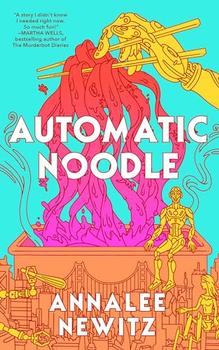
by Annalee Newitz
Published 2026
A cozy near-future novella about a crew of leftover robots opening their very own noodle shop, from acclaimed sci-fi author Annalee Newitz.

by Jayson Greene
Published 2026
From the author of Once More We Saw Stars comes a gripping novel about four intertwined lives that collide in the wake of a mysterious tragedy. Set in a near-future world where the boundaries between human and AI blur, the story challenges our understanding of consciousness and humanity.

by Aisling Rawle
Published 2026
Love Island meets Lord of the Flies in this must-talk-about-it read, as bingeable as the best reality TV.
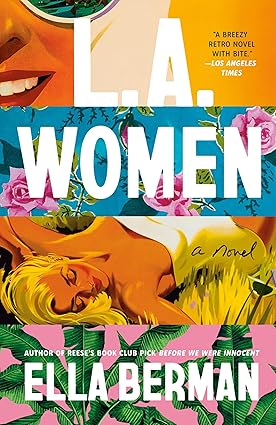
L.A. Women by Ella Berman
Two ambitious writers in 1960s LA face betrayal when one writes a novel based on the other's life.





Your guide toexceptional books
BookBrowse seeks out and recommends the best in contemporary fiction and nonfiction—books that not only engage and entertain but also deepen our understanding of ourselves and the world around us.

