
-
Your next favorite book
is waiting.
Summary | Excerpt | Reviews | Beyond the Book | Read-Alikes | Genres & Themes | Author Bio

A Novel
by Kotaro Isaka Book Reviewed by:
This article relates to Seesaw Monster

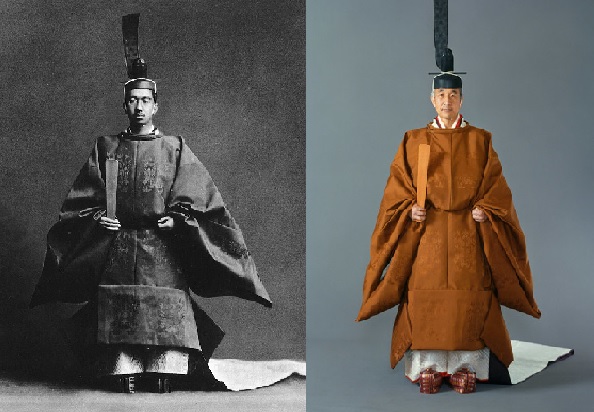 The publication date of this review corresponds in the Japanese era calendar to Reiwa 7/09/10, or September 10, 2025.
Japan uses two dating systems: the Gregorian calendar, used in most Western societies and adopted in Japan in 1873, and the system of imperial eras (gengō 年号), which divides time according to the reign of each emperor. Each era begins with the ascension of a new sovereign to the throne and ends with his death.
When a new reign begins, the count resets to year one. Japan is currently in the Reiwa era, inaugurated in 2019; therefore, the year 2025 is Reiwa 7. This era followed Heisei (1989–2019), which followed Shōwa (1926–1989), the period in which the first novella of Seesaw Monster takes place.
The system can be confusing in transitional years: when an emperor dies mid-year, that year can carry two names. Thus, 1989, for instance, can be referred to both as "Shōwa 64" and "Heisei 1," since Emperor Shōwa passed away on January 7, 1989. This ambiguity is reflected in the novel: Setsu Kitayama, Naoto's mother and Miyako's mother-in-law, continues to write "Showa 64" after the change of era, a habit that, in Naoto's view, symbolizes resistance to change, and which frustrates Miyako: "I've told her so many times. If you're going to write the era, write the right one, I say. But she still writes Showa. Sixty-fourth year of the Showa era."
As in so many things, their visions are diametrically opposed: one anchored in the past, the other embodying the future, progress. Two opposite poles.
This divergence is not only familial but also historical. The Shōwa and Heisei eras represented radically different moments in Japanese history. Shōwa, after the devastation of World War II, saw an unprecedented economic miracle. The economy, which had already begun to grow in the late 19th century, resumed after the war with dizzying speed, eventually becoming the world's second-largest after the United States—Japan's great ally against the USSR during the Cold War. This alliance frames the espionage subplot of Seesaw Monster.
As explained by Foundation for Economic Education, "from 1950 to 1973, it grew at twice the rate of Western Europe's and more than two and a half times faster than that of the US. During the 1960s, it doubled in size in only seven years." The Tōkaidō Shinkansen, inaugurated in 1964, the same year Tokyo hosted the Olympic Games for the first time, showcased Japan's advanced technology and economic strength. This bullet train (the namesake of Kotaro Isaka's most famous novel) was the world's first high-speed rail line (210 km/h), and is also a central setting in Seesaw Monster: it is where Naoto and Miyako first meet, and where the second novella begins and ends. It is telling that Naoto, in his first words to Miyako, declares: "I'm headed to tomorrow. To Japan's future."
But the future was not always bright. With the start of the Heisei era, Japan entered a stage marked by political instability, with 17 prime ministers serving over 30 years, and economic stagnation. The transition from Shōwa to Heisei represented a dramatic shift.
It is no surprise, then, that nostalgia casts its gaze back toward the Shōwa era. While Naoto sets out toward Japan's future, it is now possible to revisit Japan's past: retro cafés, reconstructed neighbourhoods that recreate the atmosphere of those decades, or museums filled with old radios and forgotten toys. Some, like Setsu Kitayama, would have preferred never to leave the past at all.
Filed under Places, Cultures & Identities
 This article relates to Seesaw Monster.
It first ran in the September 10, 2025
issue of BookBrowse Recommends.
This article relates to Seesaw Monster.
It first ran in the September 10, 2025
issue of BookBrowse Recommends.

L.A. Women by Ella Berman
Two ambitious writers in 1960s LA face betrayal when one writes a novel based on the other's life.






Your guide toexceptional books
BookBrowse seeks out and recommends the best in contemporary fiction and nonfiction—books that not only engage and entertain but also deepen our understanding of ourselves and the world around us.

