
-
Your next favorite book
is waiting.
Summary | Excerpt | Reviews | Beyond the book | Read-Alikes | Genres & Themes | Author Bio

Stories
by Carrie R. Moore Book Reviewed by:
Make Your Way Home is a collection of eleven short stories written by Carrie R. Moore that illuminate southern settings and family bonds. It is a passionate and lyrical thesis of the deep connection black Americans have to southern land and community. And the granular details that can unravel those ties. Moore's collection reminds me of a quote by award-winning writer Jesmyn Ward, who was raised in Mississippi. "There's so much I love about home, but then there's a lot that I can acknowledge that I dislike about home. And acknowledging that to myself helps me see that place more clearly."
Moore's clarity begins in the introduction with a letter to the reader. "Places allow history to accumulate layer by layer, every story written atop another, the ink showing through. The collection deals with simultaneous truths. Here, I hope you find reckoning and romance and uncertainty about the meaning of home."
What the collection does not do, to its credit, is amplify the white gaze. Race as a social construct with institutional legacies is implied but rarely mentioned. This is a collection about the southern places of black attachment and the identities of those who live there.
Most of the stories are lengthy, hovering near the thirty-page mark, which benefits the reader by allowing the characters to breathe and create a presence off the page. Moore's titles are poetic and enticing. "When We Go Downstream." "All Skin Is Clothing." "In the Swirl." "Happy Land." "How Does Your Garden Grow?" Befitting the craft of short story writing, Moore isn't interested in happy endings and tying a sweet bow but rather interior landscapes, like in "Surfacing," about a fragile married couple named Grace and Dev who see the unthinkable through the bedroom window of their cottage. The teenage daughter of their neighbor, Natalie, is being molested in her bedroom by her father, unaware she is being watched.
Horrified at the images of Natalie's father at his worst and the boundaries he is crossing, Grace mourns the loss of innocence. At a deeper level, she cannot unsee the sexual damage of a child. Grace's reaction is made more acute because she herself suffers from vaginal pain whenever she and her husband are making love, but the difference is that Grace gives consent. Natalie did not. Influenced by her memories of growing up on St. Simons Island and the protection of her wonderful mother, Grace knocks on Natalie's door to talk to her about what she witnessed.
A certain number of decades ago, "Surfacing" would have been a more shocking story, but modern southern literature—I'm thinking specifically of The Color Purple and Bastard Out of Carolina—has illuminated our understanding of what girls may endure even in seemingly perfect families. We also acknowledge the damage of sexual violence, which can happen whether you give your consent or not. But the question lingers, when the curtain is peeled back, and you are seen, what then?
A collection focusing on southern black life wouldn't be complete without a story about religious ties. The hours leading up to a baptism in the Louisiana bayou frame "Morning by Morning," and the settings of the bayou and the New Orleans neighborhood of Tremé are like flower and rock: beauty and stability. Sariah and Helene are traveling to the bayou to take part in a baptism there on New Year's Day. Newly minted deaconess Sariah is given a prime role. She is to drape the towels around the shoulders of the saved as they exit bayou waters. Her insecurity about her past and if she was holy enough have made her question herself and doubt her purity. Arriving at Helene's ancestral house, Sariah is captivated by the "boats resting solemn in the neighboring yards. Nets hanging like textiles from garage doors. Insects humming, plenty for larger creatures to eat." Moore's literary exploration of rural Louisiana and the bayou culture engages sensationally.
Like many of the stories in the collection, "Morning by Morning" is a portrait of the ordinary loneliness that faith, religion, and romance cannot cure automatically. As the plot carries the characters from New Year's Eve to the baptism morning, religion isn't only an anecdotal prop, but Moore isn't evangelizing, either. This is a quiet story about women who want to please God while managing their impulses, surrounded by the lushness and steadiness of the bayou. Inherent in the telling is the language of the water.
The story that triggered my nostalgia was "In the Swirl," about a college student working as a pool lifeguard in Birmingham, Alabama, the same summer a rapist is on the loose. Written in the second person, the lifeguard (who remains nameless) has light pink Afro tips and studies art at a liberal New York college. She is afraid of crawly things like mice and roaches, has a crush on another guard named Jacob, believes in altruism and social conscience. That summer, at a pool almost no one visits, she is one-fourth of the lifeguard clique: Jacob, Renee, and Simon are veteran lifeguards. The four occupy many down hours lounging around the office, waiting for swimmers to show up.
It reminded me of how I used to spend my adolescent summers. Not as a lifeguard at a pool but lounging around with friends in the heat of humid Michigan days while passing time at the skating rink and grabbing cones at Jones Ice Cream. "In the Swirl" evokes the same kind of lazy, happy vibe of summers in a rural place that are rarely noted in stories about adolescent dreams and disappointments.
Outside of the nostalgia that "In the Swirl" triggered, something gnawed at me. Then I remembered a 2020 TED Talk by economist Heather McGhee. McGhee recounted the story of the whites-only Oak Park swimming pool in Montgomery, Alabama. In 1959, the town council refused to desegregate the pool, and instead, they drained it. Imagine hating the idea of black bodies commingling with white bodies so much that in brutalizing temperatures before air conditioners were the norm you shut down all the pools in the city for a decade so that everyone, both black and white, suffered. The Oak Park pool was never rebuilt, the lifeguards forced to find other avenues for summer work.
Given that the Obama years are the time frame for "In The Swirl," what was so apparent to me was the passage of time. The pool in the story is now barely occupied, save for a white married couple who don't seem bothered by the presence of a black lifeguard. The way things used to be has dissolved but the new normal isn't without its pitfalls.
I've read enough southern stories to know even the most lyrical can get bogged down in tropes and shallow interpretations of history. The success of Jesmyn Ward—seen with her novels, short stories, memoir—indicates our hunger for southern intimacy and black lives. That's why I was so enthralled with this collection. I spend time in Durham, North Carolina every year but it's with a transplant who was raised military. I want to know people I don't know, and Moore's collection provides that. It's not just pain inked on the page. It's joy. It's accountability and truth. It's love of land and respect for history. It's how families are tied to one another even in conflict. Even in hope.
 This review
first ran in the August 13, 2025
issue of BookBrowse Recommends.
This review
first ran in the August 13, 2025
issue of BookBrowse Recommends.

If you liked Make Your Way Home, try these:

by Nikesha Elise Williams
Published 2026
From the two-time Emmy Award–winning producer and host of the Black and Published podcast comes a sweeping multi-generational epic following seven generations of Dupree women as they navigate love, loss, and the unyielding ties of family in the tradition of Homegoing and The Love Songs of W.E.B. DuBois.

by Diane Oliver
Published 2025
A bold and haunting debut story collection that follows various characters as they navigate the day-to-day perils of Jim Crow racism from Diane Oliver, a missing figure in the canon of twentieth-century African American literature, with an introduction by Tayari Jones

by Jamel Brinkley
Published 2024
From National Book Award finalist Jamel Brinkley, Witness is an elegant, insistent narrative of actions taken and not taken.
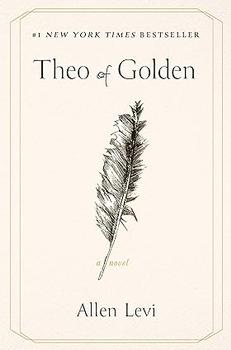
Theo of Golden by Allen Levi
One spring morning, a stranger arrives in the small southern city of Golden. No one knows where he has come from…or why…




Your guide toexceptional books
BookBrowse seeks out and recommends the best in contemporary fiction and nonfiction—books that not only engage and entertain but also deepen our understanding of ourselves and the world around us.

