
-
Your next favorite book
is waiting.
Summary | Excerpt | Reviews | Beyond the book | Read-Alikes | Genres & Themes | Author Bio

A Novel
by Daniel Kraus Book Reviewed by:
Daniel Kraus's novel Angel Down takes place late in World War I, just weeks away from the November 11, 1918 Armistice. Private Cyril Bagger, self-professed gambler, con man, and card cheat, has remained safe behind the front lines by volunteering to dig latrines and mass graves. He considers himself a coward, but he's OK with that; his only goal is to survive the war.
After a particularly brutal German artillery assault, someone can be heard shrieking in No Man's Land, and this screeching goes on and on, hour after hour, getting on everyone's nerves. Bagger is ordered, along with four other particularly expendable soldiers, to "take care of" the presumably wounded man. When Bagger finally makes it across the dangerous, cratered battlefield, he finds not an injured person, but an angel entangled in barbed wire. One of the men claims she's the "Angel of Mons" (see Beyond the Book) and as they attempt to take her to headquarters, Bagger is compelled to risk his life to protect her—from enemy fire as well as from his own squadron.
Told in a third-person voice entirely from Bagger's point of view, the novel unspools in one long stream-of-consciousness sentence. The author wisely chooses to break the narrative into shorter chunks separated by white space to make it easier to read; each paragraph, all of which start with "and" and end with a comma, might elsewhere comprise three or four sentences:
"and over the kid's head he glimpses the last marchers vanishing centipedially around a trench corner, the gunmetal sky glowing off the canteens clipped to every pack so it looks like there's a big, silver hole punched through each soldier, the air thick with the molar grind of men overburdened with matériel, the drowsy clops of horse-pulled supply wagons, the asthmatic hack of covered trucks dragging fifty-ton howitzers over cratered rubble,"
The technique risks growing old after a chapter or two, but Kraus's prose is so glorious and his descriptions so alive that the entire book is a marvel. Phrases such as "[his] light brown eyes have gone arachnid with the points of several lanterns" and "Bagger blinks away the ash that snowfalls heavier with each northward step" dot every page, painting a vibrant picture of all the protagonist sees and experiences. All one's senses are engaged ("Bagger has developed a sommelier palate for the tart fizz of brachial blood, the fudgy sorghum of femoral, the meaty sludge of heart wounds…and the warm salt lick of arterial blood he now licks from his lips").
An incredible amount of character development is also woven throughout. Bagger tries to portray himself as a callous, cynical swindler, but we discover he's riddled with lifelong guilt, and buried deep within is a truly good person. His journey toward acceptance of himself, with all his imperfections, helps propel the plot forward.
The novel also offers commentary on the pointlessness of war. The author mentions to Publishers Weekly that Angel Down is, in part, about "the absurdist futility of millions of men dying over a few feet of ruined land" and also remarks, "WWI was the dawn of truly mechanized slaughter, and once begun, that's a self-perpetuating machine that you can't turn off." Although his message risks becoming heavy-handed at a couple of points, overall the author brilliantly illustrates these points throughout the fictional narrative.
Readers might be initially daunted by the novel's structure, particularly if one is unprepared. Although I'm generally open-minded about different writing techniques, I worried Kraus's experimental approach might seem unnecessary and contrived. I'm happy to say that my initial impression was wrong. It didn't take me long to sink into the text's cadence and fully immerse myself in the narrative, and after a few chapters I couldn't imagine any other format being as effective.
The other roadblock for some may be the descriptions of all-pervading gore. Kraus doesn't spare his audience from the horrors of the WWI battlefront. Body parts and viscera are everywhere, people die in stomach-turning ways, and the soldiers are constantly encrusted in blood and muck. The author's depictions are graphic, potentially making the book a challenge for sensitive readers.
I have a penchant for well-written fiction that doesn't fit the typical narrative mold, and Angel Down is right up my alley. The author's brilliant prose, vivid descriptions, interesting characters, and underlying message make this one of my favorites of the year. I imagine that it will be one of those "love it or hate it" types of books, as its single-sentence format may be a high hurdle to overcome for some. If you're looking for a unique book with a ton of depth, however, you can't go wrong with this one—it's absolutely unforgettable.
 This review was originally published in The BookBrowse Review in July 2025, and has been updated for the
June 2026 edition.
Click here to go to this issue.
This review was originally published in The BookBrowse Review in July 2025, and has been updated for the
June 2026 edition.
Click here to go to this issue.

If you liked Angel Down, try these:

by Katherine Arden
Published 2025
During the Great War, a combat nurse searches for her brother, believed dead in the trenches despite eerie signs that suggest otherwise, in this hauntingly beautiful historical novel with a speculative twist, from the New York Times bestselling author of The Bear and the Nightingale.
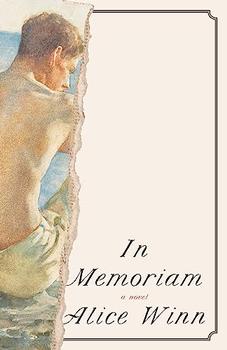
by Alice Winn
Published 2024
Winner: BookBrowse Debut Book Award 2023
A haunting, virtuosic debut novel about two young men who fall in love during World War I.
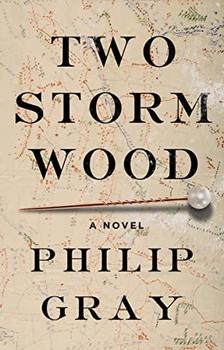
by Philip Gray
Published 2022
Three months after the end of the Great War, a young woman sets out across the wastelands of the Western Front to learn the fate of the man she loved.

L.A. Women by Ella Berman
Two ambitious writers in 1960s LA face betrayal when one writes a novel based on the other's life.






Your guide toexceptional books
BookBrowse seeks out and recommends the best in contemporary fiction and nonfiction—books that not only engage and entertain but also deepen our understanding of ourselves and the world around us.

