
-
Your next favorite book
is waiting.
Summary | Excerpt | Reading Guide | Reviews | Beyond the book | Read-Alikes | Genres & Themes | Author Bio

 Book Reviewed by:
In the years following the publication of Their Eyes Were Watching God in 1937, Zora Neale Hurston received criticism from some of her peers who felt that it did not sufficiently engage with the political issues of the day. In addition to his objections about Hurston's inclusion of explicit references to sex in the novel, Richard Wright declared that it "carries no theme, no message, no thought." It was likely partly as a result of this criticism (despite the overall positive reviews from critics) that the novel was largely forgotten for decades before its rediscovery in the 1970s. This rediscovery is attributed to Alice Walker, who published an article in Ms. Magazine in 1975 called "In Search of Zora Neale Hurston."
The fact that the novel was criticized by a leading male thinker and rediscovered by a woman writing for a feminist magazine is unsurprising. The plot of Their Eyes Were Watching God centers around Janie Crawford, who is raised by her grandmother in West Florida and married off to a man she barely knows named Logan Killicks at age 16, shortly after she has experienced a sexual awakening. Not long after the wedding, she revisits her grandmother and asks her when she can expect to fall in love with Logan. Her grandmother's demoralizing response is essentially that a respectable marriage to a landowning man is better than love.
A few months later, Janie runs off with a traveling man named Joe Starks, to the all-Black community of Eatonville, where Joe becomes mayor. While she is initially infatuated with Joe, she strains against his expectations of what a mayor's wife should be (quiet, subservient, isolated from the town's riffraff). After around 20 years of marriage, Joe dies, and shortly thereafter Janie becomes involved with a man 12 years her junior named Vergible "Tea Cake" Woods who lives in a nearby town. While less ambitious than Joe Starks, Tea Cake is fun, and passionate about Janie. They soon marry. And though she was left with a tidy inheritance when Joe died, Janie runs off with Tea Cake to the Everglades to work a bean harvest. They are happy together, until they are plagued by a series of misfortunes. The reader knows something bad is coming, as the book is framed around Janie telling her story to her friend Pheoby after having returned to Eatonville alone.
Wright's criticism that the book is not politically engaged, in addition to likely being a reflection of misogyny, is also wrong. The fact that it is not engaged in the same way as the work of Wright and many of his contemporaries makes it all the more revolutionary. While there are certainly plot points relating to the oppression and dehumanization of Black Americans, Hurston largely chooses to center the novel around Black people to the exclusion of whites, which is itself a political statement.
Furthermore, Janie's choices reflect a level of self-interest and autonomy rarely seen in novels from this era centered around women. She pursues what she wants and believes that she deserves to have it, despite having learned from her grandmother, and society, that her value as a person is determined by men and she should feel lucky if a man with land or a decent job wants her. After Joe's death, Janie could have remained an upstanding and financially comfortable resident of Eatonville, quietly enjoying her money and status. Instead, she chooses a taboo relationship with a charming younger man with no status of his own whose ambition extends only as far as picking beans, playing guitar, and winning dice games.
There is so much to consider and appreciate in Their Eyes Were Watching God from a plot and character perspective, but Hurston's style elevates it to a work of genius. There is the wry comedy of her descriptions:
"Her hair is not what you might call straight. It's negro hair, but it's got a kind of white flavor. Like the piece of string out of a ham. It's not ham at all, but it's been around ham and got the flavor."
And the layers of grief and resignation in Janie's grandmother's plea for her to marry Logan Killicks:
"And Ah can't die easy thinkin' maybe de menfolks white or black is makin' a spit cup outa you: Have some sympathy fuh me. Put me down easy, Janie, Ah'm a cracked plate."
Though the reader is meant to evaluate Janie's grandmother's advice critically, she is also treated with sensitivity, as a person who has witnessed and experienced the full spectrum of misogynoir violence and has an authentic point of view and voice. The Black vernacular and southern dialect in the dialogue rings true. A Florida resident for most of her life (and a respected anthropologist of Black southern life), Hurston knew well the cultural milieu from which her characters sprang. Their conversations spark like firecrackers.
Of course, there are reasonable critiques to be made. Their Eyes Were Watching God is not always aligned with feminist ideals; Janie is still dependent on men for validation and she endures abuse from Tea Cake with little to no complaint. It is true that in some ways it is willfully apolitical, but I mean this as a neutral observation rather than a complaint à la Richard Wright. The story—especially after Janie and Tea Cake go to the Everglades—is dramatic and riveting, the characters are dynamic and real, the settings sharply rendered, the narrative voice infused with humor. The very premise—Janie telling her story to a female friend in the all-Black town of Eatonville—was remarkable for the time and to an extent still is. Their Eyes Were Watching God has become a classic both on literary merit as a fantastic story, and because of its arresting and unflinching window into Black womanhood.
 This review
first ran in the July 16, 2025
issue of BookBrowse Recommends.
This review
first ran in the July 16, 2025
issue of BookBrowse Recommends.

If you liked Their Eyes Were Watching God, try these:
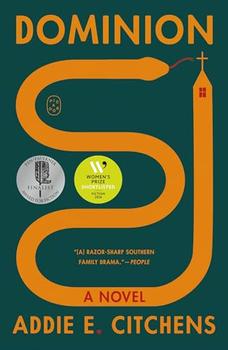
by Addie E. Citchens
Published 2026
In this taut Southern family drama, the sins of a favorite son rock a small Mississippi town.

by Dolen Perkins-Valdez
Published 2026
A woman learns the incredible story of a real-life American Kingdom—and her family's ties to it—in this enthralling novel from the New York Times bestselling, NAACP Image Award-winning author of Take My Hand.
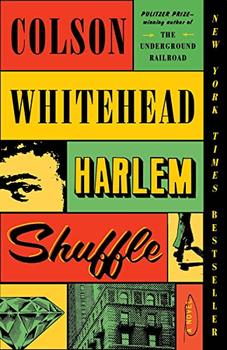
by Colson Whitehead
Published 2022
From the two-time Pulitzer Prize-winning author of The Underground Railroad and The Nickel Boys, a gloriously entertaining novel of heists, shakedowns, and rip-offs set in Harlem in the 1960s.
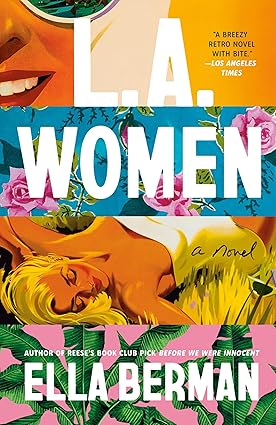
L.A. Women by Ella Berman
Two ambitious writers in 1960s LA face betrayal when one writes a novel based on the other's life.






Your guide toexceptional books
BookBrowse seeks out and recommends the best in contemporary fiction and nonfiction—books that not only engage and entertain but also deepen our understanding of ourselves and the world around us.

