
-
Your next favorite book
is waiting.
Summary | Excerpt | Reading Guide | Reviews | Beyond the book | Read-Alikes | Genres & Themes | Author Bio

A Novel
by Allegra Goodman Book Reviewed by:
Allegra Goodman's novel Isola tells the story of Marguerite de la Rocque de Roberval, a young noblewoman who lived in France during the 16th century. According to contemporary accounts, she fell in love with her guardian's servant on a journey across the sea to New France (now Canada). As punishment, the pair were abandoned on an uninhabited island where they struggled to survive. Goodman's fictionalization imagines Marguerite's life before and after this event, the hardships she endures while stranded, and the faith that helps her survive.
Very little is known of the real-life Marguerite beyond the tale of her two-year ordeal (1542-1544). Based on the book's jacket, readers might expect an epic survival adventure replete with close calls and creative solutions to what seem like insurmountable problems. This is not some high-octane thriller, however, but a thoughtful and well-imagined work of historical fiction. Goodman paints a remarkably vivid portrait of Marguerite as a wealthy orphan of noble birth, filling in the many unknowns with realistic details about what her daily life may have entailed. Later, as she tries to return to her former holdings, Goodman once again renders her experiences convincingly. It's a complete picture of her heroine's life; it includes her exile, but that's only part of what makes Marguerite memorable.
All Goodman's characters are multifaceted; Marguerite's guardian, Jean François de la Rocque de Roberval, is an enigma. In reading the 16th-century accounts, one could attribute his actions to any of a number of motives — jealousy, greed, piety, or a combination thereof; it's not clear what spurred him to maroon the couple. The author succeeds in maintaining this mystery about him, creating a character that's both kind and cruel; even by the book's end, one is unsure what to make of him.
Perhaps the best part of the book, though, is Marguerite's journey of faith. At the beginning of the novel, she's a young, headstrong girl who really doesn't give much thought to anything beyond herself and her desires. One morning on her island, though, after she's lost nearly everything, she witnesses the phenomenon where ocean waves freeze as they break. "[T]he shards fell sparkling," she recalls, "Waves rising and then crashing into glass." This sparks an epiphany:
"I did not deserve to see such beauty, and yet this wonder spread itself before me. And I felt God's presence as I had never done in grief and anger; I knew it in my insignificance. I had given up, and yet God came to me in winter and in ice, in the hard world and in the night…'Forgive me,' I called out, and I meant forgive my lack of faith, my anger, and my willfulness…This was my prayer. Not for rescue or escape, but for my soul…I gazed at waves rising and shattering, and this was my resolve — to remember myself as God remembered me."
I found it remarkably perceptive of the author that she has Marguerite's faith ebb and flow from that point forward ("sometimes believing I was blessed, sometimes certain I was cursed to live upon the island"); it's not a one-and-done moment, where suddenly the protagonist is completely renewed. The following scenes of spiritual struggle felt every bit as real as the ones depicting her physical struggles — and they were far more moving.
If I have any criticism to make, it's that for the most part, the sections of the book set on the island are somewhat less interesting than the chapters that bookend it. In some ways, Goodman's narrative choices here extend the realism; I imagine people who are literally starving to death have little creativity or ambition ("I knew it was time to hunt and collect wood if we were to live another year — but I had not the heart. Such effort required hope, and I had none"). There are a few dramatic segments, but overall these chapters are slower and more contemplative. I was surprised to discover that it was the rest of Marguerite's life — her time before and after her stranding — that I found completely engrossing.
Isola is first-rate historical fiction, and I highly recommend it to anyone looking for an outstanding book in the genre. It's appropriate for teen audiences and above, and book groups will want to consider it for discussion.
 This review was originally published in The BookBrowse Review in April 2025, and has been updated for the
January 2026 edition.
Click here to go to this issue.
This review was originally published in The BookBrowse Review in April 2025, and has been updated for the
January 2026 edition.
Click here to go to this issue.

If you liked Isola, try these:

by Charlotte McConaghy
Published 2026
An enthralling new novel from the New York Times bestselling author of Migrations and Once There Were Wolves.

by Maggie O'Farrell
Published 2026
The award-winning, bestselling author of Hamnet and The Marriage Portrait, returns with a soaring historical novel set in Ireland in the years before and after the Great Hunger.

by Victoria Redel
Published 2025
A "captivating" lesbian romance set in the "wonderfully atmospheric" art world of 1600s Amsterdam (Sarah Jessica Parker, SJP Lit).
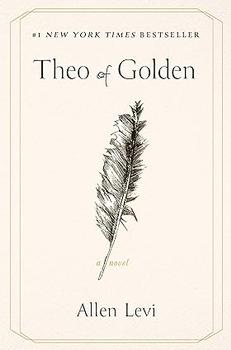
Theo of Golden by Allen Levi
One spring morning, a stranger arrives in the small southern city of Golden. No one knows where he has come from…or why…






Your guide toexceptional books
BookBrowse seeks out and recommends the best in contemporary fiction and nonfiction—books that not only engage and entertain but also deepen our understanding of ourselves and the world around us.

