
-
Your next favorite book
is waiting.
Summary | Excerpt | Reviews | Beyond the book | Read-Alikes | Genres & Themes | Author Bio

 Book Reviewed by:
When you pick up a Paul Auster novel, a spell descends over you. As if you are in a funhouse car, you are hooked onto the tracks of the story and pulled into its depths. Invisible begins, "I shook his hand for the first time in the spring of 1967." You learn many things from that sentence. The story will be told in an intimate, first-person address, as if the narrator is leaning over a dinner table toward you. The story happened in the past, so what you will hear is the narrator's reflection on those long-ago events. And it will be the story of an encounter with an extraordinary man. In just one sentence, Auster has created incredible suspense. It is the spell of a master storyteller.
The narrator is Adam Walker, a bookish but otherwise undistinguished college student, and the hand he shakes belongs to Rudolf Born, an older Parisian man who singles Walker out and pulls him into his sophisticated, almost debauched world. Born tells Walker, "You are a special case, Adam, and what makes you special is that you have no idea of the effect you have on other people." Born values Walker's unself-consciousness, yet that is exactly what he destroys in the course of the novel. Events transpire, but I'm not going to spoil a particle of the suspense that makes Auster so valuable a writer by telling you anything about the plot. Let's just say that the first part of the book comes to a climactic end.
When you turn the page to start the second part you realize that you're in the hands of another narrator. "Back in the dark ages of our youth," he begins, "Walker and I had been friends." This section is narrated by a man named Jim Freeman, and it turns out that what you have just finished reading is the first part of Walker's memoir, which he has mailed to his old college friend after forty years have elapsed. This is a classic Auster technique. He loves stories within stories, especially ones that circulate within his novels as manuscripts handed between people. The rest of Invisible operates on a dual track of suspense: what happens to Walker after the spring of 1967, as well as the effect that reading about those events has on various other protagonists within Auster's story. Above and beyond the plot itself, Invisible is about the act of reading, and what an encounter with someone else's dramatic story can do to your own worldview.
This abiding love for frame narratives (see sidebar) places Auster in the company of metafiction novelists like Vladimir Nabokov, Thomas Pynchon, or Italo Calvino, yet he is not a flashy, fancy, or difficult writer. Invisible sounds exactly like someone talking to you about something astonishing that happened to him when he was young. It is impossible not to listen.
The cost of this narrative technique is high. Auster chooses plain speech over poetic, inventive language, plot over setting or description, and retrospective narration over present-tense immediacy. Because of these choices, the dramatic events of Invisible don't really get under your skin. You don't feel what the characters feel; you simply listen as they tell you how they once felt. The biggest cost, though, is to the characters themselves. Adam Walker never seems more than a cipher through which Auster conveys his plot. Anyone who expects the kind of interiority that authors like Jhumpa Lahiri or Elizabeth Strout give to their characters will be sorely disappointed.
But this, I think, is almost entirely Auster's point. Or at least I've come to think that after spending quite a bit of time pondering his choice of title. It isn't obvious from the story what he means by the word "invisible," so I've temporarily concluded that he is referring to Walker's unself-consciousness, his invisibility to himself, which Born violently and irrevocably ruptures, plunging him into a cynical and damaged world. Auster shows us a way back toward this edenic self-absorption: by reading, by immersing ourselves in a story, by losing our sense of our own contours, by allowing ourselves to become hollowed out in the service of the deep empathy that is reading a novel.
 This review was originally published in The BookBrowse Review in November 2009, and has been updated for the
July 2010 edition.
Click here to go to this issue.
This review was originally published in The BookBrowse Review in November 2009, and has been updated for the
July 2010 edition.
Click here to go to this issue.

If you liked Invisible, try these:

by Joyce Hinnefeld
Published 2025
Hinnefeld's web of characters are bound by legacies, genes, philanthropy, and chance but gravitate largely around Charlie, a rich, white, college graduate who ends up in Venice.
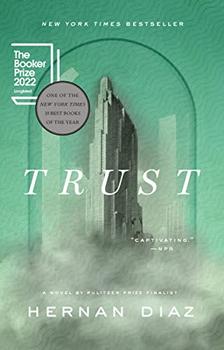
by Hernan Diaz
Published 2023
An unparalleled novel about money, power, intimacy, and perception.
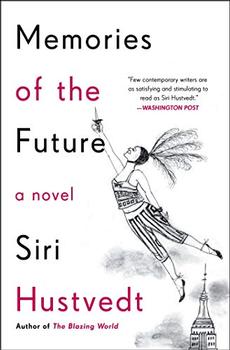
by Siri Hustvedt
Published 2020
A provocative, exuberant novel about time, memory, desire, and the imagination - the story of a young Midwestern woman's first year in New York City in the late 1970s and her obsession with her mysterious neighbor, Lucy Brite.







It is among the commonplaces of education that we often first cut off the living root and then try to replace its ...
Click Here to find out who said this, as well as discovering other famous literary quotes!

Can you name the title?
Test your book knowledge with our daily trivia challenge!
Your guide toexceptional books
BookBrowse seeks out and recommends the best in contemporary fiction and nonfiction—books that not only engage and entertain but also deepen our understanding of ourselves and the world around us.
