
-
Your next favorite book
is waiting.
Summary | Excerpt | Reading Guide | Reviews | Beyond the Book | Read-Alikes | Genres & Themes | Author Bio

A Novel
by Ann Patchett Book Reviewed by:
This article relates to Whistler

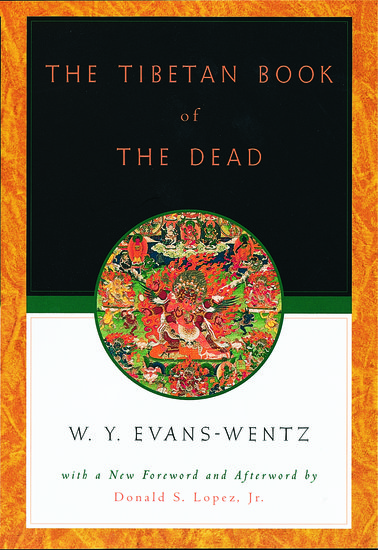 In Ann Patchett's novel Whistler, a pivotal scene occurs between the primary character, Daphne Fuller, and her former stepfather, Eddie. In it, they discuss Eddie's beliefs about the afterlife, which he says he formed in part by reading The Tibetan Book of the Dead.
The Tibetan Book of the Dead is the English title for a Buddhist text knows as Bardo Thodol (also bar do thos grol), generally translated as The Great Liberation by Hearing in the Intermediate States. In Tibetan Buddhism, the Bardo Thodol is read aloud to a dying or dead individual to help guide them through the intermediary state between life and death—the bardo—to either rebirth or enlightenment. (See the Beyond the Book for George Saunders's novel Lincoln in the Bardo for a more complete discussion of the bardo.)
Tradition has it that the Bardo Thodol was composed by Padmasambhava, an eighth-century tantric Buddhist Vajra master (an esteemed spiritual teacher), known more commonly as Guru Rinpoche. The work was transcribed by Padmasambhava's consort and student, Yeshe Tsogyal, who then buried it in the Gampo Hills in Central Tibet. It was said that the guru had all his writings hidden—under rocks, in lakes, in trees, etc.—to be found by Buddhist masters known as tertöns ("treasure revealers") when the information they contained was most needed. According to legend, the Bardo Thodol was rediscovered in the fourteenth century by the then fifteen-year-old Tibetan Karma Lingpa (c. 1326–c. 1386), though scholars suggest the work was actually authored by several individuals over many years, and that the current version dates from the fourteenth or fifteenth century.
The book came to the attention of Western scholars in the early twentieth century. A British officer, Major W.L. Campbell, returned from Asia in 1919 with a copy of the Bardo Thodol, which he shared with anthropologist Walter Evans-Wentz. Evans-Wentz, in turn, produced an English-language translation with the help of Lama Kazi Dawa Samdup, a teacher at a local school. Published as The Tibetan Book of the Dead in 1927, this version is the one most widely known in English-speaking countries and upon which most other translations are based. The title's similarity to E.A. Wallis Budge's translation of the Egyptian Book of the Dead, 1867, was deliberate; Evans-Wentz wanted his work to call to mind the earlier text.
Before long, Westerners began to adopt the book beyond its intended use as part of funerary rites. Carl Jung wrote an essay for the 1935 German edition (published in English in 1957) that contained a commentary on the work, seeing echoes between his own theories on consciousness and the views expressed in Bardo Thodol. And in 1964, Timothy Leary, Ralph Metner, and Richard Alpert published The Psychedelic Experience, a manual meant to guide people through LSD trips that was based loosely on the Bardo Thodol.
Translations of the text are in wide publication today, and Buddhism and Buddhist concepts are becoming more widely adopted in the United States as many seek an alternative to Judeo-Christian traditions. According to the Pew Research Center, the number of Buddhists in the U.S. grew by 22% in the decade between 2010 and 2020. Modern readers of the Bardo Thodol, such as Whistler's Eddie, use its tenets as a tool for personal growth; its teachings about nonattachment and impermanence hit home for many. As Eddie puts it, "Once we're comfortable with death, we'll do a better job with our lives."
You can read the full text of the Bardo Thodol (English translation) here.
Filed under Books and Authors
 This article relates to Whistler.
It first ran in the June 10, 2026
issue of BookBrowse Recommends.
This article relates to Whistler.
It first ran in the June 10, 2026
issue of BookBrowse Recommends.





A classic is a book that has never finished saying what it has to say
Click Here to find out who said this, as well as discovering other famous literary quotes!

Can you name the title?
Test your book knowledge with our daily trivia challenge!
Your guide toexceptional books
BookBrowse seeks out and recommends the best in contemporary fiction and nonfiction—books that not only engage and entertain but also deepen our understanding of ourselves and the world around us.
