
-
Your next favorite book
is waiting.
Summary | Excerpt | Reading Guide | Reviews | Beyond the Book | Read-Alikes | Genres & Themes | Author Bio

A Novel
by Abigail Savitch-Lew Book Reviewed by:
This article relates to Livonia Chow Mein

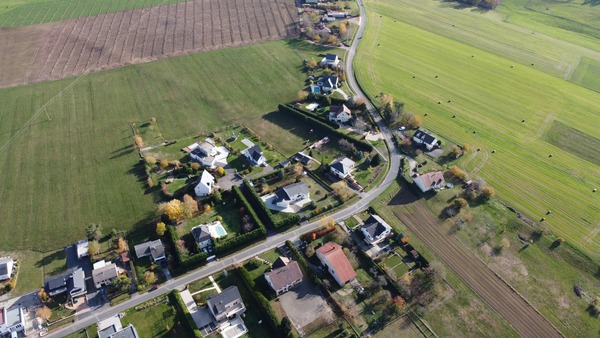 Lina Rodriguez Armstrong, the community organizer at the heart of Abigail Savitch-Lew's debut novel Livonia Chow Mein, knows she's landed on a solution to the skyrocketing real estate prices and rampant speculation that are displacing Black and Brown folks in Brooklyn's Brownsville neighborhood. Now if only she can get the decision-makers to pay attention…
Lina's proposed solution is one that is gaining momentum not only in New York City but across the country: the community land trust. Community land trusts offer an alternate framework for property ownership that also addresses the housing affordability crisis.
In the community land trust (CLT) model, the trust—usually a nonprofit organization governed by a board made up of community members—seeks a one-time investment of public and/or private funds used to purchase properties in their community. Then individuals and families—who often need to meet certain minimum and maximum income thresholds—can purchase properties that sit on that land. Because they are purchasing just the home—rather than the land it sits on, which remains in trust with the CLT—housing prices can remain more affordable. The CLT gains sustainable income via a long-term lease (99 years is a standard term) of the land to the homeowner.
As property values appreciate, homeowners can build equity in their homes and thereby establish generational wealth, but as part of their purchase contract, they agree to cap the amount at which they sell to subsequent buyers, thereby avoiding speculative buying and selling and helping keep the home affordable for future generations.
Modern community land trusts got their start in the wake of the 1960s Civil Rights Movement but have their origins in the ideas of nineteenth-century political economist Henry George. Informed by George's and others' ideas, in 1969, New Communities, Inc. was formed in rural Lee County, Georgia, to address systemic barriers like large-scale industrial farming, racial discrimination, and predatory lending practices that were preventing Black farmers from becoming landowners. Most of the first CLTs, like New Communities, served rural communities. The first urban community land trust, the Community Land Cooperative of Cincinnati, was established in 1981 by a group of churches dedicated to preventing the displacement of low-income Black residents from the neighborhoods they served.
Although home ownership remains the primary goal of most CLTs, other models are also growing in popularity, including CLTs that support independent businesses, renters in multi-family housing, and small family farms. Those interested in learning more about forming a CLT can find many resources online from organizations like the Grounded Solutions Network, the International Center for Community Land Trusts, and the NYC Community Land Initiative. A 2024 report from the Lincoln Institute of Land Policy documented 308 CLTs in the United States as of January 2024, up from 289 in 2021 and just 162 in 2006, so chances are good you have a CLT near you!
As more Americans, particularly those from historically disadvantaged backgrounds, are finding the traditional paths toward first-time home ownership unattainable, CLTs are offering an innovative model that helps address systemic barriers and maintain the vibrant multiculturalism in neighborhoods like Brownsville.
Photo of houses by Jean Woloszczyk.
Filed under Society and Politics
 This article relates to Livonia Chow Mein.
It first ran in the April 22, 2026
issue of BookBrowse Recommends.
This article relates to Livonia Chow Mein.
It first ran in the April 22, 2026
issue of BookBrowse Recommends.

L.A. Women by Ella Berman
Two ambitious writers in 1960s LA face betrayal when one writes a novel based on the other's life.






Your guide toexceptional books
BookBrowse seeks out and recommends the best in contemporary fiction and nonfiction—books that not only engage and entertain but also deepen our understanding of ourselves and the world around us.

