
-
Your next favorite book
is waiting.
Summary | Excerpt | Reviews | Beyond the Book | Read-Alikes | Genres & Themes | Author Bio

A Novel
by Mieko Kawakami Book Reviewed by:
This article relates to Sisters in Yellow

 In the United States, the "model minority" is a stereotype linked to Asian immigrants and diaspora. The myth speaks to a commitment to academic excellence while simultaneously diminishing experiences of discrimination. The stereotype and those who believe in it cherry-pick a racial group seen as embracing assimilation and pit them against other groups who consistently speak of white privilege and racism. Like all stereotypes, it is based on fallacious reasoning, and like all stereotypes, it sticks.
I found myself surprised when I read that Japan has a school dropout problem. Subconsciously, the model minority myth landed. But in the 2024 school year, a staggering number of Japanese students at the elementary and junior high school levels, more than 350,000, didn't go to school for 30 days or more. This represented a 2.2% increase over the previous year, in the twelfth straight year of rising numbers.
The reasons for non-attendance mostly aren't unique to Japan. Students lack the motivation to go. Anxiety and depression are symptomatic of a rigid school culture. Poor academic performance and a failure to turn in homework creates distance. There are friendship issues, and bullying. Covid-19 has also been cited as a reason.
In Mieko Kawakami's novel Sisters in Yellow, the three girls at the story's center all quit school. Protagonist Hana Ito was consistently bullied. She lived in tenement housing across from the school and her father was absent, her mother a hostess. Hana was awkward and an easy target. Ran Kato left high school because it was too far to travel on her bike, and then she entered beauty school and worked at night, but she missed classes, earned failing grades, and quit. Momoko Tamamori attended private school, but her affluent family fat-shamed her and she ran away.
Before 1992, school refusal in Japan was called tokokyohi, or "resistance," and was considered a mental illness. The language changed in 1997 to futoko, or "non-attendance."
While the price of school stress and pressure is consistent across cultures, one specific feature of Japanese schools is their rigidity. "Many schools in Japan control every aspect of their pupils' appearance, forcing pupils to dye their brown hair black, or not allowing pupils to wear tights or coats, even in cold weather. In some cases they even decide on the colour of pupils' underwear," writes Alessia Cerantola for the BBC. In Japan, hikikomori, or severe social isolation, is one of the most worrying consequences of school pressure, and suicides among students have reached record highs in recent years, despite a decline in the country's overall suicide rate.
Free schools, which began in the 1980s, are an alternative to compulsory education. At free schools, the environment is informal and casual, and there are common spaces. "The purpose of this school is to develop people's social skills," said Takashi Yoshikawa, the head of Tamagawa Free School. The population is quite small. When Yoshikawa opened his first free school in 2010, he expected high school students, but instead was surprised by seven- and eight-year-olds. It's his belief that communication problems are at the center of the dropout issue.
"In classrooms with about 40 students who have to spend a year together, many things can happen," said Professor Ryo Uchida, Nagoya University education expert. Japan has a high-density population where it's important to get along with others, but this skill can be challenging to learn in a large school.
"[T]he support provided for example by free schools is very meaningful," Professor Uchida says. "In free schools, they care less about the group and they tend to value the thoughts and feelings of each single student."
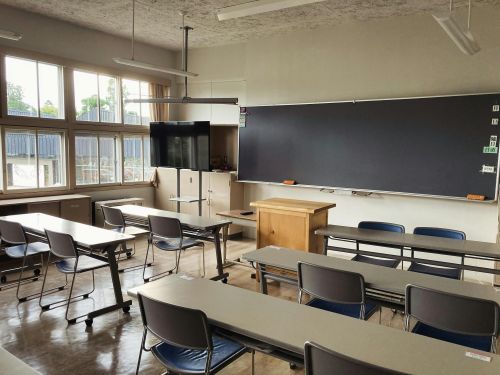
Classroom in Japan
Photo by ON VIXION, via Pexels
Filed under Places, Cultures & Identities
 This article relates to Sisters in Yellow.
It first ran in the April 22, 2026
issue of BookBrowse Recommends.
This article relates to Sisters in Yellow.
It first ran in the April 22, 2026
issue of BookBrowse Recommends.

L.A. Women by Ella Berman
Two ambitious writers in 1960s LA face betrayal when one writes a novel based on the other's life.






Your guide toexceptional books
BookBrowse seeks out and recommends the best in contemporary fiction and nonfiction—books that not only engage and entertain but also deepen our understanding of ourselves and the world around us.

