
-
Your next favorite book
is waiting.
Summary | Excerpt | Reading Guide | Reviews | Beyond the Book | Read-Alikes | Genres & Themes | Author Bio

Stories
by Louise Erdrich Book Reviewed by:
This article relates to Python's Kiss

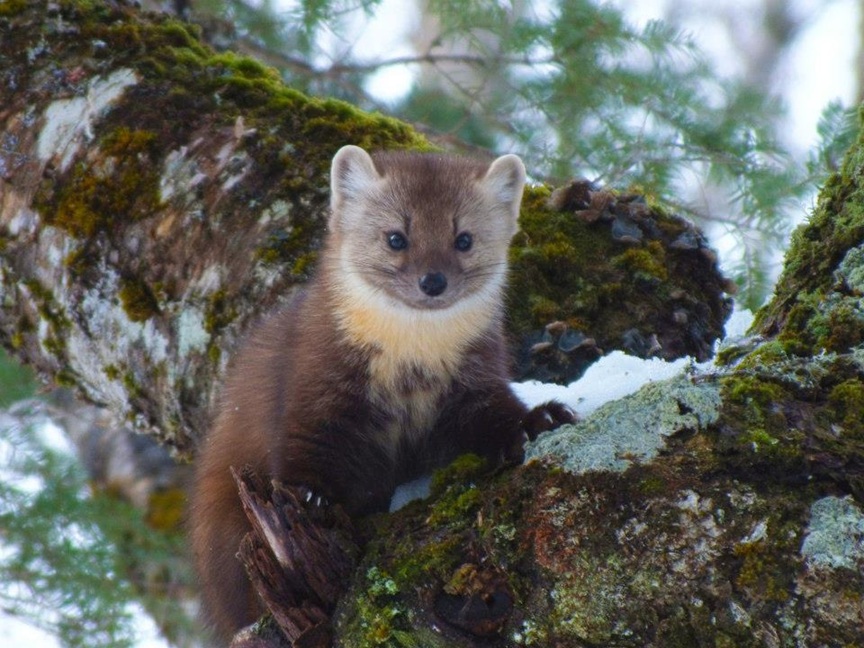 The Ojibwe are the most populous Indigenous tribe in North America today, encompassing several smaller bands, including the Turtle Mountain Band of of Chippewa, of which Louise Erdrich is a member. The Ojibwe people's connections to each other and to the environment are core details in the stories in her collection Python's Kiss.
In Ojibwe tradition, as in many other Indigenous cultures, the natural world is an interwoven part of everyday life.
The Ojibwe are the most populous Indigenous tribe in North America today, encompassing several smaller bands, including the Turtle Mountain Band of of Chippewa, of which Louise Erdrich is a member. The Ojibwe people's connections to each other and to the environment are core details in the stories in her collection Python's Kiss.
In Ojibwe tradition, as in many other Indigenous cultures, the natural world is an interwoven part of everyday life.
But in typical Western thinking, there is a disconnect and irregularity in how humans see each other in opposition to the natural world. As Potawatomi botanist and author Robin Wall Kimmerer writes:
"In the English language, a human alone has distinction while all other living beings are lumped with the nonliving 'its' ... It's no wonder that our language was forbidden. The language we speak is an affront to the ears of the colonist in every way, because it is a language that challenges the fundamental tenets of Western thinking—that humans alone are possessed of rights and all the rest of the living world exists for human use. Those whom my ancestors called relatives were renamed natural resources."
The belief that there is a direct spiritual kinship between humans and the natural world, and that everything within it deserves to be respected equally (people, animals, plants, stones) has long been central to Indigenous belief, but this idea is growing increasingly mainstream. In 2012, a large international group of scientists signed the Cambridge Declaration on Consciousness, which cited growing evidence of demonstrated consciousness in animals and explained, "[T]he weight of evidence indicates that humans are not unique in possessing the neurological substrates that generate consciousness. Non-human animals, including all mammals and birds, and many other creatures, (including octopi) also possess these neurological substrates."
Indigenous belief has always reflected the value that people weren't so different from the Earth and the rest of its inhabitants. Native people knew, on an instinctual and spiritual level, that everything is part of the same whole—long before Carl Sagan told us we were "all made of star-stuff." Why do the veins in our arms look so strikingly similar to the veins in a leaf? Why do atoms, microscopically, resemble a beehive, and a brain the roots of a plant?
Most Ojibwe clans are named for animals, and the Ojibwe are a part of the Anishinaabe people, many of whom have traditionally believed, according to documentation from Queen's University Indigenous Land-Based Learning, "the Creator convinced the animals to teach humans how to live in balance and harmony on the earth. The animals also teach the humans how to govern themselves with equitable social and political structures."
The seven primary clans of the Anishinaabe are: Waabizheshi (Marten), the hunters and protectors; Giigoonh (Fish), the planners and thinkers; Maang (Loon), the peacemakers and holders of local leadership roles; Bineshiinh (Bird), the knowledge keepers; Ajijaak (Crane), the negotiators responsible for Nation-to-Nation relations; Wawaashkeshi (Deer), the "gentle people" who are preservers of sacred teachings; and Makwa (Bear) that "has the largest clan membership" and are "known as the medicine people." The bear holds similar significance for the Iroquois, who perform the Haudenosaunee Bear Dance, which is a medicine dance in which a performer imitates the movements of a bear to promote healing.
Other animals special to the Ojibwe in particular are the Waabooz (snowshoe hare), which represents survival and storytelling wisdom, and the Ma'iingan (wolf), regarded as the "brother and partner to man," who is a symbol of prophecy and protection of familial units.
Indigenous people have a long history of valuing the natural world as crucial to human life, and environmental science teaches these same tenets. Through Erdrich and other Indigenous writers' commitment to weaving their traditions into the fabric of their work, non-Indigenous people are instructed in the vital arteries to the immense expanse of myth and culture of a group of peoples that was nearly smothered out.
A Newfoundland pine marten, photo by Bailey Parsons, courtesy of Wikimedia Commons CC BY-SA 3.0
Filed under Places, Cultures & Identities
 This article relates to Python's Kiss.
It first ran in the April 8, 2026
issue of BookBrowse Recommends.
This article relates to Python's Kiss.
It first ran in the April 8, 2026
issue of BookBrowse Recommends.
Theo of Golden by Allen Levi
One spring morning, a stranger arrives in the small southern city of Golden. No one knows where he has come from…or why…






Your guide toexceptional books
BookBrowse seeks out and recommends the best in contemporary fiction and nonfiction—books that not only engage and entertain but also deepen our understanding of ourselves and the world around us.


