
-
Your next favorite book
is waiting.
Summary | Excerpt | Reviews | Beyond the Book | Read-Alikes | Genres & Themes | Author Bio

 Book Reviewed by:
This article relates to One Word, Six Letters

In Adib Khorram's novel One Word, Six Letters, Farshid is struggling to come to terms with his identity. The pressure of being a closeted immigrant teenager in modern America manifests in anxiety and a fixation on diet and exercise.
Body dysmorphic disorder (BDD) can have a potentially devastating impact on a person's physical and mental wellbeing. The condition was first described by Italian psychiatrist Enrico Morselli in 1891. Other prominent figures such as psychiatrist Pierre Janet and neurologist Sigmund Freud also wrote case studies on people suffering from classic symptoms of the illness, known then as "dysmorphophobia." It received its first mention in the American Diagnostic and Statistical Manual (DSM) in 1980, before in 1987 being re-named BDD, the term which has been used to make diagnoses ever since.
As understanding of the condition developed throughout the 1990s and 2000s, it became associated primarily with girls and young women, but it can affect anyone at any age. Recent years have seen a particular surge in the number of teenage boys and young men affected, with the emergence of a sub-category known as muscle dysmorphia, or "bigorexia."
Characterized by an unhealthy preoccupation with physical appearance, sufferers go to extreme lengths to build muscle mass, believing they look skinny and frail, despite often having an average or even abnormally muscular build. A type of behavioral addiction, the condition is closely linked to obsessive compulsive disorder (OCD) and typically manifests in excessive exercise, an overly restrictive diet, purging, social anxiety, and steroid abuse.
Research shows that almost 90% of people suffering from muscle dysmorphia are young men aged 15–32. This precise demographic is known to be much more reluctant than women and girls to seek medical or psychiatric help. This makes it particularly difficult to quantify just how many people are living with the condition, as many likely go undiagnosed. Harmful stereotypes continue to push the narrative that BDD is an inherently "feminine" issue, which likely makes many young men hesitant to reach out for help. In reality, as many as 40% of people suffering from BDD are thought to be male.
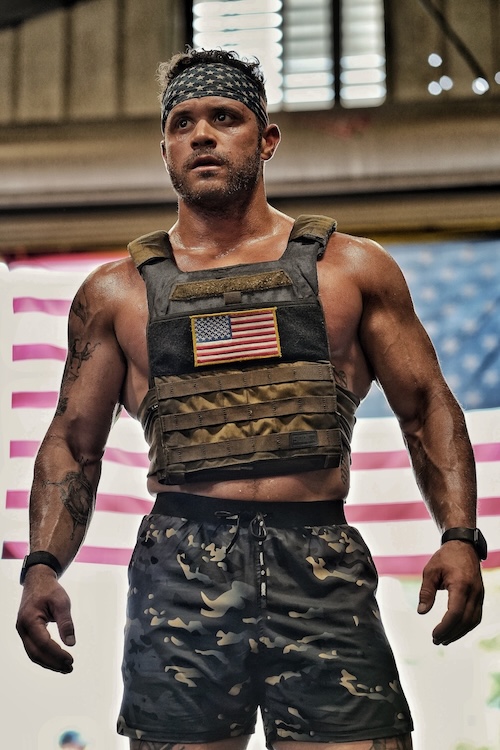 Social media pushing unrealistic body standards and a culture of constant comparison are thought to be leading causes of the steep rise in cases among young people. Genetics and social conditioning can also play a role, as those with a family history of body dysmorphia and eating disorders are known to be at greater risk. A study also found those who had adverse childhood experiences are more likely to develop muscle dysmorphia. It has been suggested that those who felt threatened or vulnerable in childhood may become fixated on the idea of building muscle as a form of defense, due to a muscular physique being conflated with strength and masculinity. This could also help to explain why those in predominantly masculine environments—like competitive weightlifting and the military—exhibit higher rates of muscle dysmorphia.
In milder cases, steps such as limiting social media exposure and reassessing your relationship with food and exercise can help reduce the problem, but seeking professional help is always advised, particularly in more severe cases. A wide range of treatment options are available depending on the individual's needs, including cognitive behavioral therapy (CBT), family-based treatment (FBT), dialectical behavioral therapy (DBT), and nutritional support.
In One Word, Six Letters, the first step towards self-acceptance for Farshid is recognizing the problem within himself and admitting that he needs help.
Army Capt. David B. Winne, who participates in bodybuilding and CrossFit competitions, courtesy of U.S. Department of War
Filed under Medicine, Science and Tech
 This article relates to One Word, Six Letters.
It first ran in the April 8, 2026
issue of BookBrowse Recommends.
This article relates to One Word, Six Letters.
It first ran in the April 8, 2026
issue of BookBrowse Recommends.

L.A. Women by Ella Berman
Two ambitious writers in 1960s LA face betrayal when one writes a novel based on the other's life.






Your guide toexceptional books
BookBrowse seeks out and recommends the best in contemporary fiction and nonfiction—books that not only engage and entertain but also deepen our understanding of ourselves and the world around us.

