
-
Your next favorite book
is waiting.
Summary | Excerpt | Reading Guide | Reviews | Beyond the Book | Read-Alikes | Genres & Themes | Author Bio
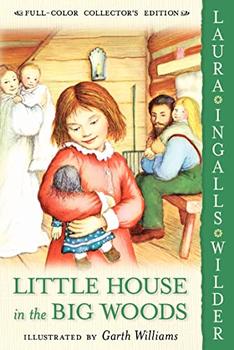
Little House on the Prairie #1
by Laura Ingalls Wilder Book Reviewed by:
This article relates to Little House in the Big Woods

 In Little House in the Big Woods, Laura Ingalls Wilder narrates a fictionalized version of her childhood in the Big Woods near Pepin, Wisconsin, in the 1870s. The first official book in the Little House series, Big Woods is less well-known than the third book, Little House on the Prairie, which has been read in countless classrooms across the country and was developed into an award-winning television series in the 1970s. But despite the popularity of the series, the prevalent anti-Black and anti-Native sentiments are a source of controversy and have stoked a conversation about what to do when classic children's literature reflects racist views.
Haitian American bestselling author Roxane Gay has written about her love for the Little House books, saying "the sweetest, most wide-eyed parts" of her grew out of reading about Laura and her family. Similarly, Korean American author and Newbery medalist Linda Sue Park read the Little House books repeatedly as a child, but she notes that she "knew where to hold the pages together so she wouldn't have to read the hurtful parts." Those hurtful parts were anti-Black—the mention of the "darkey" Uncle Ned in Big Woods—and anti-Native commentary, particularly Prairie's infamous line: "the only good Indian was a dead Indian." Park, like many people of color, felt dehumanized by the overt racism in the series. "Here I was," she explains, "trying so hard to be part of that story and realizing that I would have been completely rejected by Laura's family."
Criticisms of Wilder's work began as early as 1952, when a reader complained to the publisher about the offensiveness of one of the book's opening lines, which stated that the Ingalls family was headed west to where there "were no people…only Indians lived there." Appalled at this blatant implication that Indians weren't people, the publisher contacted Wilder, who responded, "It was a stupid blunder of mine. Of course Indians are people and I did not intend to imply they were not." The line was subsequently changed, with "settlers" taking the place of "people," but there were still many other inaccurate representations of Black and Native people that weren't addressed, and over the years, complaints continued.
In 2018, the American Library Association publicly took note of those decades of complaints and changed the name of the Laura Ingalls Wilder Lifetime Achievement Award to the Children's Literature Legacy Award. They stated that this decision was due to "the inconsistency between Wilder's legacy and [the Association for Library Service to Children's] core values of inclusiveness, integrity and respect." Some have proposed that racist passages be removed or rewritten, or that the Little House books be removed from libraries.
However, many, including Pulitzer Prize-winning author Caroline Fraser and Wilder biographer Pamela Smith Hill, strongly disagree with this type of revision. "[Those scenes] are very disturbing," says Hill, "but it is part of our history, and if we don't talk about these issues honestly with our children, we are jeopardizing their future and the future of our country." Fraser shared similar sentiments in an interview with the Washington Post, saying, "the answer to racism is not to impose purity retroactively or to disappear titles from shelves, no 8-year-old Dakota child should have to listen to an uncritical reading of 'Little House on the Prairie'…but no white American should be able to avoid the history it has to tell."
In a country still underpinned by racism, what, then, is the answer when nostalgic books have oppressive language that can harm readers? And how should classic books with historical depictions of racism be discussed with young readers, who may be encountering offensive words or stereotypes for the first time? Hill's opinion is that "an informed, contextual reading of Laura Ingalls Wilder's books" is necessary, and Roxane Gay agrees: "The books just have to be taught in context, and the proper context, not revisionist context."
In order to help provide some of that necessary context, Dr. Debbie Reese, a Nambé Pueblo scholar and educator, has developed American Indians in Children's Literature (AICL), an online database that "provides critical analysis of Indigenous peoples in children's and young adult books." It's important to note that Reese believes the depictions of Indigenous people in the Little House book do a disservice to both non-Native and Native children, "miseducating" the former into believing that Wilder's books are strictly fact and potentially traumatizing the latter. "The cognitive dissonance that a native child experiences when they read ['the only good Indian was a dead Indian'] in a sanctioned text throws them into this space…it's unsettling," Reese has stated.
In 2020, the School Library Journal shared an article interviewing several school librarians about their thoughts on what to do with classic literature that is racist or hurtful. One librarian said that "trying not to censor and not to further oppression at the same time is challenging." Another said she's not in favor of pulling books from shelves because she "believe[s] in a child's right to read what they want." Across the board, librarians recognize the importance of context when recommending, teaching, or reading controversial books. If a problematic classic is being taught as part of a curriculum, "a good teacher should step in and provide information about when the book was written and some of the factors that might have gone into [the author's] choice to use that word." When such a book is praised or recommended because of certain themes or lessons, many librarians try to find alternative titles to suggest or teach alongside a classic that might be deemed offensive, specifically ones that share the same themes but are written, for instance, by people of color who write characters of the same background. To Kill a Mockingbird, for example, could be taught alongside The Hate U Give by Angie Thomas, which has similar themes of "coming of age and agency and finding one's voice as a youngster" but is written by a Black woman about a Black high school student's political awakening. In agreement with this, Dr. Reese's AICL has several lists of books that accurately and respectfully depict Native cultures and could serve as alternatives or additions to the usual literature studied in the classroom.
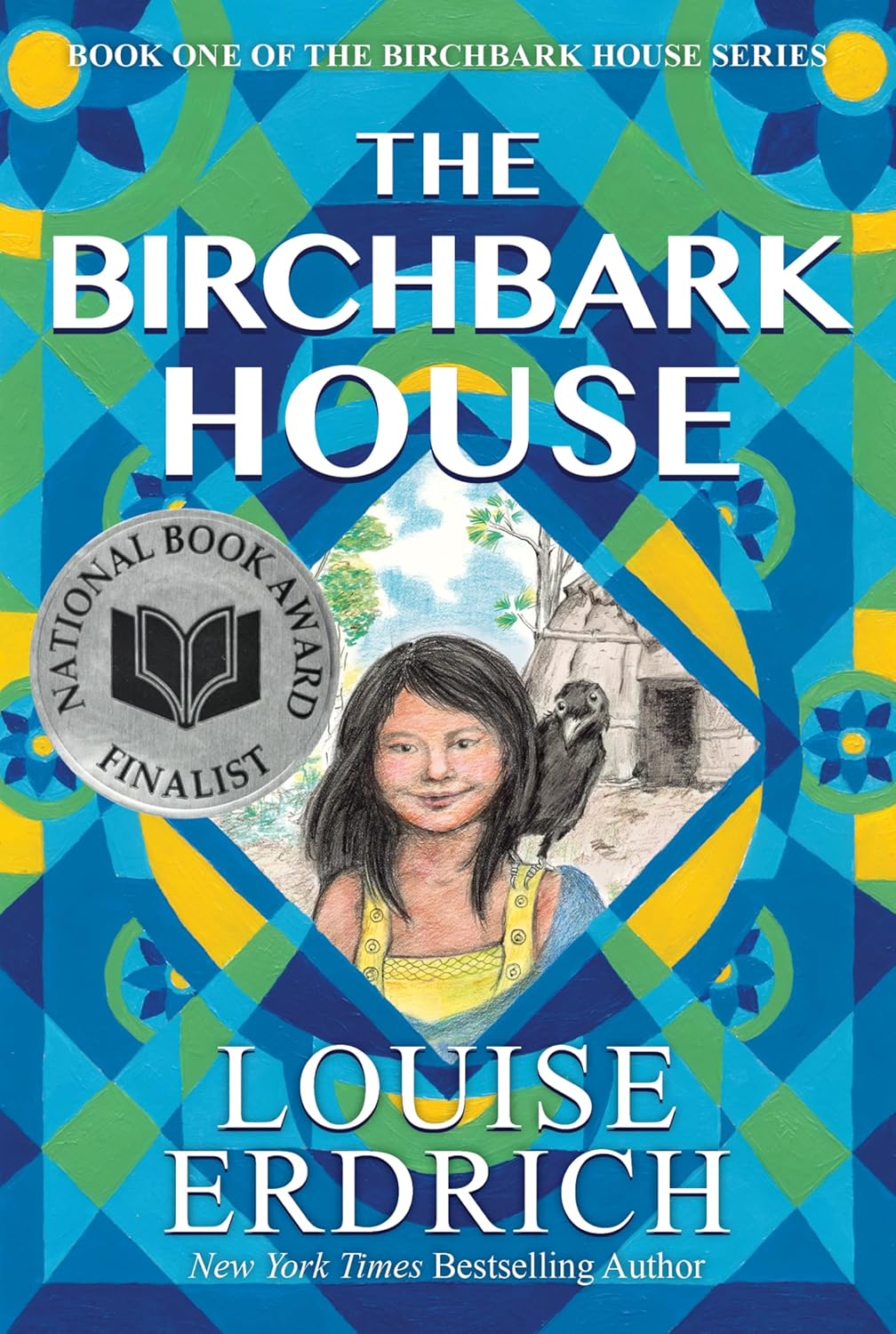
Educators, librarians, parents, and others helping young people choose books should take note and seek out authors from diverse backgrounds or marginalized perspectives as alternatives to classics with problematic language or topics, or to be read alongside these classics. Linda Sue Park can help with that; inspired by the simultaneous love and pain she felt over the Little House series, Park wrote her own children's book, Prairie Lotus, which takes place in Dakota territory during the same time as Wilder's books and features an Asian American main character. Louise Erdrich's Birchbark House series is another great option. The AICL offers a comprehensive list of historical fiction titles, broken down by decade.
When sharing books like those in the Little House series with young people, it's necessary to provide context and support to ensure that all readers feel heard during potentially painful discussions. Although the series isn't as wholesome as many would make it out to be, it features themes of hope, resilience, and determination, and a story displaying those positive aspects and told through the eyes of a fellow child may be the perfect springboard for young readers to discuss racism in contemporary society.
Filed under Books and Authors
 This article relates to Little House in the Big Woods.
It first ran in the January 28, 2026
issue of BookBrowse Recommends.
This article relates to Little House in the Big Woods.
It first ran in the January 28, 2026
issue of BookBrowse Recommends.
L.A. Women by Ella Berman
Two ambitious writers in 1960s LA face betrayal when one writes a novel based on the other's life.






Your guide toexceptional books
BookBrowse seeks out and recommends the best in contemporary fiction and nonfiction—books that not only engage and entertain but also deepen our understanding of ourselves and the world around us.

