
-
Your next favorite book
is waiting.
Summary | Excerpt | Reading Guide | Reviews | Beyond the Book | Read-Alikes | Genres & Themes | Author Bio

 Book Reviewed by:
This article relates to Broken Country

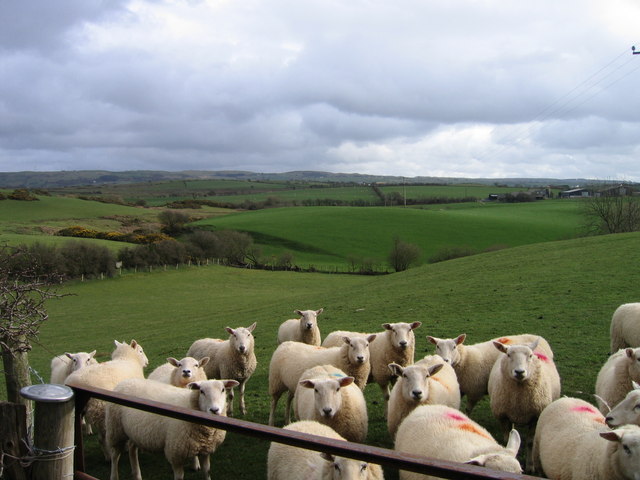 In Clare Leslie Hall's novel Broken Country, main characters Beth and Frank Johnson are sheep farmers in the North Dorset region of England. The book talks about the couple raising lambs that are then sold to market.
Sheep have been farmed on the British Isles since Roman times, and it remains a significant industry, particularly in the Southwest and Northern parts of England. The UK's Agriculture and Horticulture Development Board estimates that in 2023, there were nearly 32 million head of sheep in England spread across more than 26,000 farms. It was a £1.3 billion ($1.7 billion) industry in 2020 and employed approximately 150,000 people at that time.
Sheep can be farmed for a number of reasons—wool production, milk, sheepskin, and land management (they can improve soil health through their grazing and the resultant manure). Although the UK did at one point have a thriving wool industry, in recent years it has become too expensive to raise sheep for this purpose alone. In many cases shearing the animals can cost more than farmers would earn by selling the wool. Consequently, today sheep are primarily raised for their meat. Lamb makes up the bulk of the product on the market because it's widely considered to be more tender than mutton (meat from an adult sheep). In Broken Country, most of the couple's income comes from selling lambs.
Lambing takes a great deal of work and planning. The schedule varies across the UK, but in farms located in North Dorset, generally the production cycle starts in September. The farmers carefully check their ewes to make sure they're in breeding shape, since those that are too fat or too thin are unlikely to conceive or successfully raise young. Each animal's body condition is rated on a scale of 1-5, with 2.5-3.5 being optimal. Animals that are too thin are generally put to pasture on the lushest grass while overweight ewes are placed on a diet. Culled ewes—those no longer in breeding condition—are generally sent to slaughter and become mutton, and newly purchased ewes may be added to the herd at this time. Healthy rams are considered those that rate from 3.5-4.0 on the scale.
In October, rams are paired up with ewes for breeding. An experienced ram may have 50-100 ewes to service, while a less experienced animal's harem may consist of about 25. Males are segregated from the females after six to eight weeks (long enough for two estrus cycles). The gestation period for sheep is 145-150 days, and pregnant sheep are given an ultrasound by a technician who brings equipment to the farm. This provides information about the number of lambs a ewe is expecting, allowing farmers to segregate them so their nutritional needs can be adequately managed (i.e., a sheep pregnant with three lambs needs a heartier diet than one pregnant with a single lamb).
Lambs are typically born in March in the UK, and it's a very hectic time for the farmers. Those with many pregnant ewes are busy almost 24/7 for weeks because the ewes need to be watched carefully. They can generally bear their young unaided but might need assistance for a difficult birth. A properly positioned lamb exits its mother in a sort of diving position, with the front hooves coming out first followed by the head and then the rest of the body. It's vital that a newborn start nursing within two hours of birth to help prevent disease and infection.
In April, the lambs are turned out to pasture with their mothers, and they start eating a mixture of grass and milk. Most weigh just 8-12 lbs at birth (2.5 kg) but they grow rapidly—as much as 10 oz (300 g) a day. The following month the lambs are weaned, and ewes are placed in a separate area, away from their offspring.
The lambs continue to gain weight throughout the summer, until they reach about 85 lbs (40 kg), usually in August. Farmers may keep some to increase their herds or to replace ewes that are no longer able to reproduce, but the majority are sold for slaughter.
Sheep farm in Wales near Aberystwyth, courtesy of Ian Medcalf via Wikimedia Commons, CC BY-SA 2.0
Filed under Nature and the Environment
 This article relates to Broken Country.
It first ran in the December 10, 2025
issue of BookBrowse Recommends.
This article relates to Broken Country.
It first ran in the December 10, 2025
issue of BookBrowse Recommends.

L.A. Women by Ella Berman
Two ambitious writers in 1960s LA face betrayal when one writes a novel based on the other's life.






Your guide toexceptional books
BookBrowse seeks out and recommends the best in contemporary fiction and nonfiction—books that not only engage and entertain but also deepen our understanding of ourselves and the world around us.


