
-
Your next favorite book
is waiting.
Summary | Excerpt | Reviews | Beyond the Book | Read-Alikes | Genres & Themes | Author Bio

 Book Reviewed by:
This article relates to Bury Your Gays

 The meaning behind Bury Your Gays' title becomes clear as soon as oily Harold Bros. executive Jack Hays orders protagonist Misha to do the bidding of the algorithm for the sake of his streaming TV show and kill off two lesbian characters. Author Chuck Tingle is commenting on the cynical use of queer representation in entertainment, especially on streaming television: characters are flaunted for brownie points, then casually discarded when they've served their purpose. But the "bury your gays" trope, in which queer characters are more likely to die than their straight counterparts, has been around for much longer than the likes of Netflix, and these character deaths have been motivated by many different factors.
For a long time, if gay characters were shown at all in film or television, it was as a villain, monster, or general person of ill-repute. The Hays Code, which censored Hollywood from the early 1930s to the mid-'60s, forbid the portrayal of homosexuality as anything other than wicked behavior to be punished. Certain characters, usually villains, were "coded" as gay or bisexual — recall Peter Lorre as Joel Cairo in The Maltese Falcon, or Laurence Olivier's Crassus in Spartacus — which, as discussed in Vito Russo's The Celluloid Closet, certainly didn't help the reputation of actual queer people.
Even as social mores shifted and queer characters were portrayed with a modicum of humanity, they usually met a tragic fate. From The Children's Hour, William Wyler's 1961 film about a lesbian school teacher being driven to suicide, through the AIDS epidemic, queer characters rarely ended their stories unscathed: in the documentary version of The Celluloid Closet, a lengthy montage depicts one gay or lesbian character after another dying, dying, dying.
Contemporary television is rife with examples of the trope: it has appeared in some form on everything from LA Law and Ally McBeal to Supernatural and Doctor Who. These shows are often lauded by critics for including queer characters despite killing them off for a cheap source of drama or tragedy, their deaths used to highlight the strengths and range of feeling of the heterosexual protagonist(s). A long list of examples can be found on the TV Tropes website.
Of course, a tragic ending for a queer character can be as dramaturgically sound as a happy ending, and demanding a rosy, sanitized picture of queer reality is as misguided in its own way as the Hays Code. But the history of the trope shows how cynical its execution has been, and Tingle's take is a necessary rejoinder. Like the New Queer Cinema movement that emerged post-AIDS, Bury Your Gays is a reminder of how important it is for queer writers to tell their own stories.
Cropped version of Televisión gay, by Esther Vargas (CC BY-SA 2.0)
Filed under Cultural Curiosities
 This "beyond the book article" relates to Bury Your Gays. It originally ran in July 2024 and has been updated for the
June 2025 paperback edition.
Go to magazine.
This "beyond the book article" relates to Bury Your Gays. It originally ran in July 2024 and has been updated for the
June 2025 paperback edition.
Go to magazine.
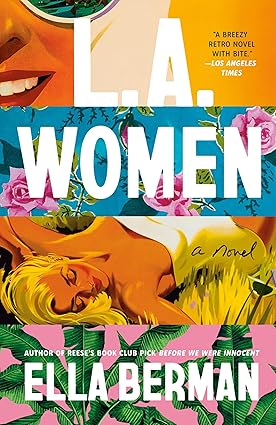
L.A. Women by Ella Berman
Two ambitious writers in 1960s LA face betrayal when one writes a novel based on the other's life.






Your guide toexceptional books
BookBrowse seeks out and recommends the best in contemporary fiction and nonfiction—books that not only engage and entertain but also deepen our understanding of ourselves and the world around us.

