
-
Your next favorite book
is waiting.
Summary | Excerpt | Reviews | Readalikes | Genres & Themes | Author Bio
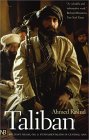
Militant Islam, Oil and Fundamentalism in Central Asia
by Ahmed Rashid
Some Taliban say Omar was chosen as their leader not for his political or military ability, but for his piety and his unswerving belief in Islam. Others say he was chosen by God. 'We selected Mullah Omar to lead this movement. He was the first amongst equals and we gave him the power to lead us and he has given us the power and authority to deal with people's problems,' said Mullah Hassan. Omar himself gave a simple explanation to Pakistani journalist Rahimullah Yousufzai. 'We took up arms to achieve the aims of the Afghan jihad and save our people from further suffering at the hands of the so-called Mujaheddin. We had complete faith in God Almighty. We never forgot that. He can bless us with victory or plunge us into defeat,' said Omar.
No leader in the world today is surrounded by as much secrecy and mystery as Mullah Mohammed Omar. Aged 39, he has never been photographed or met with Western diplomats and journalists. His first meeting with a UN diplomat was in October 1998, four years after the Taliban emerged, when he met with the UN Special Representative for Afghanistan Lakhdar Brahimi, because the Taliban were faced with a possibly devastating attack by Iran. Omar lives in Kandahar and has visited the capital Kabul twice and only then very briefly. Putting together the bare facts of his life has become a full-time job for most Afghans and foreign diplomats.
Omar was born sometime around 1959 in Nodeh village near Kandahar to a family of poor, landless peasants who were members of the Hotak tribe, the Ghilzai branch of Pashtuns. The Hotaki chief Mir Wais, had captured Isfahan in Iran in 1721 and established the first Ghilzai Afghan empire in Iran only to be quickly replaced by Ahmad Shah Durrani. Omar's tribal and social status was non-existent and notables from Kandahar say they had never heard of his family. During the 1980s jihad his family moved to Tarinkot in Urozgan province ---one of the most backward and inaccessible regions of the country where Soviet troops rarely penetrated. His father died while he was a young man and the task of fending for his mother and extended family fell upon him.
Looking for a job, he moved to Singesar village in the Mewand district of Kandahar province, where he became the village mullah and opened a small madrassa. His own studies in madrassas in Kandahar were interrupted twice, first by the Soviet invasion and then by the creation of the Taliban. Omar joined Khalis's Hizb-e-Islami and fought under commander Nek Mohammed against the Najibullah regime between 1989 and 1992. He was wounded four times, once in the right eye which is now permanently blinded.
Despite the success of the Taliban, Singesar is still like any other Pashtun village. Mud-brick homes plastered with more mud and straw are built behind high compound walls ---a traditional defensive feature of Pashtun homes. Narrow, dusty alleyways, which turn into mud baths when it rains, connect village homes. Omar's madrassa is still functioning ---a small mud hut with a dirt floor and mattresses strewn across it for the boys to sleep on. Omar has three wives, who continue living in the village and are heavily veiled. While his first and third wives are from Urozgan, his teenage second wife Guljana, whom he married in 1995, is from Singesar. He has a total of five children who are studying in his madrassa.
A tall, well-built man with a long, black beard and a black turban, Omar has a dry sense of humour and a sarcastic wit. He remains extremely shy of outsiders, particularly foreigners, but he is accessible to the Taliban. When the movement started he would offer his Friday prayers at the main mosque in Kandahar and mix with the people, but subsequently he has become much more of a recluse, rarely venturing outside Kandahar's administrative mansion where he lives. He now visits his village infrequently and when he does he is always accompanied by dozens of bodyguards in a convoy of deluxe Japanese jeepsters with darkened windows.
From Taliban. Copyright © 2000 Ahmed Rashid. All rights reserved. Used by permission of Yale Univ. Press.

L.A. Women by Ella Berman
Two ambitious writers in 1960s LA face betrayal when one writes a novel based on the other's life.






Your guide toexceptional books
BookBrowse seeks out and recommends the best in contemporary fiction and nonfiction—books that not only engage and entertain but also deepen our understanding of ourselves and the world around us.


