
-
Your next favorite book
is waiting.
Summary | Excerpt | Reviews | Beyond the Book | Readalikes | Genres & Themes | Author Bio

The Art and Science of Prediction
by Philip E. Tetlock Book Reviewed by:
How our low-profile superforecasters compare with cerebral celebrities like Tom Friedman is an intriguing question, but it can't be answered because the accuracy of Friedman's forecasting has never been rigorously tested. Of course Friedman's fans and critics have opinions one way or the other--"he nailed the Arab Spring" or "he screwed up on the 2003 invasion of Iraq" or "he was prescient on NATO expansion." But there are no hard facts about Tom Friedman's track record, just endless opinions--and opinions on opinions. And that is business as usual. Every day, the news media deliver forecasts without reporting, or even asking, how good the forecasters who made the forecasts really are. Every day, corporations and governments pay for forecasts that may be prescient or worthless or something in between. And every day, all of us--leaders of nations, corporate executives, investors, and voters--make critical decisions on the basis of forecasts whose quality is unknown. Baseball managers wouldn't dream of getting out the checkbook to hire a player without consulting performance statistics. Even fans expect to see player stats on scoreboards and TV screens. And yet when it comes to the forecasters who help us make decisions that matter far more than any baseball game, we're content to be ignorant.
In that light, relying on Bill Flack's forecasts looks quite reasonable. Indeed, relying on the forecasts of many readers of this book may prove quite reasonable, for it turns out that forecasting is not a "you have it or you don't" talent. It is a skill that can be cultivated. This book will show you how.
The One About the Chimp
I want to spoil the joke, so I'll give away the punch line: the average expert was roughly as accurate as a dart-throwing chimpanzee.
You've probably heard that one before. It's famous--in some circles, infamous. It has popped up in the New York Times, the Wall Street Journal, the Financial Times, the Economist, and other outlets around the world. It goes like this: A researcher gathered a big group of experts--academics, pundits, and the like--to make thousands of predictions about the economy, stocks, elections, wars, and other issues of the day. Time passed, and when the researcher checked the accuracy of the predictions, he found that the average expert did about as well as random guessing. Except that's not the punch line because "random guessing" isn't funny. The punch line is about a dart-throwing chimpanzee. Because chimpanzees are funny.
I am that researcher and for a while I didn't mind the joke. My study was the most comprehensive assessment of expert judgment in the scientific literature. It was a long slog that took about twenty years, from 1984 to 2004, and the results were far richer and more constructive than the punch line suggested. But I didn't mind the joke because it raised awareness of my research (and, yes, scientists savor their fifteen minutes of fame too). And I myself had used the old "dart-throwing chimp" metaphor, so I couldn't complain too loudly.
I also didn't mind because the joke makes a valid point. Open any newspaper, watch any TV news show, and you find experts who forecast what's coming. Some are cautious. More are bold and confident. A handful claim to be Olympian visionaries able to see decades into the future. With few exceptions, they are not in front of the cameras because they possess any proven skill at forecasting. Accuracy is seldom even mentioned. Old forecasts are like old news--soon forgotten--and pundits are almost never asked to reconcile what they said with what actually happened. The one undeniable talent that talking heads have is their skill at telling a compelling story with conviction, and that is enough. Many have become wealthy peddling forecasting of untested value to corporate executives, government officials, and ordinary people who would never think of swallowing medicine of unknown efficacy and safety but who routinely pay for forecasts that are as dubious as elixirs sold from the back of a wagon. These people--and their customers--deserve a nudge in the ribs. I was happy to see my research used to give it to them.
Excerpted from Superforecasting by Philip E. Tetlock. Copyright © 2015 by Philip E. Tetlock. Excerpted by permission of Crown. All rights reserved. No part of this excerpt may be reproduced or reprinted without permission in writing from the publisher.
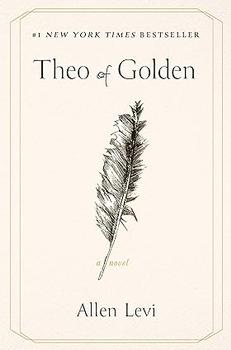
Theo of Golden by Allen Levi
One spring morning, a stranger arrives in the small southern city of Golden. No one knows where he has come from…or why…





Your guide toexceptional books
BookBrowse seeks out and recommends the best in contemporary fiction and nonfiction—books that not only engage and entertain but also deepen our understanding of ourselves and the world around us.


