
-
Your next favorite book
is waiting.
Summary | Excerpt | Reviews | Beyond the book | Read-Alikes | Genres & Themes | Author Bio

The Art and Science of Prediction
by Philip E. Tetlock Book Reviewed by:
It's that time of the year. Each December and January, pundits and thinktanks publish their takes on the events of the last year and make predictions for the next. What conflicts will come to a boiling point, which elections will swing where, what trends will take hold? A question that is less frequently asked of expert panels, however, is placed front and center in Superforecasting: How accurate were the previous year's pronouncements? And, when statements are couched in vague, noncommittal language like "It's possible that," and "We may see, in the future," how can we judge their accuracy at all?
Within these 269 plain-language pages (or 328 for those "super-readers" who seek out the appendix), Philip Tetlock, a political scientist and Wharton School psychologist—with the help of Dan Gardner, a journalist and academic who works wonders in translating Tetlock's expertise for a lay reader—describes his research and forecasting methods. Readers looking for ways to improve their analytic and forecasting abilities will walk away not only inspired, but with a concrete to-do list.
The foundation of the book is a massive tournament sponsored by IARPA, a U.S. government national intelligence organization that invests in high-risk, high-payoff research to improve the U.S.'s intelligence work, including forecasting global political and economic trends. (The idea being that an intelligence analyst's carefully crafted forecast could be what helps their agency prepare for a major global event; an off-base guess, however, could doom an operation.) The tournament began in 2011 and featured five teams led by top foresight researchers, one of whom was Tetlock. Teams competed to generate the most accurate forecasts on a variety of questions that were relevant to intelligence analysts at the time, such as "Will the president of Tunisia flee his country in the next month?" and "Will the euro fall below $1.20 in the next twelve months?"
Tetlock recruited ordinary people to his team, called it the "Good Judgement Project," and proceeded to win the whole thing. Over four years and nearly five hundred questions about international affairs, Tetlock's "superforecasters" got better and better at predicting, eventually beating the accuracy of prediction markets, random guessing, and trained intelligence professionals with access to classified information. In Superforecasting, Tetlock and Gardner explain how that improvement happened. To do so, they include a short list of Tetlock's "Ten Commandments," as well as in-depth explanations of how superforecasters tend to approach the world. They instruct participants to implement methods like breaking large questions into smaller ones—when calculating how many piano tuners are in Chicago, for example, it helps to ask how many pianos there are, how often a piano must be tuned, and how much manpower it takes to do so. Another tip: during your forecast postmortems, look for the errors behind both your inaccurate and accurate forecasts. "Not all successes imply your reasoning was right," Tetlock warns. Tetlock's research shows that even reading just those Ten Commandments improved participants' forecasting outcomes by an average of 10%.
One of the book's biggest strengths is the combination of the authors' expertise. Both have written previously about decision-making and about the shortfalls of human thought. Before Superforecasting, Tetlock was infamous for his "dart-throwing chimpanzee" study on experts' abilities to predict the future, from which many took the lesson that expert knowledge was totally unreliable. Tetlock has worked overtime ever since to explain the nuances of that study, and continues to do so in Superforecasting, diving into the quantitative science behind forecasting and how individuals and groups can improve their prediction skills. After all, he writes, "it is one thing to recognize the limits on predictability, and quite another to dismiss all prediction as an exercise in futility." And Gardner turns all of Tetlock's research and analysis into clear, approachable explanations, providing a plethora of examples to illustrate everything from regression to Bayesian equations.
When a colleague recommended Superforecasting, I approached it with more than a grain of salt—I pushed a full boulder of sodium at it. The market for pop psychology writing—books promising health, wealth, and mental perfection—has exploded over my lifetime, with public intellectuals flooding the speaker circuit and publishing world with simple solutions to complex problems. In many ways, however, this book is the pop-psychology antithesis. Tetlock and Gardner caution against overapplication; they provide incredibly specific and measurable benchmarks for success; despite the numerical evidence supporting their method, they refuse to overpromise an easy solution to the world's prediction woes. This process creates skilled thinkers, not soothsayers; forecasting "is a skill that can be cultivated. This book will show you how," as they put it. And when the evidence isn't there on a question, they don't venture a guess; "Knowing what we don't know is better than thinking we know what we don't." The scientific embrace of doubt, in fact, is key to becoming a superforecaster yourself.
If a reader leaves this book with nothing but a more critical eye towards punditry, that's already an improvement upon the status quo. And if an even more inspired reader takes up the task of diving further into the complexities of predicting the future and practicing their craft on one of the many forecasting platforms out there, they can contribute in a real way to strategic foresight research. It may not save the world, but the likelihood of improving it—well, it's statistically significant.
 This review
first ran in the January 28, 2026
issue of BookBrowse Recommends.
This review
first ran in the January 28, 2026
issue of BookBrowse Recommends.

If you liked Superforecasting, try these:

by Carissa Véliz
Published 2026
From an award-winning University of Oxford professor comes a brilliant, urgent new look at prophecies—the predictions that determine our lives, from our personal finances and the quality of our healthcare to the news and social media we consume and the produces foisted upon us.
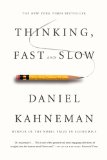
by Daniel Kahneman
Published 2013
Engaging the reader in a lively conversation about how we think, Thinking, Fast and Slow will transform the way you think about thinking.
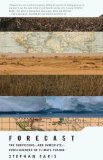
by Stephan Faris
Published 2009
A vivid and illuminating portrayal of the surprising ways that climate change will affect the world in the near future—politically, economically, and culturally

L.A. Women by Ella Berman
Two ambitious writers in 1960s LA face betrayal when one writes a novel based on the other's life.






Your guide toexceptional books
BookBrowse seeks out and recommends the best in contemporary fiction and nonfiction—books that not only engage and entertain but also deepen our understanding of ourselves and the world around us.

