
-
Your next favorite book
is waiting.
Summary | Excerpt | Reading Guide | Reviews | Beyond the Book | Readalikes | Genres & Themes | Author Bio

A Novel
by Denise Mina Book Reviewed by:
18:38
Professor Claudia Atkins O'Sheil, MBE, and Lord Philip Ardmore were taking the back stairs at the Royal College of Forensic Scientists in Regent's Park, heading down to the distant rumble of a party in the open courtyard.
Even here, in a little-used service area, the new building was elegant and understated. A handrail of pale ash spiralled seamlessly down from the third floor. A soft light from skylights tucked into the eaves made the concrete walls look like grey suede in the late January gloom.
In just twenty minutes Claudia was due on stage in front of an auspicious audience, being filmed and recorded as she gave a career-defining speech about her most famous criminal case. She would outline the facts of the murders at Chester Terrace and the subsequent investigation, explain how her scientific evidence had secured the conviction of a vicious murderer.
But Claudia was not going to give that speech. She was going to tell the truth tonight. It would ruin her life but she had to do it.
If certain people knew what she had planned they would do anything to stop her so she had been careful and secretive. To protect her sons from this act of social terrorism, she had tucked them somewhere safe and set up a bank account in their names. She'd handwritten the speech and burned her early drafts because she didn't trust the security on her computer or the sanctity of her bins.
Every minute of every day for the past few weeks she had been expecting to be found out, denounced and stopped. But it didn't happen. In twenty minutes she would blow her world apart.
Astonished to have got this close, the enormous consequences of what she was about to do began to weigh on her. Her staff would lose their jobs. Criminal cases the world over would have to be retried. A lot of well-meaning people would be discredited. She would ruin her own career and that of the man walking with her now. Lord Philip Ardmore had asked her to speak tonight. He had sponsored her career in many ways, had been kind and supportive since she lost her husband. He had promoted and protected her.
Philip was quite proper and this would be a gross public humiliation for him.
Claudia was no great fan of drama but the theatrics were absolutely necessary. Having the courage to speak out was only half the issue. The real problem was getting people to listen.
Comfortable fictions versus awkward truths were not unheard of in forensic science.
A day after the first Shaken Baby Syndrome conviction the academic whose work it was based on gave several interviews to the press. The court had misunderstood his data, he said, the numbers didn't mean that. No one listened to him. For decades afterwards grieving parents had been accused of shaking their infant children to death. It was a fairly successful charge: many accused fathers pled guilty and confessed to the crime. Of course the authorities were not in the home at the time of the offence. They couldn't know which of the parents was to blame so both were charged. These couples often had other children. It occurred to no one that the fathers might plead guilty so that their partner was set free and allowed to raise the other kids. Shaken Baby Syndrome had a good conviction rate. It became an accepted charge.
And Claudia knew it was hard to listen to the contradiction of an established legal fact because reversals were so consequential. The serial killer Ted Bundy was convicted on the basis of Forensic Odontology, bitemark-matching evidence, a science now discredited. If Bundy wasn't dead, he'd be out.
She was familiar with the stickiness of a comfortable lie, how hard it was to make people turn and face the truth, so her revelations had to be spectacular. She would make a fool of herself by saying these things. She'd much rather just keep quiet and collect her pension, but she might die of shame if she didn't do something. She was too angry to stay silent.
Excerpted from The Good Liar by Denise Mina. Copyright © 2025 by Denise Mina. Excerpted by permission of Mulholland. All rights reserved. No part of this excerpt may be reproduced or reprinted without permission in writing from the publisher.
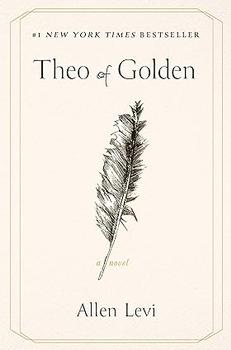
Theo of Golden by Allen Levi
One spring morning, a stranger arrives in the small southern city of Golden. No one knows where he has come from…or why…






Your guide toexceptional books
BookBrowse seeks out and recommends the best in contemporary fiction and nonfiction—books that not only engage and entertain but also deepen our understanding of ourselves and the world around us.


