
-
Your next favorite book
is waiting.
Summary | Excerpt | Reading Guide | Reviews | Beyond the book | Read-Alikes | Genres & Themes | Author Bio

A Novel
by Denise Mina Book Reviewed by:
Professor Claudia Atkins O'Sheil is a well-respected forensic scientist whose expertise is bloodstain pattern analysis. When she inadvertently gets wrapped up in the crime scene investigation of a gruesome double-murder at Chester Terrace, and her work is used to convict a young man that Claudia knows to be innocent, she begins to dig into the case herself. She discovers that there are many parties working to hide the real killer, and that the case may be tied to the death of her husband only months before. When given the chance to reveal what really happened at the cost of her reputation, her career, and her life, Claudia must decide whether it's better to be honest or to live a comfortable lie.
The Good Liar opens in the final minutes before Claudia is set to give a speech at the Royal College of Forensic Scientists. The ominous chapter title reads 18:38—a countdown to the time when she must decide whether or not to publicly tell the truth about the murder's cover-up and reveal the killer. But what is the truth, and why is it so dangerous? Neither question is answered before author Denise Mina jumps back in time to one year prior, the night of the murder in question. The narrative alternates between present day, just before Claudia's speech, and the past year in which Claudia works to solve the case. It's not a unique framework, but it is successfully employed here, creating a frantic pace that complements Claudia's scattered emotions.
Between the death of her husband, the gruesomeness of the murders, and the horrifying realization that her forensic work has been used to falsely convict an innocent man, Claudia's emotions swing wildly throughout the novel. One minute she's burning with rage to the point of accidentally breaking someone's arm, and the next she's frozen in fear and unable to function. While these dramatic changes don't seem unrealistic—extreme, but not unrealistic—they do make Claudia's character a bit unsympathetic, especially when her emotions are aimed at her sons. Even though she tells herself that "all she had left were her boys," Claudia refuses to be honest with them, believing that she's protecting them from the truth about their father's death and instead finds herself wanting "to scream at them so hard that her knuckles were white" when they question her detective work. Later, when Bernie, her youngest, is being fitted for his school uniform, Claudia makes him "choose the trousers with the smaller waist, the size that dug in a little…it was a nag in absentia, a reminder not to eat too much." Claudia's motivations make sense in context, and readers want to extend her sympathy for her losses and for the revelations that are shattering her world, but her being the sort of mother who uses clothing to shame her son makes this difficult.
None of Claudia's colleagues and peers are particularly likable, either, constantly gossiping about each other. One character "was the dullest man in London," Claudia thinks, and "people were so open in their dislike of him because he was what they feared they might be: rich and dull"; another character "had no power and no one wanted to know her now and they felt free to admit that she was unnervingly odd and a bore." Claudia herself is difficult to root for because she is so swayed by power (Claudia's husband said that she would "go to a Klan rally if it was at Buckingham Palace") and willing to go along with things, even dismissing "unpopular" people, if it means she can keep her comfortable life.
Indeed, one of the reasons that Claudia wavers before digging into the case is that she knows she'll be ostracized—at best—if she reveals the truth of the Chester Terrace murders. But we still see complications in her character, just as the moral question at the heart of the book—personal safety, stability, and guilt versus integrity, justice, and professional precarity—is complicated by the ways that other, innocent people will be affected: if she reveals the truth, her sons will have to transfer schools, many of her colleagues will lose their jobs and their reputations, and many criminal cases in which Claudia's methodology has been used could have their convictions overturned. It's not clear which speech Claudia will give until the final moments—and even once her decision is made, it remains unclear as to what truly motivates her to make the decision one way or another.
Filled with detailed forensic elements, intriguing twists, and a complex leading lady, The Good Liar is a breakneck thriller that will leave readers on the edge of their seat until the final page as they wait to see what Claudia discovers and, ultimately, what she's going to do about it.
 This review
first ran in the September 10, 2025
issue of BookBrowse Recommends.
This review
first ran in the September 10, 2025
issue of BookBrowse Recommends.

If you liked The Good Liar, try these:

by Frances Crawford
Published 2026
A dazzling debut mystery about a young girl and her grandmother grappling with the fallout of an unexplained murder in 1979 Glasgow,
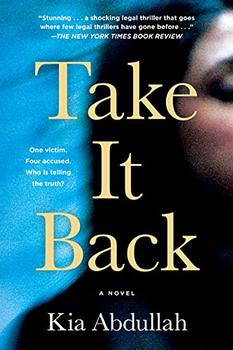
by Kia Abdullah
Published 2022
From author Kia Abdullah, Take It Back is a harrowing and twisting courtroom thriller that keeps you guessing until the last page is turned.
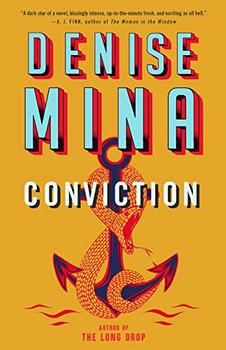
by Denise Mina
Published 2020
The captivating, utterly unforgettable new thriller for fans of Killing Eve and The Woman in the Window: A true-crime podcast sets a housewife's present life on a collision course with her secret past.
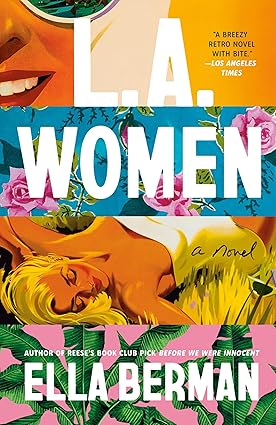
L.A. Women by Ella Berman
Two ambitious writers in 1960s LA face betrayal when one writes a novel based on the other's life.






Your guide toexceptional books
BookBrowse seeks out and recommends the best in contemporary fiction and nonfiction—books that not only engage and entertain but also deepen our understanding of ourselves and the world around us.

