
-
Your next favorite book
is waiting.
Summary | Excerpt | Reading Guide | Reviews | Beyond the Book | Readalikes | Genres & Themes | Author Bio

How the South Lost the Civil War, Then Rewrote the History
by Ann Bausum Book Reviewed by:
LIE #1: Slavery was a compassionate institution.
EACH FALSEHOOD of the Lost Cause sought to sway public opinion. The history of slavery in America was one of the most popular subjects for distortion. White southerners were eager to convince others—and themselves—that they were taking part in a mutually beneficial arrangement. If they succeeded, they could avoid facing blame or guilt for their participation. The lies persisted even after slavery ended in 1865.
Contrary to all evidence—including the traumatic memories that haunted the formerly enslaved and the lash marks that scarred so many of their bodies—proponents of this false narrative claimed that slavery had been conducted in a humane and thoughtful way. Enslavers had treated the enslaved like members of their families, said the promoters of this falsehood. They had fed, clothed, and cared for them during sickness and old age. Violent treatment had been the exception, not the rule. Southern enslavers had already convinced themselves long before the Civil War that these beliefs were grounded in reality. After the Civil War and slavery's demise, they worked to convince others of these same misrepresentations of the facts.
Jefferson Davis, a former enslaver who had served as president of the Confederate States of America, declared after the war that "never was there happier dependence" between two groups of people than during slavery. He and others claimed credit for providing not only the material needs of the people they held in bondage but their spiritual ones as well, by introducing them to Christianity. As he put it, their enslaved workers had been "enlightened by the rays of Christianity." Many Whites tried to obscure their past ties to slavery by substituting the word servant for slave when describing their formerly enslaved workers.
Such portrayals erased the facts of the misery enslaved people experienced. The forced separation of Black families, the routine sexual exploitation of enslaved women, the oppression that forbade people to learn how to read, the financial gains Whites reaped with the system—all were omitted and ignored. Instead, the public was charmed into believing a version of events that left Whites blameless for their ties to slavery and misled Blacks into believing that their enslaved ancestors had been happy.
Only in recent decades have scholars and the descendants of the enslaved begun to unwind this web of deceit. By uncovering eyewitness accounts and other evidence in the historical record of the cruelty and true horror of enslavement in America, they have brought forth facts with the potential to erase the lies.
CHAPTER ONE
THE SLIPPERY SLOPE OF SLAVERY
It is thus clear that, just as some are by nature free, so others are by nature slaves, and for these latter the condition of slavery is both beneficial and just.
Aristotle, fourth century BCE
WHEN GEORGE Junkin relocated his family to Lexington, Virginia, in 1848, he not only started a new job, he encountered a new way of life. Although some local families employed servants to handle their household chores, just as the Junkins had previously done in Pennsylvania and Ohio, many in Lexington followed a different approach: They enslaved other people to work for them without pay.
George Junkin wasn't a big supporter of slavery. As a White Presbyterian minister, he had looked to the Bible for guidance, and as far as he was concerned the Bible had been pretty clear. "The Bible tolerates slavery," he told fellow Presbyterians in 1843. But, he observed, that didn't make it right. Junkin presented his analysis in painstaking detail during a two-day, eight-hour speech. "Now, toleration is bearing with—enduring a thing," he said. "And it implies, that the thing is viewed as an evil." Nonetheless, Junkin believed that there were times when even something as evil as slavery might need to be tolerated, and one of those times was the 1840s.
Excerpted from White Lies by Ann Bausum. Copyright © 2025 by Ann Bausum. Excerpted by permission of Roaring Brook Press. All rights reserved. No part of this excerpt may be reproduced or reprinted without permission in writing from the publisher.
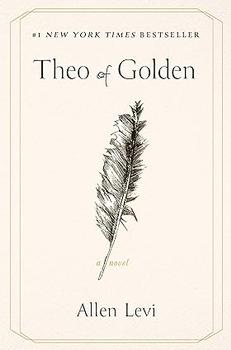
Theo of Golden by Allen Levi
One spring morning, a stranger arrives in the small southern city of Golden. No one knows where he has come from…or why…


Your guide toexceptional books
BookBrowse seeks out and recommends the best in contemporary fiction and nonfiction—books that not only engage and entertain but also deepen our understanding of ourselves and the world around us.


