
-
Your next favorite book
is waiting.
Summary | Excerpt | Reading Guide | Reviews | Beyond the Book | Read-Alikes | Genres & Themes | Author Bio

How the South Lost the Civil War, Then Rewrote the History
by Ann Bausum Book Reviewed by:
This article relates to White Lies

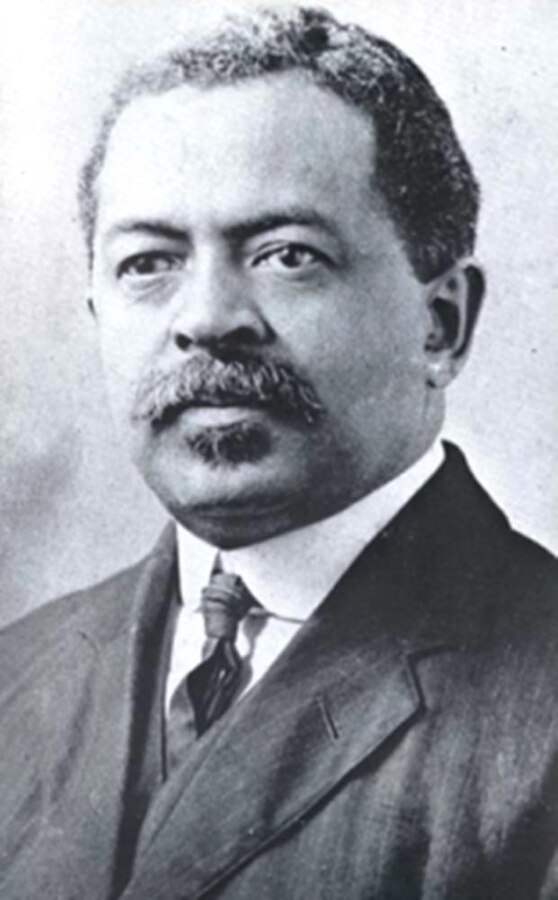 Americans know the names Martin Luther King, Jr., and Rosa Parks, and many may be familiar with W.E.B. Du Bois, but if asked about Black activists, fewer would recognize the name of William Monroe Trotter. This is an unfortunate oversight because Trotter was a passionate defender of Black civil rights and founder and editor of one of the most important Black-owned newspapers in American history. His relative obscurity today demonstrates how those who have challenged the dominant narrative about equal rights and racial progress in America are often erased from the historical record.
Trotter was born in 1872 in Ohio, but he lived most of his life in Boston. His father was a lieutenant in the Union Army during the Civil War, and despite facing discrimination in the supposedly progressive North, he was able to provide his family with relative wealth and comfort. The only son, William Monroe, graduated in 1895 from Harvard and founded the Guardian newspaper in 1901 with partner George Forbes. Like many muckraking journalists of the Progressive Era, they wanted to expose the abusive nature of voter suppression, KKK-driven violence, segregation, and the myriad other forms of discrimination Black people faced in early 20th-century America.
Their goals were in some ways directly opposed to those of Booker T. Washington, who advocated for accommodation with segregated systems and gradual "racial uplift" of Black people through education and work. Trotter dismissed this approach as useless and argued tirelessly—in the Guardian and elsewhere—for immediate equal rights. He led rallies at Boston's historic Faneuil Hall for years calling for the enforcement of the 14th and 15th Amendments. He founded Black activist groups in the 1910s in opposition to the National Association for the Advancement of Colored People (NAACP). As Kerri K. Greenidge explains in her detailed biography of Trotter, these groups "challenged what many black activists and their working-class allies saw as white Progressives' compromise and racial paternalism in the emerging NAACP."
Trotter met with President Woodrow Wilson twice to argue for desegregation policies in the years before World War I. In 1915, he led protests against the film The Birth of a Nation, which depicts the KKK as heroic protectors of White life and Black people as vicious threats. As Ann Bausum notes in White Lies: How the South Lost the Civil War, Then Rewrote the History, this movie was a prime example of the Lost Cause, a falsified retelling of the history of the Civil War and Reconstruction. Presenting the KKK as a righteous, noble force rather than as violent vigilantes was a key part of Lost Cause mythology, and Trotter was one of the most vocal denouncers of the film.
Trotter fought tirelessly for Black civil rights, but it was an uphill battle against entrenched racist policies, many of which wouldn't change until the 1960s. He was further plagued by infighting among his colleagues and personal and professional setbacks, including the bankruptcy of the Guardian. He tragically died by suicide in 1934.
Books such as White Lies and Greenidge's Black Radical are reintroducing Trotter's work to new audiences and showing that demands for full racial equality have had a long legacy and many dedicated advocates. As Greenidge explains, "Trotter's life, then, is the story of America's shift from a general acceptance of black economic, political, and racial subjugation, toward a radical demand for racial justice led and decided by black people themselves."
William Monroe Trotter, 1902, courtesy of the Trotter Multicultural Center at the University of Michigan
Filed under People, Eras & Events
 This "beyond the book article" relates to White Lies. It originally ran in August 2025 and has been updated for the
August 2025 edition.
Go to magazine.
This "beyond the book article" relates to White Lies. It originally ran in August 2025 and has been updated for the
August 2025 edition.
Go to magazine.
L.A. Women by Ella Berman
Two ambitious writers in 1960s LA face betrayal when one writes a novel based on the other's life.

Your guide toexceptional books
BookBrowse seeks out and recommends the best in contemporary fiction and nonfiction—books that not only engage and entertain but also deepen our understanding of ourselves and the world around us.

