
-
Your next favorite book
is waiting.
Summary | Excerpt | Reviews | Beyond the Book | Readalikes | Genres & Themes | Author Bio
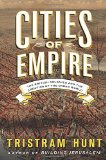
The British Colonies and the Creation of the Urban World
by Tristram Hunt Book Reviewed by:
Yet just as unhelpful a side-effect of Ferguson's case was that it provoked an equal and opposite reaction from scholars and commentators who sought, by way of contrast, to cast British imperialism as a very bad thing. In the context of political opposition to perceived American imperialism at the turn of the twenty-first century, discussion about the British Empire (particularly on the political left) was reduced to slavery, starvation and extermination; loot, land and labour. In the words of the left-wing author Richard Gott, 'the rulers of the British empire will one day be perceived to rank with the dictators of the twentieth century as the authors of crimes against humanity on an infamous scale'.10
Much of Gott's case has received official endorsement in recent years with a series of public acknowledgements by European governments of colonial crimes. In 2004 Germany apologized for the massacre of 65,000 Herero people in what is now Namibia; in 2008 Italy announced that it was to pay reparations to Libya for injustices committed during its thirty-year rule of the north African state (judged by Time magazine to be 'an unprecedented act of contrition by a former European colonial power'); in 2011 the Dutch government apologized for the killing of civilians in the 1947 Rawagede massacre in Indonesia; and in 2012 the President of France, François Hollande, officially acknowledged the role of the Parisian police in massacring some 200 Algerians during a 1961 rally.11 Then, in 2013, the United Kingdom government (having apologized for the Great Famine of 1845–52 and expressed official regret over Britain's role in the Atlantic slave trade) was forced by a High Court judgement to announce a £20 million compensation package for 5,228 Kenyan victims of British abuse during the 1950s Kenya Emergency or Mau Mau Rebellion. 'The British government recognizes that Kenyans were subject to torture and other forms of ill-treatment at the hands of the colonial administration,' Foreign Secretary William Hague told the House of Commons. 'The British Government sincerely regrets that these abuses took place and that they marred Kenya's progress towards independence.'12
The danger now is that, as the legacy of Empire moves into the realm of official apologies, law suits and compensation settlements, the space for detached historical judgement has perceptibly narrowed. For the history of Empire is always more complicated than the simple binary of ruler and ruled–as episodes such as the loss of America in 1776, the tortured psychology of the settlers of the White Dominions, or the endlessly unclear place of Ireland within the British imperial imagination demonstrated. What is more, as Linda Colley has suggested, 'one of the reasons why we all need to stop approaching empire in simple "good" or "bad" thing terms, and instead think intelligently and enquiringly about its many and intrinsic paradoxes, is that versions of the phenomenon are still with us'.13
The most compelling of those phenomena still with us is the chain of former colonial cities dotted across the globe. From the Palladian glories of Leinster House in Dublin to the Ruskinian fantasia of the Victoria Terminus in Mumbai to the stucco campanile of Melbourne's Government House to the harbour of Hong Kong, the footprint of the old British Empire remains wilfully in evidence. After sporting pastimes and the English language (to which might be added Anglicanism, the parliamentary system and Common Law), Jan Morris has described urbanism as 'the most lasting of the British imperial legacies'.14 And this imperial heritage is now being preserved and restored at a remarkable rate as postcolonial nations engage in a frequently more sophisticated conversation about the virtues and vices, the legacies and burdens of the British past and how they should relate to it today.
Excerpted from Cities of Empire by Tristram Hunt. Copyright © 2014 by Tristram Hunt. Excerpted by permission of Metropolitan Books. All rights reserved. No part of this excerpt may be reproduced or reprinted without permission in writing from the publisher.
L.A. Women by Ella Berman
Two ambitious writers in 1960s LA face betrayal when one writes a novel based on the other's life.






Your guide toexceptional books
BookBrowse seeks out and recommends the best in contemporary fiction and nonfiction—books that not only engage and entertain but also deepen our understanding of ourselves and the world around us.


