
-
Your next favorite book
is waiting.
Summary | Excerpt | Reviews | Beyond the Book | Readalikes | Genres & Themes | Author Bio
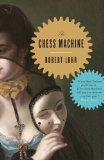
A Novel
by Robert Lohr Book Reviewed by:
The next day Tibor had a bad attack of influenza. Kempelen provided medicine and
blankets for the invalid but did not interrupt their journey. Meanwhile he
negotiated the terms of their contract with Tibor. Kempelen was offering a
weekly wage of five guilders, with free board and lodging, and an extra bonus of
fifty guilders if the performance before the Empress was a success. Tibor was
so overwhelmed by these figures that he never even dreamed of haggling.
Tibor had last held a steady job in the summer of the year 1761, in the
Polish monastery of Obra, to which he had fled from Prussia. He worked as a
gardener, learned to read and write, and daily thanked God the Father, the
Savior, and above all the Holy Mother of God for the safety of the monastery
walls. He did not become a monk, but then he hadn't actually promised the Virgin
Mary to take vows.
In fact Tibor's time in the monastery lasted not forever but only four years. A
small group of novices indulged in playing chess, in defiance of the abbot's ban
on it, and Tibor was initiated into the "Game of Kings" himself. One of the
novices explained the rules to the dwarf, and from his first game on Tibor
defeated all his opponents. It seemed incredible that he had never played chess
before. Over the weeks he became a great attraction: more and more monks were
admitted to the secret chess club, played against this newly discovered chess
genius, and lost to him. The dwarf enjoyed the admiration of the brothers, until
one bad loser alerted the abbot to the gaming going on within his walls. A
scapegoat was required, and the lot fell on Tibor. With one accord, all the
novices swore that the dwarf had tempted them to play, and he had to leave Obra.
He was paid his wages and given the chess set, for after all—or so the novices
told the abbot—he had smuggled it into the monastery himself.
In the autumn of 1765, then, Tibor was on the road once more, and as it was a
cold autumn, he decided to go south. It took him three more years to get back to
the Venetian Republic. The chess set had cost him his job in the monastery, and
now it was to earn him a living: he made money in the taverns along his way by
winning his opponents' stakes. Often he would play for payment in kind: a meal
here, a bed for the night there, a seat in the mail coach. He could undoubtedly
have earned more in towns, but he avoided places of any size. It was bad enough
to have a whole village gawping at him.
The small chess player was a sensation in the villages, but he was never
popular, certainly not when he won the villagers' money. Tibor sought comfort
from their hostility in praying to the Madonna, and he took time off to visit
every roadside shrine and every chapel along his way. But the remote Mother of
God wasn't always there for Tibor, so he found another and far more physical
comfort: brandy. Since he spent most of the time when he wasn't on the road in
hostelries, strong liquor was readily available. One night, on the border of the
Venetian Republic, the inebriated Tibor was beaten and robbed on the road by
villagers from whom he had won over forty guilders the day before.
Now aged twenty-four, he returned to his native land in the summer of 1769—on
foot, in rags, a drunk. A few months later he left it again in Kempelen's fine
carriage, wearing good clothes and with a purse full of coins.
Baron Wolfgang von Kempelen and Tibor Scardanelli reached their journey's end
on the afternoon of St. Nicholas's Day. Shortly before they came to the bridge
over the Danube leading to Pressburg on the far side of the river, Kempelen had
the carriage halted on a slight rise. Gentle snow was falling, but it melted as
soon as it touched the ground.
When Tibor had urinated, he scrutinized the city. By comparison with Venice,
Pressburg appeared almost boring: a neat, tidy place that had spilled beyond its
original town walls, with the huts of fishermen and ferrymen in front of it,
and vineyards stretching away behind. Only St. Martin's Cathedral with its green
tower really caught the eye. To the left rose Castle Mount, with the bulky
shape of the castle lying on it like a table turned upside down, its four corner
towers reaching into the gray sky like the table legs.
Excerpted from The Chess Machine by Robert Loer. Copyright © 2007 by Robert Loer. Excerpted by permission of Penguin Group. All rights reserved. No part of this excerpt may be reproduced or reprinted without permission in writing from the publisher.

Theo of Golden by Allen Levi
One spring morning, a stranger arrives in the small southern city of Golden. No one knows where he has come from…or why…






Your guide toexceptional books
BookBrowse seeks out and recommends the best in contemporary fiction and nonfiction—books that not only engage and entertain but also deepen our understanding of ourselves and the world around us.


