
-
Your next favorite book
is waiting.
A few weeks ago I asked our Facebook followers to share the name of their favorite poem. As you'll see below, the responses were both enthusiastic and eclectic!
Do you see any of your favorites here? Whether that's a yes or no, do take a moment to click on the comments option at the bottom and tell us about your favorite or favorites!
Phyllis SB got in first, within a few seconds of me posting, with her recommendation of "The Cremation of Sam McGee" by Robert Service, which was seconded by Dana VB.
The New York Times reviewed Rebecca Hunt's novel, Mr. Chartwell, in the Sunday Book Review on March 13. Since I reviewed the book for BookBrowse not long ago, I was interested to see what the Times thought of it. (My review is only available to BookBrowse members at this time. Here's a PDF of it for those who are not members.)
Tadzio Koelb's review took a snarky tone from the start, and not just in reference to Mr. Chartwell, but to readers in general (who are apparently too stupid to know what good books are). My blood didn't really start to boil, however, until Mr. Koelb condescended to reveal the obvious truth about Rebecca Hunt's novel, the glaring fact that those of us who liked the book sadly missed:
Why do we love to read about animals? The answer seems quite simple, the library cat Dewey of Vicki Myron's surprise bestseller, the wild snail of Elisabeth Tova Bailey's memoir, or John Grogan's dog Marley each offers more charming and inspiring company than the average critter.
I couldn't imagine a life without animals. My life involves the science of observing moody monkeys and apes, a tendency to get slimed rather than sublime in the company of snails, and the herding of a horde of seven fractious cats at home. So, to read an engaging animal book for me is to escape from the litterbox-and-hairball detail for a while.
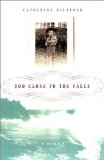 Sometimes interviews are a great thing. They actually make you think. One interviewer asked me if being a psychologist for 25 years had anything to do with the fact that I wrote a few memoirs. I said that it made me less afraid to write the truth about myself and my feelings no matter how bizarre or unflattering they might be. After delving into the unconscious of others for so long I realized that we are all pretty much the same. The difference between a murderer and a nun is really very little. Usually it is only one moment in time that differentiates the two. Both people have the same unconscious instincts or desires that they have had to repress--primarily sex and aggression. Freud isn't famous for nothing. Just look at TV that only has various forms of sex or aggression blasting on 400 channels to know that Freud was no amateur. Sometimes people say to me "Oh I was so shocked you were involved in a murder trial and were investigated by the FBI." Really they had thought or probably did the same things I did but didn't get caught. I know that and they know that. Realizing we are all on a level playing field is freeing and I felt I could write what I wanted so my pen just danced across the page.
 The Afghan Women's Writing Project is an online magazine comprised of writing by Afghan women. Our project is run by a team of volunteers, and our goal is to empower Afghan women to have a voice in the world by writing stories and poetry about their lives. The Afghan women write in English and students receive ongoing mentoring from women writers primarily from the United States.
I got involved in AWWP because I happened to hear Masha Hamilton, who founded the Project, on Minnesota Public Radio. I was inspired to read her book, Staircase of a Thousand Steps, which led me to read more of her books. I was curious about this woman who writes such compelling books about places that I'm not sure I would ever have the courage to visit. On her web site, I found a link to the AWWP and was impressed with the stories that I read.
 Say "preacher's wife" and see if a picture doesn't come immediately to mind. If your mind is anything like my mind, the picture will be of a woman with big hair and eyelashes clotted with mascara and a smile that can win her a toothpaste commercial audition. A hand (nails long, lacquered) gestures upward, while on her lap rests a gently used Bible (full of highlighted passages that are already committed to memory) and at her feet a cluster of fresh-scrubbed children. The words "Minister's wife" conjure a completely different image: see the postmenopausal woman wearing sensible shoes and a beige outfit putting the finishing touches to the potluck in the fellowship hall?
I can guarantee, either way you say it, what is not going to come into your mind is: me. My hair doesn't tease well, for one thing, and I have the musical tendencies of a barnacle. I still have trouble memorizing Scripture, and I'm usually late for church. Despite all this, I am somewhat of a curiosity to the parishioners of the church where my husband is the minister.
It's the things that church members find worthy of discussing about me that I find interesting. What I wear is a perennial favorite (note to self: never wear bib overalls to a church function, no matter how casual). Also what I eat. One week the gossip centered around what had been on my plate at the Fourth of July church picnic. "She's not a real vegetarian if she's got a great big hamburger on her plate." You try defending yourself with the words "soy patty."
