Book Club Discussion Questions
In a book club? Subscribe to our Book Club Newsletter and get our best book club books of 2025!
Please be aware that this discussion guide will contain spoilers!
-
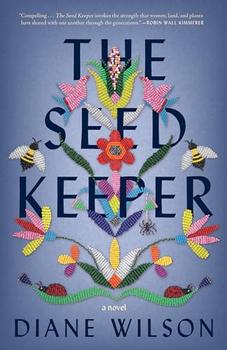
Consider the way the various timelines and characters are tied together in the conclusion of the novel. In what ways can readers of The Seed Keeper use these interwoven stories to reflect on intergenerational trauma, and more broadly, the role the past plays in the present and future, particularly in Indigenous communities?
-
In the Author's Note, Diane Wilson tells us that this story was inspired by the true story
of Dakhóta women hiding seeds in their skirts while being forcibly removed from their
homelands, noting that they are "the reason why we have Dakhóta corn today" (364).
What does this story suggest about the nature of sacrifice?
-
Rosalie and Ida's friendship is a powerful reminder that while we inherit a past legacy from those who come before us, we each get to choose the way we allow that legacy to influence how we conduct our lives. Can we glean lessons on reconciliation, with others and with the earth, from this relationship? If so, what might they be? If not, why do you think that is?
-
The closing epigraph of this book is a prayer: "Love the seeds as you love your children, and the people will survive. Wačhékiye." (361) Consider this prayer and Rosalie's connection with her son. What might the significance of this parallel between Wakpa/Tommy and the seeds be? What do you think happens after the novel ends, and how might the seeds act as a bridge for him to find his way back to his own Dakhóta heritage?
-
The Seed Keeper grapples directly with themes of environmental degradation, specifically at the hands of corporate agriculture and genetically modified seeds protected by copyright. Ultimately, this corporate agricultural industry impacts the
entire community in which Rosalie and her family are living. What elements of this conflict struck you? What impacts are industries like this one having on communities today?
-
Rosalie and Gaby are frequently portrayed as opposites (Rosalie calls them "the mouth and the ears"). Compare and contrast their approaches to activism and their relationships to identity/community. What does their friendship tell us about the different roles we can play in social movements? What do you think Rosalie and Gaby learn from each other?
-
How does Wilson feature storytelling within Rosalie's community and personal story (in linear and non-linear ways) to enrich history and legacy within the characters?
-
The Seed Keeper highlights the tension between viewing seeds through a lens of reciprocity in opposition to regarding seeds solely as commodities. How does Wilson illustrate this tension in the ways Rosalie and her husband John communicate and
interact?
-
When she isn't writing, Wilson works with the Native American Food Sovereignty Alliance. This nonprofit organization works to support Native communities in reclaiming their sovereign food systems. Share an example of a food item, meal, or method of gathering, cooking, or sharing that has taught you something meaningful about your identity and connection to your ancestors.
-
Which tribes and Indigenous communities live near your home? Which crops and harvests do they hold sacred and are they still able to grow them? Have you eaten these foods?
Unless otherwise stated, this discussion guide is reprinted with the permission of Milkweed Editions. Any page references refer to a USA edition of the book, usually the trade paperback version, and may vary in other editions.