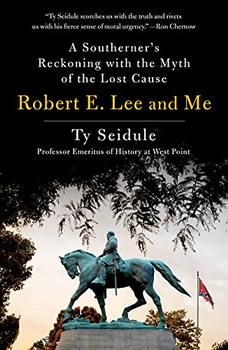
Book Club Discussion Questions
In a book club? Subscribe to our Book Club Newsletter and get our best book club books of 2025!
Please be aware that this discussion guide will contain spoilers!
-
The author argues that history is dangerous. What does he mean?
-
What is the Lost Cause of Confederacy myth and what is its purpose?
-
Seidule presents three different identities: soldier, scholar, and southerner.
Which identity is most important to him?
-
Few historians write memoirs. Why did the author choose this format?
-
Why did Seidule idolize Robert E. Lee as a child?
-
The author uses the term, "educated Christian gentleman" repeatedly.
Why is that term so fraught for Seidule?
-
Seidule uses several books and movies from his childhood to explain the Lost Cause
myth. Can you think of media that informed you about race? Were they accurate?
-
Seidule uses his hometown's tortured racial history as a way to explain his own
understanding of race. Does your hometown have a racial past similar or dissimilar
to Alexandria, Virginia, and Monroe, Georgia?
-
Seidule argues that lynching and Confederate monuments serve the same purpose.
What is the purpose? Do you agree?
-
Why does Seidule spend so many pages describing Lee Chapel in detail? Why does he call it the "Shrine of the South"?
-
The author makes few actual policy prescriptions. Instead, he argues that history must
be the foundation. "The alternative to ignoring our racist history is creating a racist
future." Do you agree?
-
Do you think the author would change the name of Washington and Lee University?
Should the name change? Why or why not?
-
Ten army posts honor Confederate generals. Why did the army choose those names?
Why does Seidule say they should change them?
-
Seidule is even more outraged at the Confederate Memorial in Arlington National Cemetery. Why?
-
West Point has many memorials to Lee. When did West Point honor Lee and why?
-
Seidule accuses Lee, claiming he "committed treason to preserve slavery." What is his argument? Is it fair?
-
Seidule says that monuments tell historians more about who emplaced them than they do about the figures memorialized. What does he mean by that?
-
In the last chapter, Seidule writes about Lee's treason and his racial views. Is the author
fair? Or is he unfairly holding Lee to a modern standard?
-
Seidule says he had to retire from the army to speak frankly about what he believes was
treason on the part of Lee and the Confederates. Why did the army find this subject so
fraught?
-
Seidule argues in the epilogue that racism is the virus in the American dirt, infecting
everything and everyone. Is the fight against racism hopeless or can the country change? How can it change?
Unless otherwise stated, this discussion guide is reprinted with the permission of St. Martin's Griffin. Any page references refer to a USA edition of the book, usually the trade paperback version, and may vary in other editions.