Book Club Discussion Questions
In a book club? Subscribe to our Book Club Newsletter and get our best book club books of 2025!
Please be aware that this discussion guide will contain spoilers!
-
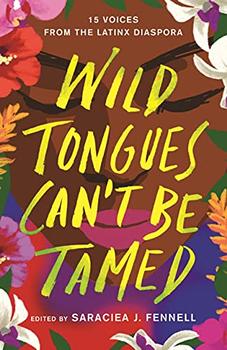
In her introduction, Saraciea J. Fennell writes of the contributors, "We are letting our truths run wild, and pushing against whatever it is you think is the ideal Latinx individual." The anthology celebrates the diversity of the Latinx diaspora and the full range of identities
among the contributors. Are there also common stereotypes and preconceptions that the contributors face and interrogate?
-
Mark Oshiro understands the phrase "eres un pocho" to mean "You gave up your culture. You assimilated ... You betrayed who you were." What pressures do they face to assimilate, and what are the consequences of assimilation? How do they eventually begin to push back against assimilation to reclaim their full identity?
-
In "The Price of Admission," Naima Coster writes, "I often think about what we lose when we deny the complexity of our stories, our families, and selves in service of some victorious narrative—the desire to declare ourselves triumphant, worthy, palatable to whiteness. I think about the testimonies and self-expression we lose, as well as the opportunities to accept ourselves and connect to one another." What does she mean? How does her piece acknowledge and embrace some of that complexity, through her relationship with her father-in-law? How can writing be, as she describes it, "a way to move away from shame"?
-
Why is Tío Francisco so important to Meg Medina growing up, in "The Mark of a Good Man"? How does he, like Naima Coster's father-in-law, complicate our understanding of what a "good man" or "good immigrant" is? Why are those terms problematic?
-
What do you think Natasha Díaz means by the phrase "caution song" in her poem? How do her closing lines—"if you call me spicy, / you should expect me to bite your tongue"—resonate with the anthology's title, Wild Tongues Can't Be Tamed?
-
In "#Julian4SpiderMan," Julian Randall writes, "The consequence of being seen is that you're seen." What do they mean? How does this sentiment resonate throughout both their piece and the anthology as a whole?
-
Multiple contributors describe the experience of being asked, "What are you?" What does that phrase mean, and why is it hurtful?
-
In "Half In, Half Out," Saraciea J. Fennell writes, "I desperately needed to know what our roots were so I could dictate my identity—not other people." Similarly, Zakiya N. Jamal writes in "Cuban Impostor Syndrome," "As long as I know where I come from, I know exactly who I am." What is the importance of uncovering and understanding family history for these writers?
-
Several contributors address the label "Afro-Latinx" in their pieces. For some, like Julian Randall, it's a powerful way to claim their full identity, while for others, like Ibi Zoboi and Janel Martinez, it doesn't feel like enough. Discuss what "Afro-Latinx" means and
why it's so complicated. How does colorism operate within the Latinx diaspora, as we see in this anthology?
-
Cristina Arreola struggles to claim her Mexican-American identity in "The Land, the Ghosts, and Me": "Away from home, I began to feel that I hadn't been steeped in the culture long enough to make me strong with its flavor, but just enough that you couldn't hide the scent." Similarly, Zakiya N. Jamal describes her "Cuban Impostor Syndrome" and not feeling like she "fit the mold of what a Cuban should be." How do these writers' experiences compare and contrast? How are they able, over the course of their essays, to claim their full Latinx identities?
-
Both Kahlil Haywood in "Paraíso Negro" and Janel Martinez in "Abuela's Greatest Gift" describe traveling to Central America to visit family in Panama and Honduras, respectively. How do those trips deepen their understanding of their own identities? What insights do they share about the differences and similarities between the Latinx experience in the US and Central America? Do you agree with Kahlil that "once you increase travel and meet all of the people, you have no choice but to have a more varied
view of the world"?
-
Why is theater so important and liberating for Jasminne Mendez in "Alaiyo" when she first discovers it in middle school? Why does she ultimately stop performing onstage and turn to poetry and spoken word instead?
-
One of the major cultural differences between Ingrid Rojas Contreras's Colombian family and her husband's white American family is how they deal with conflict. In "Invisible," she writes of her in-laws, "being conflict-averse meant that they all chose to
avert their eyes away from things that might invite discord. They could not see, and I could not get any of them to understand, however hard I tried, that discord can, in turn, invite justice." What does she mean? Do you agree?
-
Some of the contributors in this anthology describe growing up fluent in Spanish, while others never learned or don't know it well. Why is the Spanish language often so fraught within the Latinx community? How can it be both empowering and exclusionary?
-
In "A Mi Orden," Elizabeth Acevedo writes, "internal bleeding is as dangerous as any open cut." What does she mean? How does that line resonate with Lilliam Rivera's experience, described in "More than Nervios," with her own mental health struggles? What do these two essays suggest about the importance of speaking up and asking for help, as well as the difficulty of doing so, especially as a Latina?
-
Was there a piece in the anthology that particularly moved you or surprised you? If so, which one and why?
Unless otherwise stated, this discussion guide is reprinted with the permission of Flatiron Books. Any page references refer to a USA edition of the book, usually the trade paperback version, and may vary in other editions.