Book Club Discussion Questions
In a book club? Subscribe to our Book Club Newsletter and get our best book club books of 2025!
Please be aware that this discussion guide will contain spoilers!
-
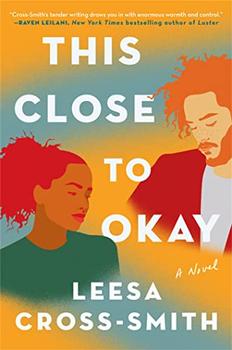
This Close to Okay alternates between Tallie and Emmett's points of view. How does this narrative choice affect your reading of the story and your understanding of the characters?
-
"She knew healing-if and when it happened-happened in increments, the same sneaky way the days got longer and shorter. Barely noticeable at times, slow" (page 137). What are some of the pivotal moments in this gradual healing process, for both Tallie and Emmett?
-
What are Tallie and Emmett's coping mechanisms for stress, anxiety, and grief? What kind of support systems do they each have in their lives, both before and after the events of the novel? Where do these support systems fall short of their needs?
-
When Tallie says Emmett seems like a kitten, Emmett reflects that, "Remarks like that felt like criticisms coming from women" (29). How do gender norms in our society intersect with mental health? In what ways might this story be different if Emmett were a cisgender woman?
-
One of Tallie's potential new therapy clients is "a black woman who was struggling with the stress of living in America and the long-lasting damaging effects of racism" (111). How does systemic racism play a part in both Emmett and Tallie's lives? What moments can you think of where the threat of racism causes or compounds their stress or anxiety?
-
In his email to Tallie/Emmett, Joel says about his affair: "You may feel like there are parts of me you don't know, yes, but you do know the heart of me. I separated myself...in order to deceive you" (77). In what ways do different characters compartmentalize themselves, and why?
-
Art plays an important role in both Tallie and Emmett's lives, and there are references to specific works in the novel. For instance, Tallie has hung pictures of Courbet's L'Origine du monde and Klimt's Frau bei der Selbstbefriedigung by her bed, and Emmett references Francisco Goya's Saturn Devouring His Son, Hieronymus Bosch's Last Judgement, and Francis Bacon's Three Studies for a Crucifixion. What do you think is the significance of including these pieces?
-
Although Emmett is innocent of his wife and daughter's deaths, he is convicted and sent to a maximum-security prison. What factors lead to his wrongful conviction? Why does Emmett have a harder time emotionally after his release?
-
What role does religion play in Tallie and Emmett's lives?
-
In what ways do Emmett and Tallie each find closure over the course of the novel?
For the full book club kit please refer to the
publisher's page.
Unless otherwise stated, this discussion guide is reprinted with the permission of Grand Central Publishing. Any page references refer to a USA edition of the book, usually the trade paperback version, and may vary in other editions.