Book Club Discussion Questions
In a book club? Subscribe to our Book Club Newsletter and get our best book club books of 2025!
Please be aware that this discussion guide will contain spoilers!
-
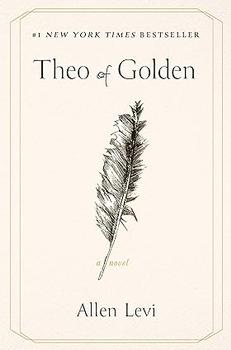
Discuss the novel's three epigraphs with your book club. How do you think each applies to the story within? How do they frame your expectations?
-
The novel begins with a description of 1816 as "The Year Without a Summer," and Mount Tambora's eruption. These references also appear throughout the novel. Why do you think the author chose to preface the novel this way? In what ways does "The Year Without a Summer" relate to the themes of the novel? How does Mount Tambora's eruption serve as a metaphor for its events?
-
"He had too much money to continue living the life he knew, but not enough—or not the right kind—to dissolve into the upper echelon of society" (30). Discuss how class is portrayed in the novel. What complications does it present? In what ways do the characters abide—or not abide—by the standards of their society?
-
"Both parties were performing roles they had seen onstage and read about in novels but never truly understood. Still, the relief, the joy, the hope after long uncertainty for a happier, more stable tomorrow—these emotions were real enough on both sides, if only indirectly related to the matter at hand" (73). Discuss how gender roles appear in the novel. How do characters perform them—and how do they subvert them?
-
"At least they had a mutual interest in letting the memory fade. It was one of many mutual interests, all of them principally controlled by Vivian" (91). Discuss this quote. Which interests of the three main characters do you think were truly mutual?
-
"Sex was, on this matter, an equalizer, more powerful even than social class" (99). Discuss this quote. How does sex function in the novel, as an equalizer or otherwise?
-
"Vivian made the rigid shape of the world malleable by simply confusing the right people at the right moment" (111–12). Discuss this quote in relation to Vivian—do you agree? Do you find her resourceful—or Machiavellian? Discuss.
-
"One's origins, Vivian thought, were inescapable. Inevitable, destined. Ashes to ashes; dust to dust" (121). How do Vivian, Oscar, and Squire's backgrounds make them who they are? In what ways do they each rebel against from where they came—and in what ways do they carry it with them?
-
The novel employs an "intrusive narrator," a style popular in the era in which the novel is set. How does this omniscient style of narration influence the way we read the novel?
-
"A capitalist fairy tale, Vivian in a walnut-paneled office with a rolltop desk" (135). In what ways might the novel resemble a fairy tale—of capitalism or otherwise?
-
"Even in America, a country that has been obliged to manufacture a mold-cast imitation of a sceptered class, there exists a species of person best able—perhaps only able—to process strong emotion behind a placid facade" (144). What kind of portrait of historic America does the novel paint? Of New York?
-
"Squire and Vivian were partners too—appreciative of each other's brilliance; frustrated by each other's flaws; accustomed to their many shared routines" (187). Consider this definition of partnership. What other ways is it defined by the novel?
-
"With Sofia, [Vivian] would have remained an audience, a good luck charm. A hanger-on. Perpetually uneasy, dependent not just on her own charms but on another person's capricious taste for them" (194). Why do you think Vivian is so drawn to Sofia? Consider the ways their relationship is different from Vivian's relationship with Oscar
and Squire.
-
"Who among us has not soldiered on through festivities honoring, or critiques berating, an identity that no longer applies? Who among us has not weathered a prodigal holiday return to a place once familiar, now made ancient and strange by personal growth, and felt the vertiginous, regressive pull of outdated expectations?" (242). Consider this quote from the novel. Do you agree? Discuss with your book club.
-
"Oscar had been for fifty-four years afraid of disaster in general, and for ten of those afraid of losing Squire in particular" (268). If such is true for Oscar, what do you think Squire and Vivian fear the most?
-
What is your theory on where Vivian went—and how she transformed?
Unless otherwise stated, this discussion guide is reprinted with the permission of Bloomsbury Publishing. Any page references refer to a USA edition of the book, usually the trade paperback version, and may vary in other editions.