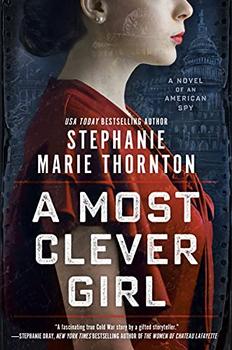
Book Club Discussion Questions
In a book club? Subscribe to our Book Club Newsletter and get our best book club books of 2025!
Please be aware that this discussion guide will contain spoilers!
-
Throughout this story, Elizabeth Bentley is an unreliable narrator as well as an antihero. At what points did you cheer for her? When did you condemn her? What do you think she should have done differently in her life?
-
Elizabeth calls herself a villain and tells Cat that even the most heinous villain has reasons that let them rationalize their wrong doing. How did Elizabeth rationalize the many wrongs she committed?
-
Many of the characters in this book—Elizabeth, Yasha, Mary Tenney, and even Cat—goby multiple names. What is the power of a name? What role did code names play throughout the novel?
-
When he recruits her, Yasha tells Elizabeth that he needs operatives who trust him implicitly and who will report any mistakes they have made even if it's the dead of night. Was there anything that surprised you throughout the story about the relationships between Russian handlers and their contacts?
-
The life of a spy is often portrayed as exciting an glamorous—complete with dazzling spy gadgets and high-speed chases. What parts of Elizabeth Bentley's life as a spy fit that stereotype and what parts were entirely the opposite? Did Elizabeth's life remind you of any other spy stories you've read or seen on television or in movies?
-
Mary Tenney says to Elizabeth at one point, "There's a saying my father often said: Sinners make the best saints. I know what I'm doing isn't strictly right, but it's not wrong either. Because it's for a good cause." Do you think her work as a honey trap and Elizabeth's spy work were more right or wrong? Did the ends truly justify their means?
-
Following the end of the war and Yasha's death, Elizabeth decides to go to the FBI with her insider knowledge of the Russian spy rings in America. Do you think she made the right decision?
-
Early on in the story, Elizabeth tells Cat, "That's the problem with being an accomplished liar—no one believes you even when you're telling the truth." At what points in the story did you suspect Elizabeth was lying? When did you think she
was telling the truth?
-
The adoption scam Elizabeth speaks of was a real phenomenon in America, especially in the 1950s. (The author's own mother was adopted this way.) Were you surprised to hear of such illicit adoptions taking place?
-
Elizabeth's work as a Soviet spy and FBI informer spanned both World War II and the Cold War. What did you know about spying during these eras before reading this book? Had you heard of William Remington and the Rosenbergs, Joseph Mc‑Carthy, and the House Un‑American Activities Committee?
Unless otherwise stated, this discussion guide is reprinted with the permission of Berkley Books. Any page references refer to a USA edition of the book, usually the trade paperback version, and may vary in other editions.