
-
Your next favorite book
is waiting.
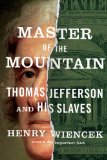
Thomas Jefferson and His Slaves
by Henry Wiencek
Is there anything new to say about Thomas Jefferson and slavery? The answer is a resounding yes. Henry Wiencek's eloquent, persuasive book - based on new information coming from archaeological work at Monticello and on hitherto overlooked or disregarded evidence in Jefferson's papers - opens up a huge, poorly understood dimension of Jefferson's world. We must, Wiencek suggests, follow the money.
So far historians have offered only easy irony or paradox to explain this extraordinary Founding Father who was an emancipationist in his youth and then recoiled from his own inspiring rhetoric and equivocated about slavery, who enjoyed his renown as a revolutionary leader yet kept some of his own children as slaves. But Wiencek's Jefferson is a man of business and public affairs who makes a success of his debtridden plantation thanks to what he calls the "silent profits" gained from his slaves - and thanks to a skewed moral universe that he and thousands of others readily inhabited. We see Jefferson taking out a slave-equity line of credit with a Dutch bank to finance the building of Monticello and deftly creating smoke screens when visitors are dismayed by his apparent endorsement of a system they thought he'd vowed to overturn. It is not a pretty story. Slave boys are whipped to make them work in the nail factory at Monticello that pays Jefferson's grocery bills. Parents are divided from children - in his ledgers they are recast as money - while he composes theories that obscure the dynamics of what some of his friends call "a vile commerce."
Many people of Jefferson's time saw a catastrophe coming and tried to stop it, but not Jefferson. The pursuit of happiness had been badly distorted, and an oligarchy was getting very rich. Is this the quintessential American story?
"Starred Review. This meticulous account indicts not only Jefferson but modern apologists who wish to retain him as a moral standard of liberty. Wiencek's vivid, detailed history casts a new slant on a complex man." - Publishers Weekly
"Wiencek's insightful and engaging account is recommended to both the illustrious Virginian's detractors and to his devotees. A fine complement to Annette Gordon-Reed's The Hemingses of Monticello." - Library Journal
"Beautifully constructed reflections and careful sifting of Jefferson's thoughts and deeds."
This information about Master of the Mountain was first featured
in "The BookBrowse Review" - BookBrowse's membership magazine, and in our weekly "Publishing This Week" newsletter. Publication information is for the USA, and (unless stated otherwise) represents the first print edition. The reviews are necessarily limited to those that were available to us ahead of publication. If you are the publisher or author and feel that they do not properly reflect the range of media opinion now available, send us a message with the mainstream reviews that you would like to see added.
Any "Author Information" displayed below reflects the author's biography at the time this particular book was published.
Henry Wiencek, a nationally prominent historian and writer, is the author of several books, including The Hairstons: An American Family in Black and White, which won the National Book Critics Circle Award in 1999, and An Imperfect God (FSG, 2003). He lives with his wife in Charlottesville, Virginia.

If you liked Master of the Mountain, try these:

by Scott Shane
Published 2024
A riveting account of the extraordinary abolitionist, liberator, and writer Thomas Smallwood, who bought his own freedom, led hundreds out of slavery, and named the underground railroad, from Pulitzer Prize-winning author and journalist, Scott Shane. Flee North tells the story for the first time of an American hero all but lost to history.
by Clint Smith
Published 2022
The Atlantic staff writer and poet Clint Smith's revealing, contemporary portrait of America as a slave owning nation.
by Jocelyn Nicole Johnson
Published 2022
A young woman descended from Thomas Jefferson and Sally Hemings driven from her neighborhood by a white militia. A university professor studying racism by conducting a secret social experiment on his own son. A single mother desperate to buy her first home even as the world hurtles toward catastrophe. Each fighting to survive in America.
Theo of Golden by Allen Levi
One spring morning, a stranger arrives in the small southern city of Golden. No one knows where he has come from…or why…






Your guide toexceptional books
BookBrowse seeks out and recommends the best in contemporary fiction and nonfiction—books that not only engage and entertain but also deepen our understanding of ourselves and the world around us.

